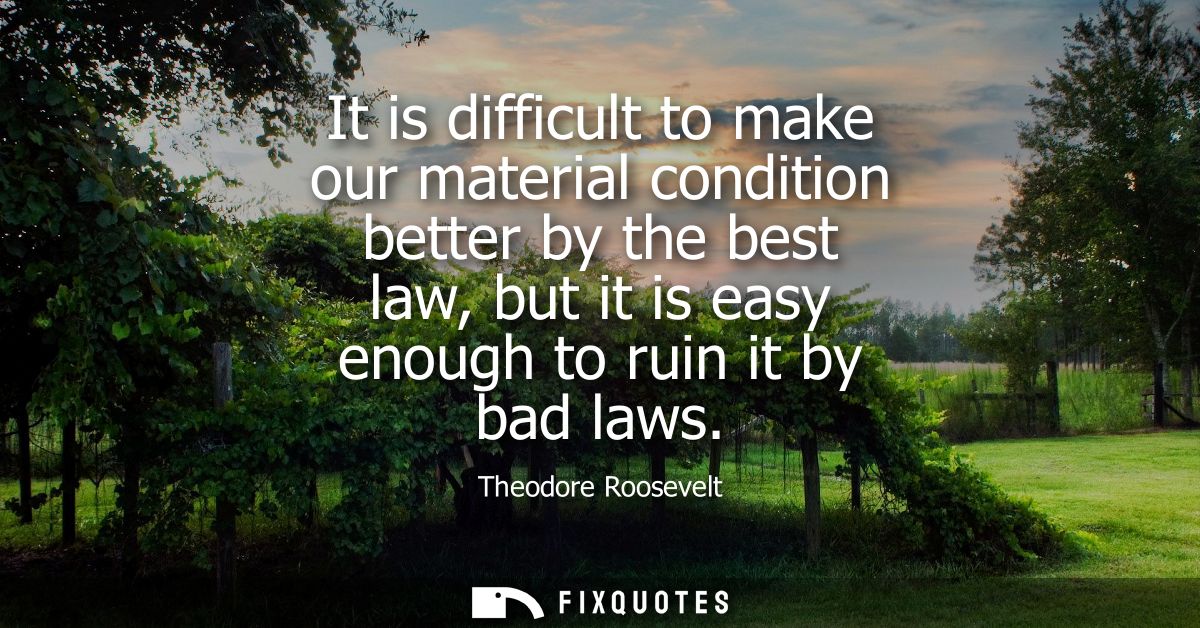
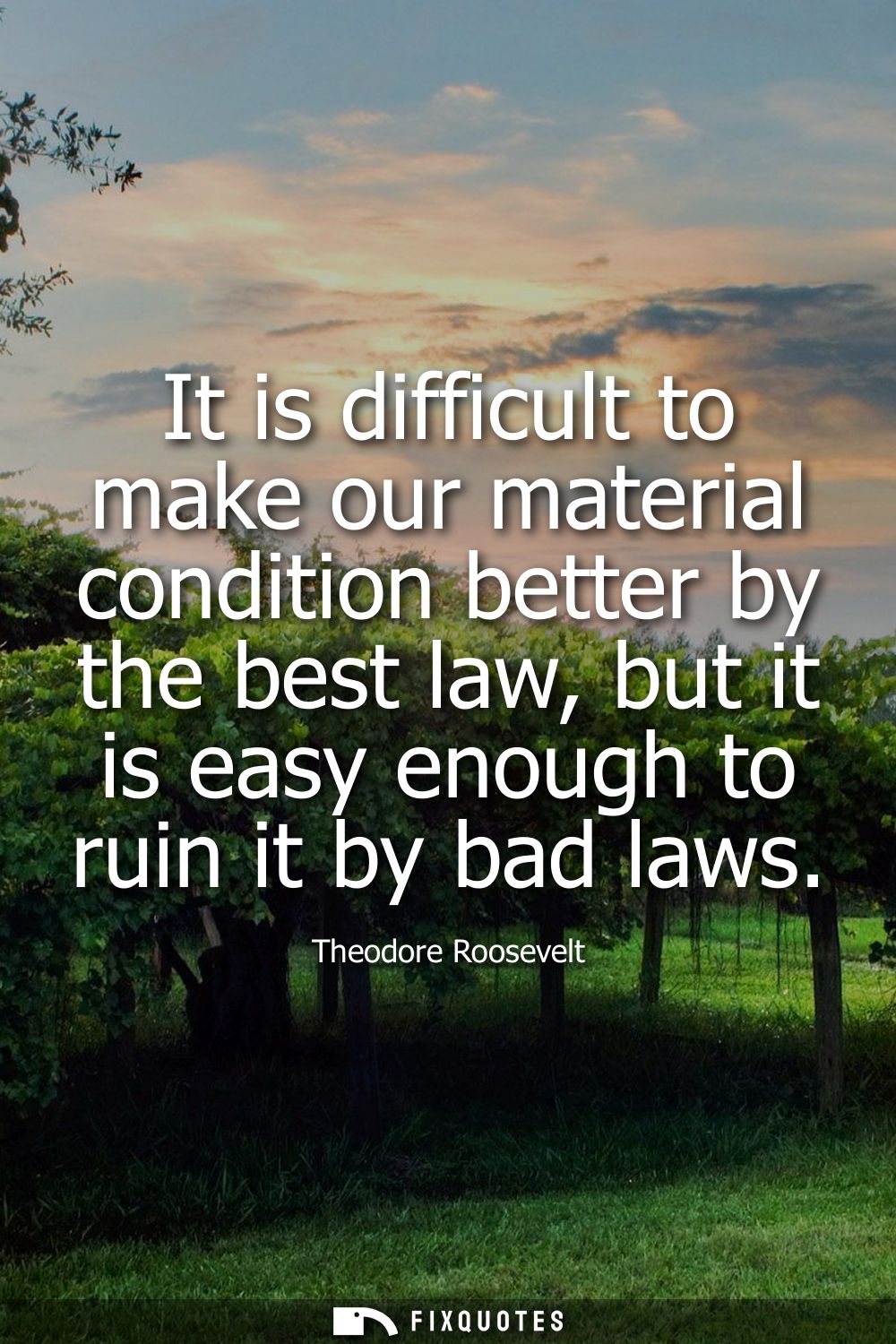
"It is difficult to make our material condition better by the best law, but it is easy enough to ruin it by bad laws"
About this Quote
The specific intent is a plea for competence and restraint under pressure. “The best law” can only do so much because material conditions are tangled in technology, markets, and human behavior. Legislation can nudge, regulate, correct; it rarely creates prosperity from nothing. “Bad laws,” though, can choke credit, encourage corruption, freeze investment, or reward predation. Roosevelt is putting lawmakers on notice: don’t confuse activity with achievement, and don’t mistake punitive symbolism for governance.
The subtext is also Roosevelt’s signature argument for a strong but disciplined state. As a Progressive-era president, he believed in using federal power to curb monopolies and protect the public. Yet he’s equally wary of sloppy populism and ideological lawmaking that treats the economy as a moral theater. The sentence is a quiet rebuke to both extremes: the complacent who think good intentions are sufficient, and the wreckers who believe you can smash the system into virtue.
Context matters: this is a leader speaking from the dawn of national regulatory power, insisting that the new tools of government demand adult supervision.
Quote Details
| Topic | Justice |
|---|---|
| Source | Help us find the source |
| Cite |
Citation Formats
APA Style (7th ed.)
Roosevelt, Theodore. (2026, January 15). It is difficult to make our material condition better by the best law, but it is easy enough to ruin it by bad laws. FixQuotes. https://fixquotes.com/quotes/it-is-difficult-to-make-our-material-condition-41985/
Chicago Style
Roosevelt, Theodore. "It is difficult to make our material condition better by the best law, but it is easy enough to ruin it by bad laws." FixQuotes. January 15, 2026. https://fixquotes.com/quotes/it-is-difficult-to-make-our-material-condition-41985/.
MLA Style (9th ed.)
"It is difficult to make our material condition better by the best law, but it is easy enough to ruin it by bad laws." FixQuotes, 15 Jan. 2026, https://fixquotes.com/quotes/it-is-difficult-to-make-our-material-condition-41985/. Accessed 6 Mar. 2026.