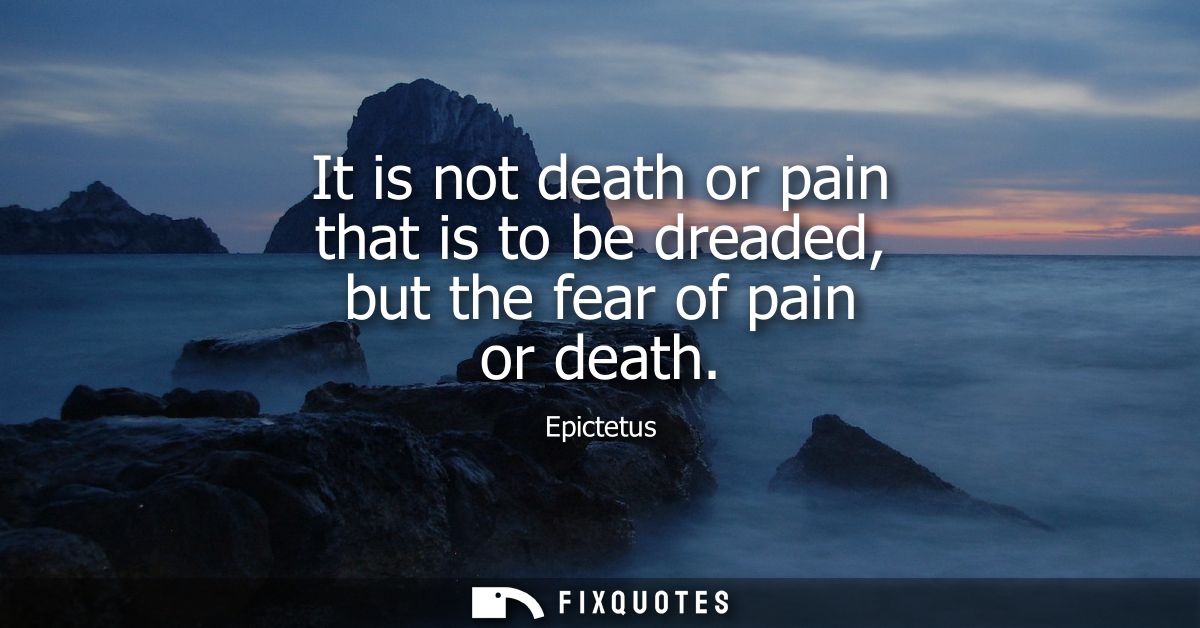
"It is not death or pain that is to be dreaded, but the fear of pain or death"
About this Quote
The line works because it demotes the big scary nouns (death, pain) into externals and elevates a quieter culprit: fear, an internal judgment masquerading as a prophecy. Epictetus is arguing that anxiety is not evidence. It’s an interpretation. And interpretations, unlike mortality, can be trained. The subtext is almost tactical: if you can interrupt the fear response, you reclaim agency without needing to control the world.
Context matters. Epictetus was a former slave operating in an empire that specialized in reminding people how little they commanded - their bodies, their status, their safety. Stoicism in that setting isn’t a self-help aesthetic; it’s a survival philosophy. When he says don’t dread pain or death, he’s not denying their brutality. He’s pointing out that dread is a voluntary add-on: the imagination running ahead of reality, spending suffering in advance with interest.
There’s also a moral edge: fear makes us pliable. If rulers, crowds, or our own habits can scare us, they can steer us. Epictetus offers a quieter revolt: stop granting terror the power to narrate what’s coming.
Quote Details
| Topic | Wisdom |
|---|---|
| Source | Help us find the source |
| Cite |
Citation Formats
APA Style (7th ed.)
Epictetus. (2026, January 18). It is not death or pain that is to be dreaded, but the fear of pain or death. FixQuotes. https://fixquotes.com/quotes/it-is-not-death-or-pain-that-is-to-be-dreaded-but-14208/
Chicago Style
Epictetus. "It is not death or pain that is to be dreaded, but the fear of pain or death." FixQuotes. January 18, 2026. https://fixquotes.com/quotes/it-is-not-death-or-pain-that-is-to-be-dreaded-but-14208/.
MLA Style (9th ed.)
"It is not death or pain that is to be dreaded, but the fear of pain or death." FixQuotes, 18 Jan. 2026, https://fixquotes.com/quotes/it-is-not-death-or-pain-that-is-to-be-dreaded-but-14208/. Accessed 20 Feb. 2026.