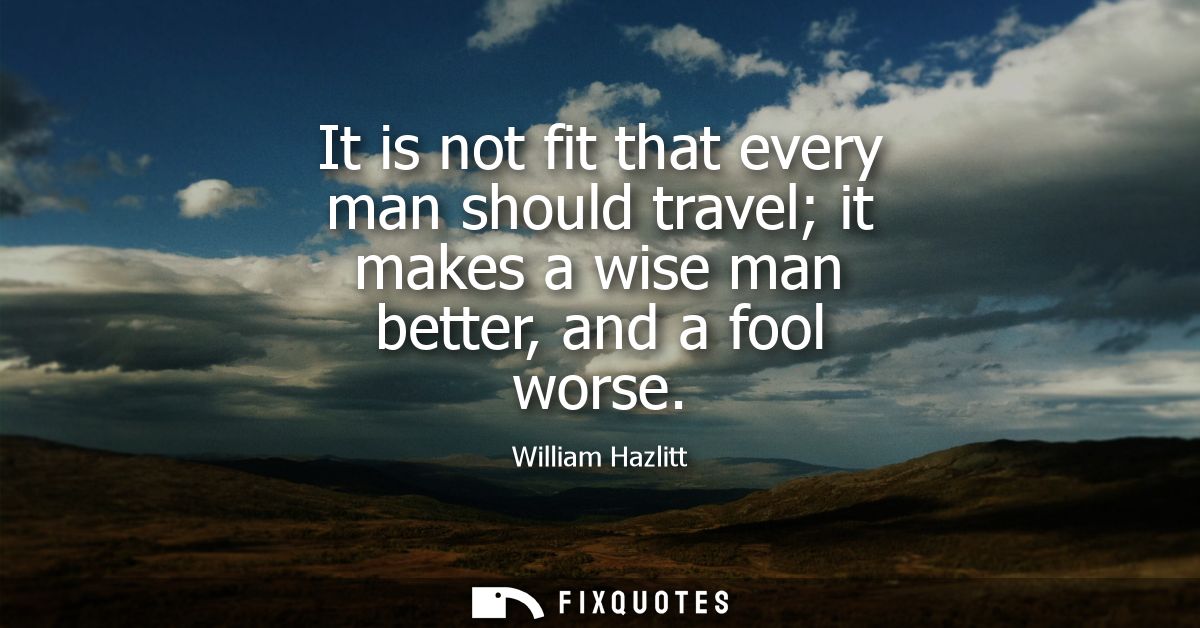
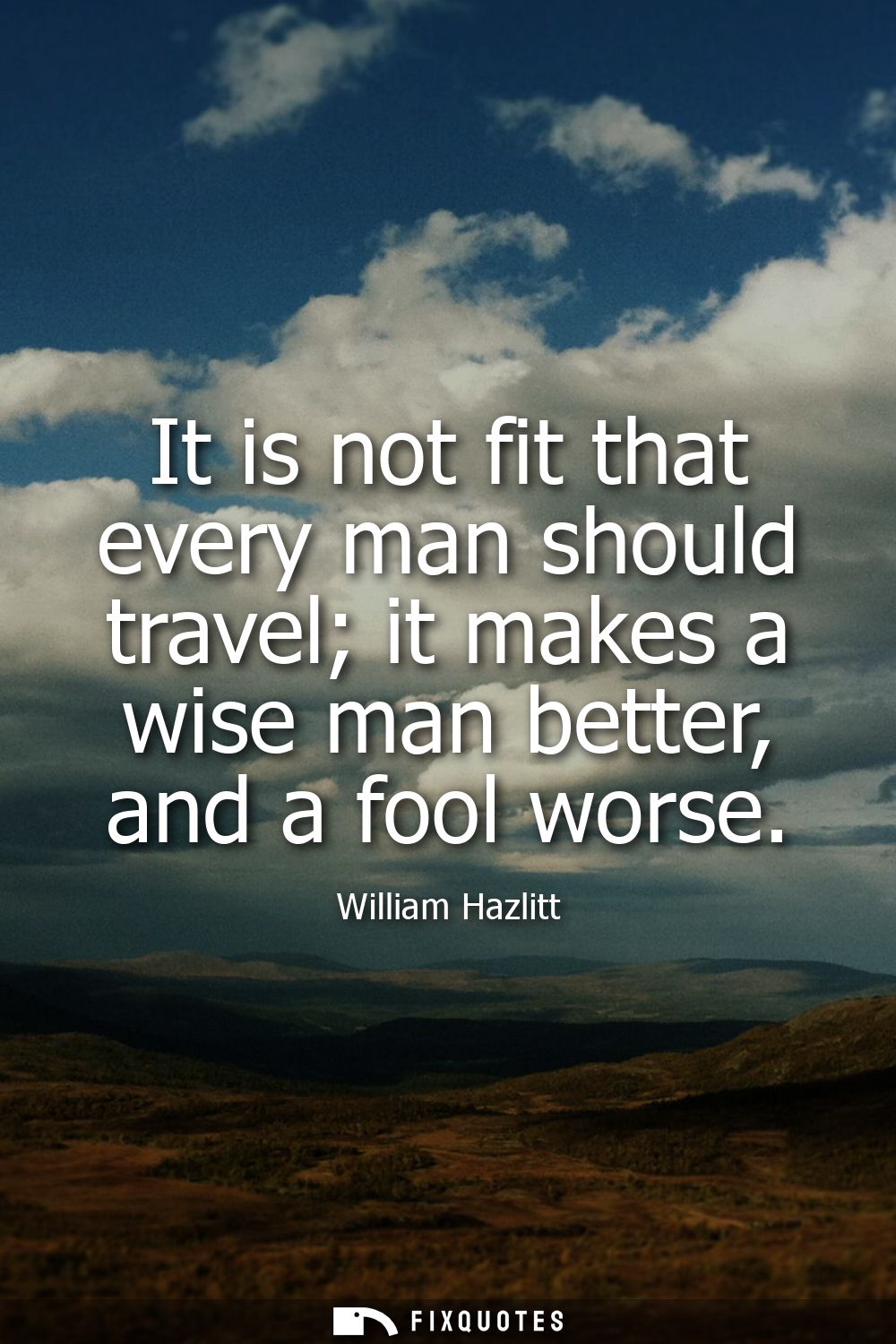
"It is not fit that every man should travel; it makes a wise man better, and a fool worse"
About this Quote
The construction is classic Hazlitt - brisk, unsentimental, and a little cruel. “Not fit” reads like a social corrective, not a personal preference. Then comes the neat antithesis: “a wise man better, and a fool worse.” It’s a rhetorical trapdoor. You can’t nod along without quietly auditioning for the “wise” category, which is exactly Hazlitt’s point: the desire to be improved can itself be vanity.
The subtext is less about passports than about perception. For Hazlitt, experience doesn’t automatically educate; it only provides more material for interpretation. A wise traveler meets difference and revises the self. A fool meets difference and turns it into proof of their own superiority, or into souvenirs of a life they didn’t really live. Travel, in this view, isn’t broadening by nature. It’s a stress test for judgment, curiosity, humility - and for the stories we tell ourselves when no one from home is watching.
Quote Details
| Topic | Travel |
|---|---|
| Source | Help us find the source |
| Cite |
Citation Formats
APA Style (7th ed.)
Hazlitt, William. (2026, January 16). It is not fit that every man should travel; it makes a wise man better, and a fool worse. FixQuotes. https://fixquotes.com/quotes/it-is-not-fit-that-every-man-should-travel-it-121119/
Chicago Style
Hazlitt, William. "It is not fit that every man should travel; it makes a wise man better, and a fool worse." FixQuotes. January 16, 2026. https://fixquotes.com/quotes/it-is-not-fit-that-every-man-should-travel-it-121119/.
MLA Style (9th ed.)
"It is not fit that every man should travel; it makes a wise man better, and a fool worse." FixQuotes, 16 Jan. 2026, https://fixquotes.com/quotes/it-is-not-fit-that-every-man-should-travel-it-121119/. Accessed 11 Mar. 2026.