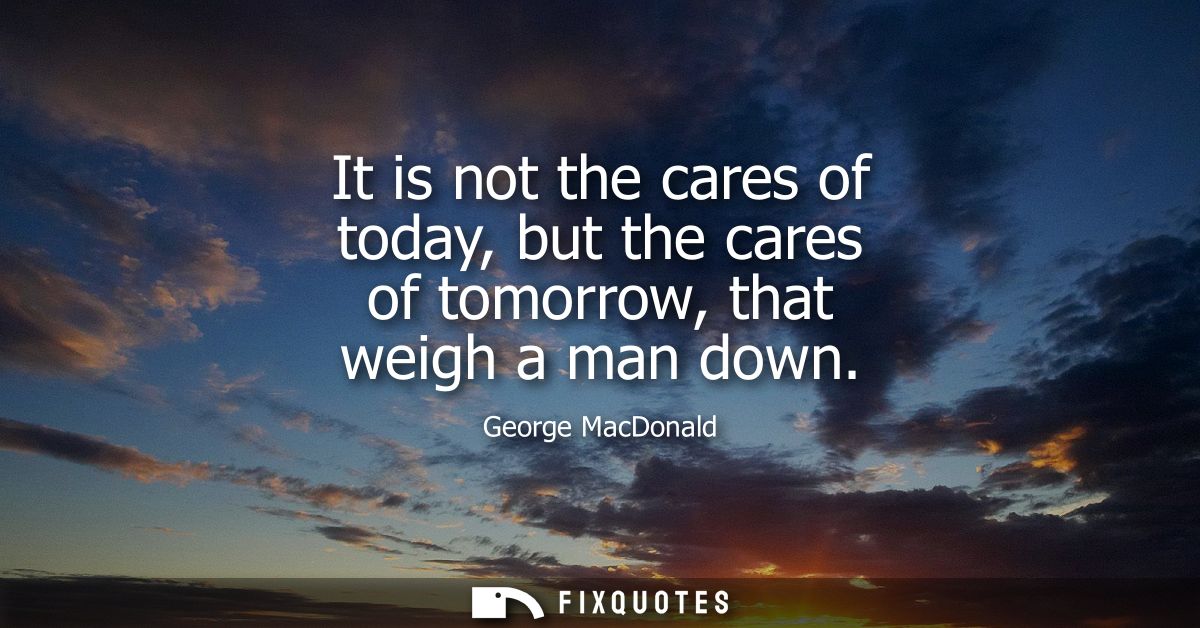
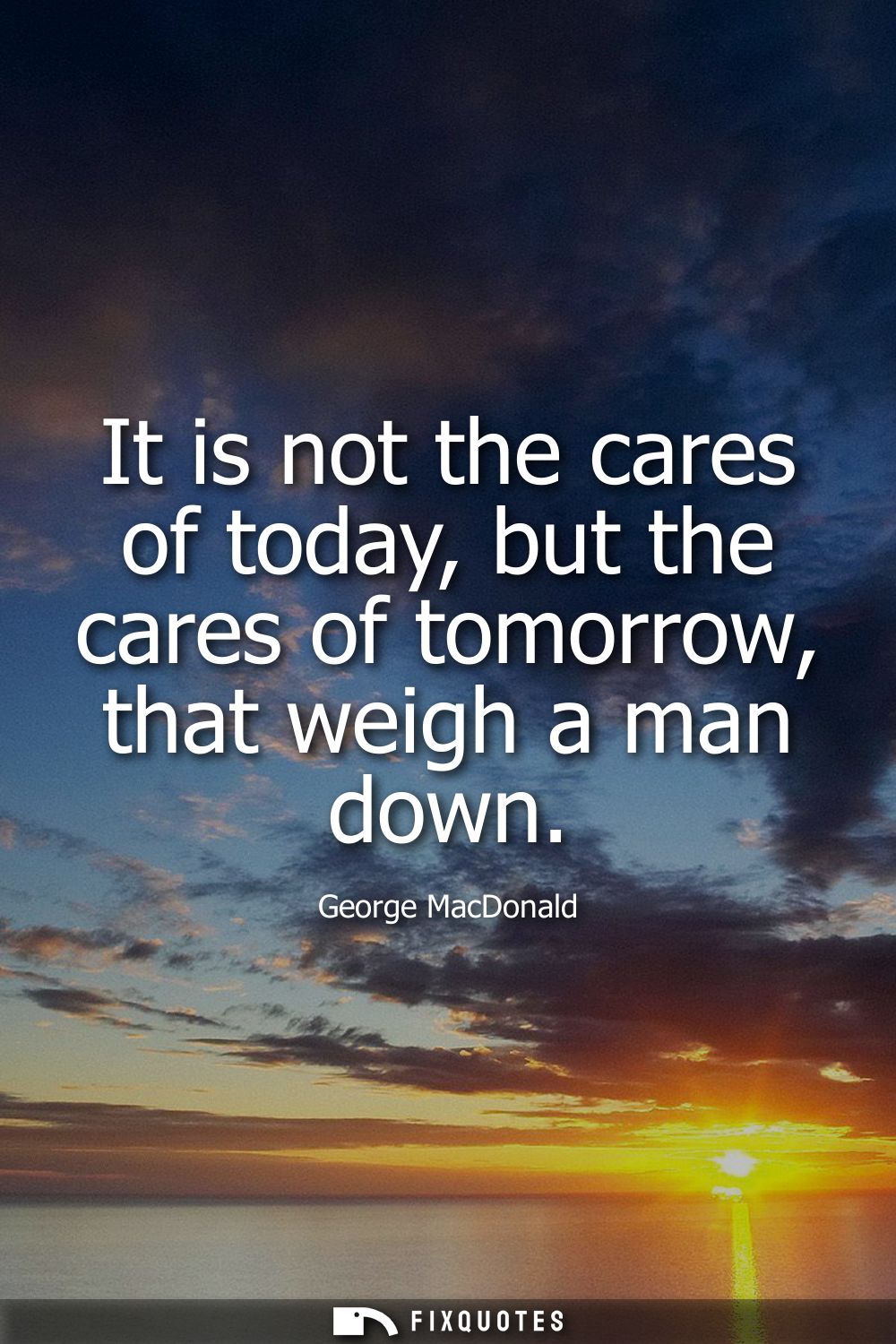
"It is not the cares of today, but the cares of tomorrow, that weigh a man down"
About this Quote
The phrasing matters. “Cares” sounds mild, almost domestic, but paired with “weigh a man down” it becomes bodily, heavy, humiliating. It’s not melodrama; it’s gravity. And “a man” signals the Victorian moral universe he wrote in, where character is proved under pressure and spiritual steadiness is an aspiration. MacDonald, a novelist steeped in Christian thought and moral formation, isn’t offering a productivity hack. He’s arguing for a discipline of attention: the present is where responsibility can be met; the future is where the mind goes to catastrophize and call it preparation.
The subtext is a rebuke of a certain respectable fretfulness. Worry often poses as prudence, but MacDonald suggests it’s closer to a failure of trust, in oneself, in providence, in the idea that tomorrow will bring its own resources. Read in its 19th-century context of industrial uncertainty and social churn, the line becomes both pastoral counsel and quiet resistance: don’t let an imagined future conscript your body and spirit today.
Quote Details
| Topic | Anxiety |
|---|---|
| Source | Help us find the source |
| Cite |
Citation Formats
APA Style (7th ed.)
MacDonald, George. (2026, January 15). It is not the cares of today, but the cares of tomorrow, that weigh a man down. FixQuotes. https://fixquotes.com/quotes/it-is-not-the-cares-of-today-but-the-cares-of-143878/
Chicago Style
MacDonald, George. "It is not the cares of today, but the cares of tomorrow, that weigh a man down." FixQuotes. January 15, 2026. https://fixquotes.com/quotes/it-is-not-the-cares-of-today-but-the-cares-of-143878/.
MLA Style (9th ed.)
"It is not the cares of today, but the cares of tomorrow, that weigh a man down." FixQuotes, 15 Jan. 2026, https://fixquotes.com/quotes/it-is-not-the-cares-of-today-but-the-cares-of-143878/. Accessed 27 Mar. 2026.