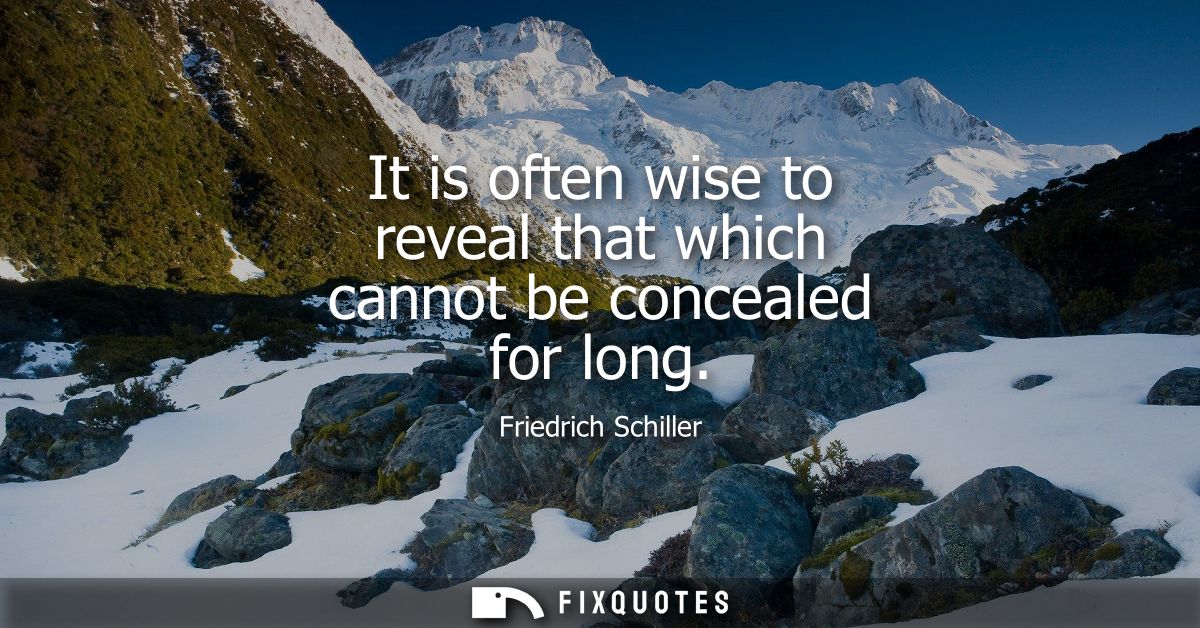
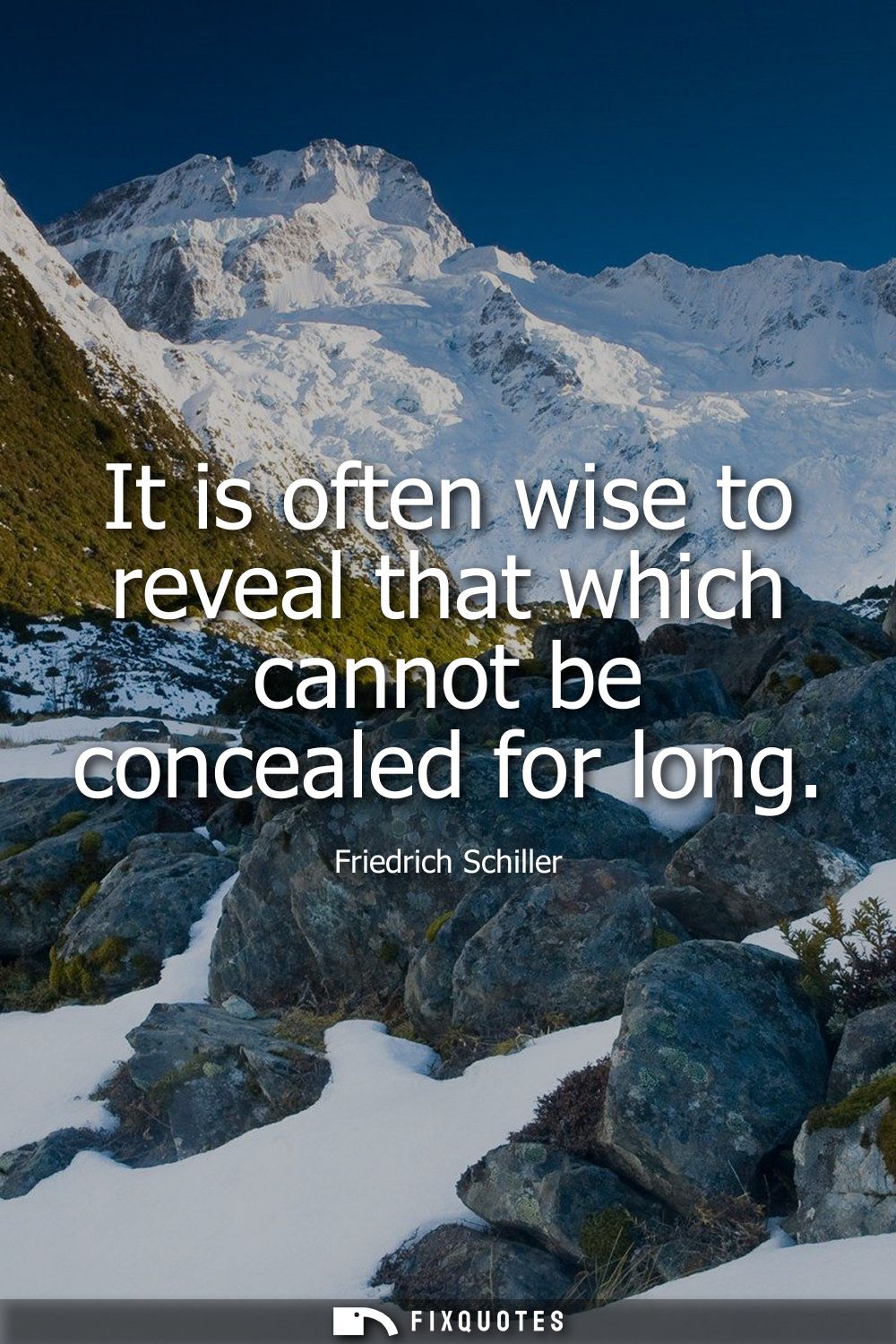
"It is often wise to reveal that which cannot be concealed for long"
About this Quote
Schiller’s line reads like stage direction for real life: if a secret has the lifespan of a prop, treat disclosure as strategy, not confession. “Often wise” is the key hedge. He’s not moralizing about honesty; he’s diagnosing the physics of concealment. Some facts - motives, betrayals, forbidden love, political rot - generate pressures that make silence unstable. In that world, revelation isn’t virtue. It’s timing.
The subtext is power. To reveal “that which cannot be concealed for long” is to seize authorship of the story before it’s ripped away by rumor, evidence, or an enemy’s well-placed whisper. You don’t just avoid being found out; you choose the frame, the language, the moment. It’s PR before the term existed, with the added theatrical insight that audiences hate feeling tricked. If the truth is coming anyway, better to deliver it with a controlled flourish than have it stumble out in an ugly, humiliating scramble.
Context matters: Schiller wrote dramas obsessed with freedom, legitimacy, and the collision between private conscience and public order. Courts and conspiracies run on withheld information, but his plots also expose how secrecy corrodes everyone it touches, including the person keeping it. The line implies an ethics of inevitability: when concealment is a losing game, the only dignity left is voluntary exposure. It’s less “be honest” than “don’t let the truth be your executioner.”
The subtext is power. To reveal “that which cannot be concealed for long” is to seize authorship of the story before it’s ripped away by rumor, evidence, or an enemy’s well-placed whisper. You don’t just avoid being found out; you choose the frame, the language, the moment. It’s PR before the term existed, with the added theatrical insight that audiences hate feeling tricked. If the truth is coming anyway, better to deliver it with a controlled flourish than have it stumble out in an ugly, humiliating scramble.
Context matters: Schiller wrote dramas obsessed with freedom, legitimacy, and the collision between private conscience and public order. Courts and conspiracies run on withheld information, but his plots also expose how secrecy corrodes everyone it touches, including the person keeping it. The line implies an ethics of inevitability: when concealment is a losing game, the only dignity left is voluntary exposure. It’s less “be honest” than “don’t let the truth be your executioner.”
Quote Details
| Topic | Truth |
|---|---|
| Source | Help us find the source |
| Cite |
Citation Formats
APA Style (7th ed.)
Schiller, Friedrich. (2026, January 17). It is often wise to reveal that which cannot be concealed for long. FixQuotes. https://fixquotes.com/quotes/it-is-often-wise-to-reveal-that-which-cannot-be-76422/
Chicago Style
Schiller, Friedrich. "It is often wise to reveal that which cannot be concealed for long." FixQuotes. January 17, 2026. https://fixquotes.com/quotes/it-is-often-wise-to-reveal-that-which-cannot-be-76422/.
MLA Style (9th ed.)
"It is often wise to reveal that which cannot be concealed for long." FixQuotes, 17 Jan. 2026, https://fixquotes.com/quotes/it-is-often-wise-to-reveal-that-which-cannot-be-76422/. Accessed 26 Mar. 2026.
More Quotes by Friedrich
Add to List