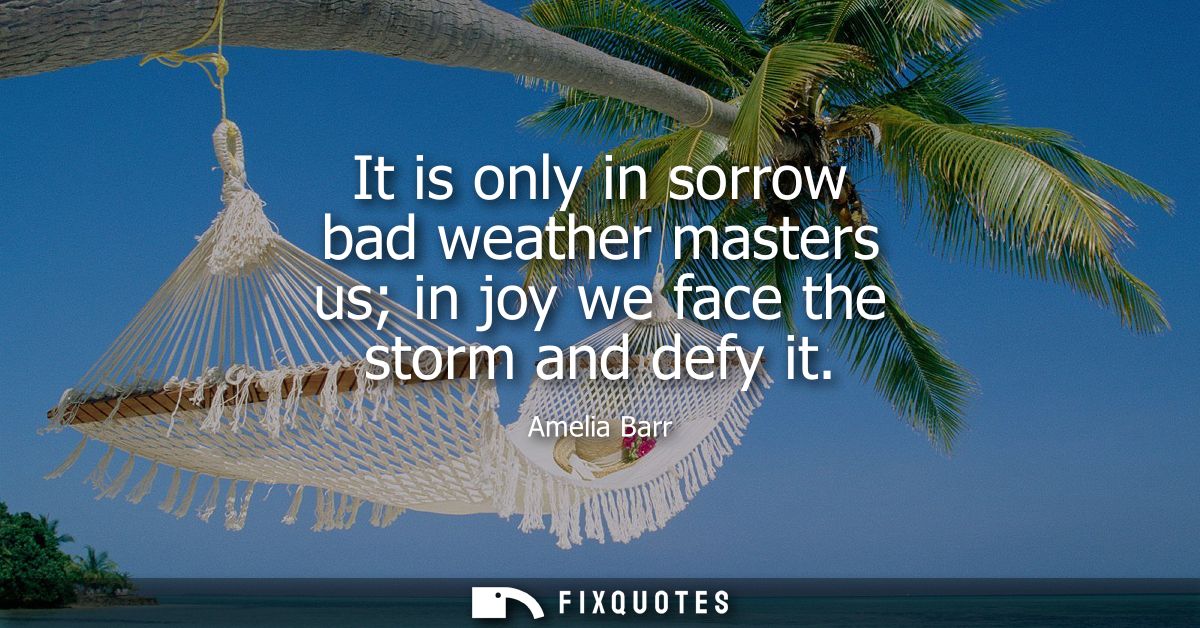
"It is only in sorrow bad weather masters us; in joy we face the storm and defy it"
About this Quote
Barr turns weather into a psychological litmus test, and the trick is how she flips the usual metaphor. Storms typically stand in for hardship; here, hardship is what lets the storm win. "Only in sorrow bad weather masters us" isn’t about umbrellas and barometers so much as permission: grief grants the world the right to feel hostile. The line makes sorrow a kind of surrender contract, where the external becomes an excuse for the internal. It’s a bracing, almost unsentimental take on mood, one that refuses to romanticize sadness as depth. Sorrow doesn’t ennoble; it immobilizes.
Then she snaps the phrase open with "in joy we face the storm and defy it". Joy isn’t portrayed as naive sunshine; it’s stamina. Barr’s verb choice matters: "face" implies confrontation, "defy" implies agency. Weather becomes an adversary you can meet head-on, not fate you simply endure. The subtext is moral and social: emotional posture is a form of character, and character is practiced. That’s very 19th-century in its faith in self-command, but it also reads like a novelist’s insight into narrative momentum. Sorrow makes you passive; joy turns you into the protagonist again.
Context helps. Barr, a prolific Victorian-era novelist who lived through dislocation and loss, writes from a culture that prized resilience and moral fortitude, especially in domestic life. The quote functions less like a comforting platitude than a corrective: don’t wait for conditions to improve before you live; cultivate the inner weather that keeps the outer from ruling you.
Then she snaps the phrase open with "in joy we face the storm and defy it". Joy isn’t portrayed as naive sunshine; it’s stamina. Barr’s verb choice matters: "face" implies confrontation, "defy" implies agency. Weather becomes an adversary you can meet head-on, not fate you simply endure. The subtext is moral and social: emotional posture is a form of character, and character is practiced. That’s very 19th-century in its faith in self-command, but it also reads like a novelist’s insight into narrative momentum. Sorrow makes you passive; joy turns you into the protagonist again.
Context helps. Barr, a prolific Victorian-era novelist who lived through dislocation and loss, writes from a culture that prized resilience and moral fortitude, especially in domestic life. The quote functions less like a comforting platitude than a corrective: don’t wait for conditions to improve before you live; cultivate the inner weather that keeps the outer from ruling you.
Quote Details
| Topic | Joy |
|---|---|
| Source | Help us find the source |
More Quotes by Amelia
Add to List