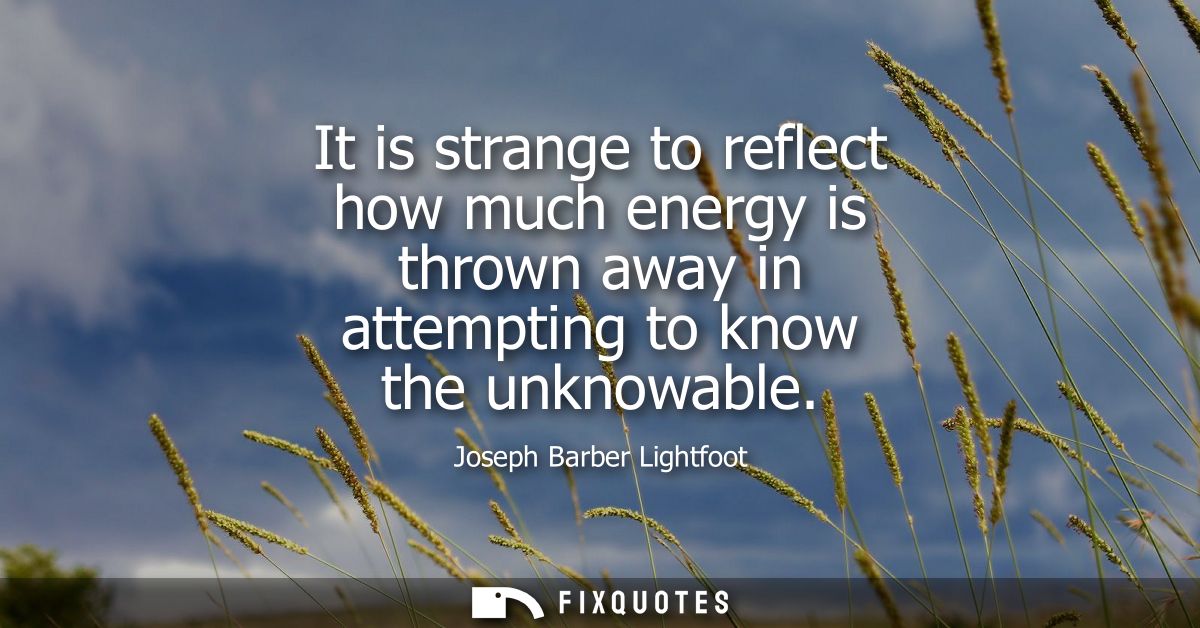
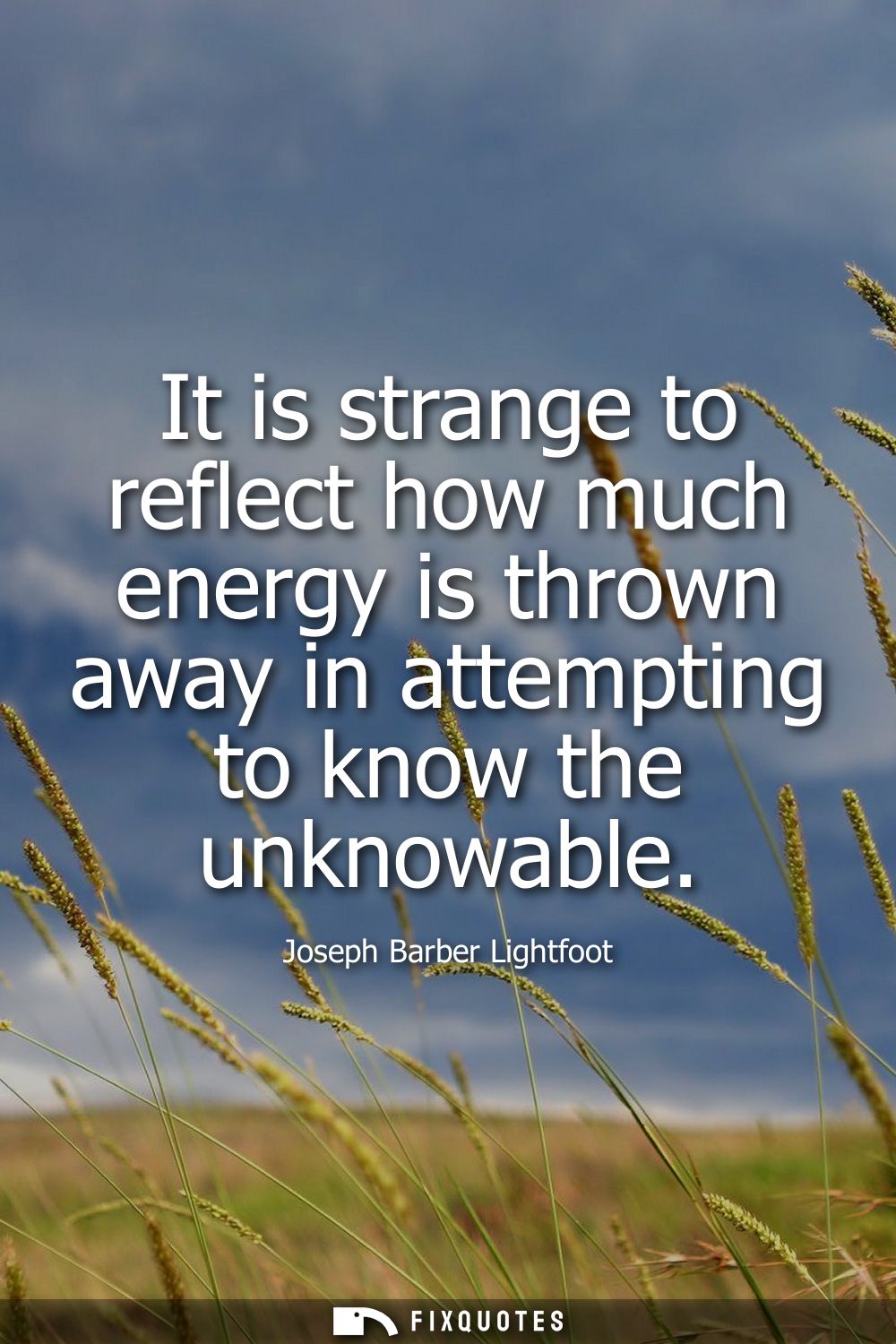
"It is strange to reflect how much energy is thrown away in attempting to know the unknowable"
About this Quote
As a theologian, Lightfoot isn’t scorning inquiry; he’s policing its borders. The sentence draws a hard line between mystery and solvable problem, and then critiques the modern impulse to treat everything as a problem. “Energy” is the key word: not curiosity, not wonder, but effort, investment, and strain. The subtext is pastoral as much as philosophical: people can exhaust their moral attention chasing metaphysical certainty, then have little left for compassion, discipline, or communal duty.
In 19th-century religious culture - shadowed by Darwin, higher criticism, and new historical methods applied to Scripture - the pressure to “know” the ultimate stuff (God’s mechanics, providence’s math, the afterlife’s architecture) was intense. Lightfoot’s line reads like a corrective to both anxious believers and swaggering rationalists. He implies that the most honest posture toward the divine is not conquest but proportion: know what can be known, hold the rest without panic, and stop mistaking obsession for seriousness.
Quote Details
| Topic | Wisdom |
|---|---|
| Source | Help us find the source |
| Cite |
Citation Formats
APA Style (7th ed.)
Lightfoot, Joseph Barber. (2026, January 18). It is strange to reflect how much energy is thrown away in attempting to know the unknowable. FixQuotes. https://fixquotes.com/quotes/it-is-strange-to-reflect-how-much-energy-is-21716/
Chicago Style
Lightfoot, Joseph Barber. "It is strange to reflect how much energy is thrown away in attempting to know the unknowable." FixQuotes. January 18, 2026. https://fixquotes.com/quotes/it-is-strange-to-reflect-how-much-energy-is-21716/.
MLA Style (9th ed.)
"It is strange to reflect how much energy is thrown away in attempting to know the unknowable." FixQuotes, 18 Jan. 2026, https://fixquotes.com/quotes/it-is-strange-to-reflect-how-much-energy-is-21716/. Accessed 12 Mar. 2026.