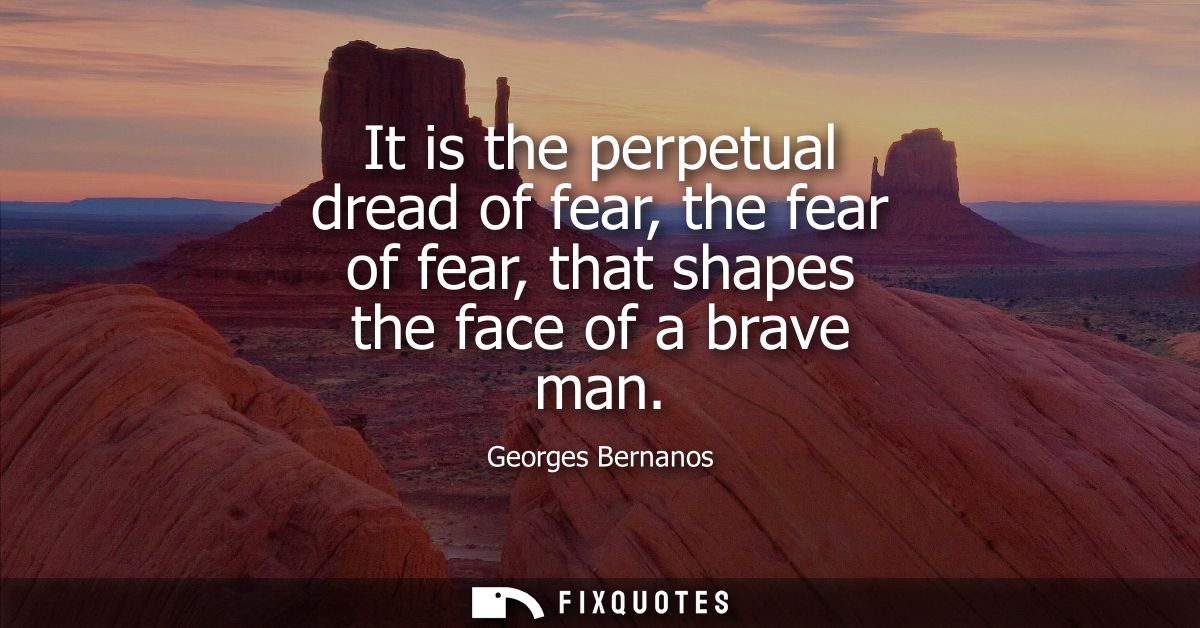
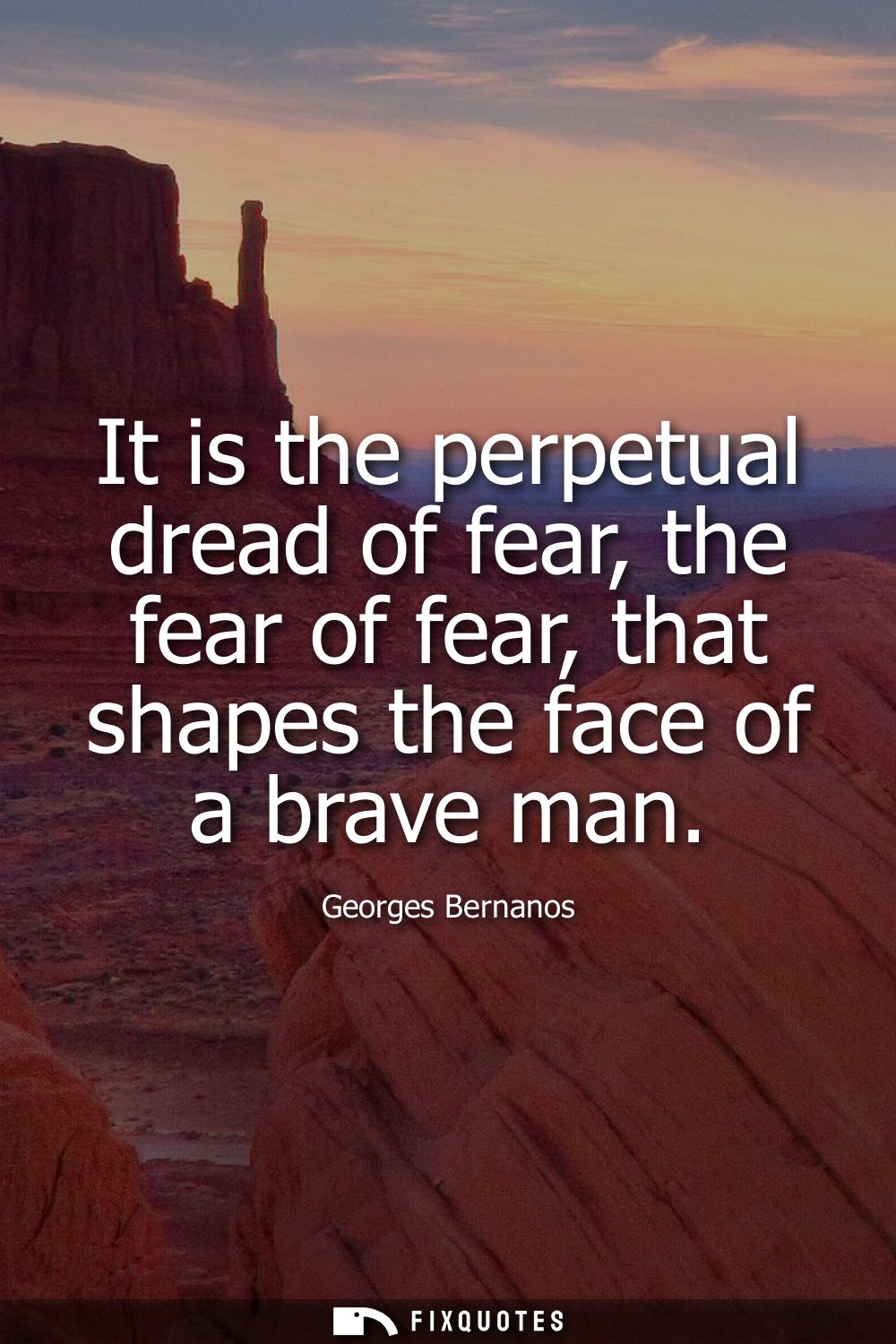
"It is the perpetual dread of fear, the fear of fear, that shapes the face of a brave man"
About this Quote
The intent is quietly accusatory toward the popular myth of the brave man as a granite statue. Bernanos writes as a Catholic novelist steeped in the moral injuries of the early 20th century (two world wars, political fanaticism, the machinery of propaganda). In that landscape, heroism is less a cinematic charge than a daily refusal to surrender your conscience. The subtext: bravery is expensive, and its price is paid in advance, in anticipation. “Perpetual dread” implies no clean victory over fear; there’s only endurance, and that endurance becomes visible.
It also smuggles in a critique of performative masculinity. The “brave man” isn’t defined by swagger but by the strain required to keep fear from governing him. His face is not a mask of confidence; it’s a record of restraint. Bernanos makes courage intimate, unglamorous, and therefore more believable.
Quote Details
| Topic | Fear |
|---|---|
| Source | Help us find the source |
| Cite |
Citation Formats
APA Style (7th ed.)
Bernanos, Georges. (2026, January 18). It is the perpetual dread of fear, the fear of fear, that shapes the face of a brave man. FixQuotes. https://fixquotes.com/quotes/it-is-the-perpetual-dread-of-fear-the-fear-of-8791/
Chicago Style
Bernanos, Georges. "It is the perpetual dread of fear, the fear of fear, that shapes the face of a brave man." FixQuotes. January 18, 2026. https://fixquotes.com/quotes/it-is-the-perpetual-dread-of-fear-the-fear-of-8791/.
MLA Style (9th ed.)
"It is the perpetual dread of fear, the fear of fear, that shapes the face of a brave man." FixQuotes, 18 Jan. 2026, https://fixquotes.com/quotes/it-is-the-perpetual-dread-of-fear-the-fear-of-8791/. Accessed 21 Mar. 2026.