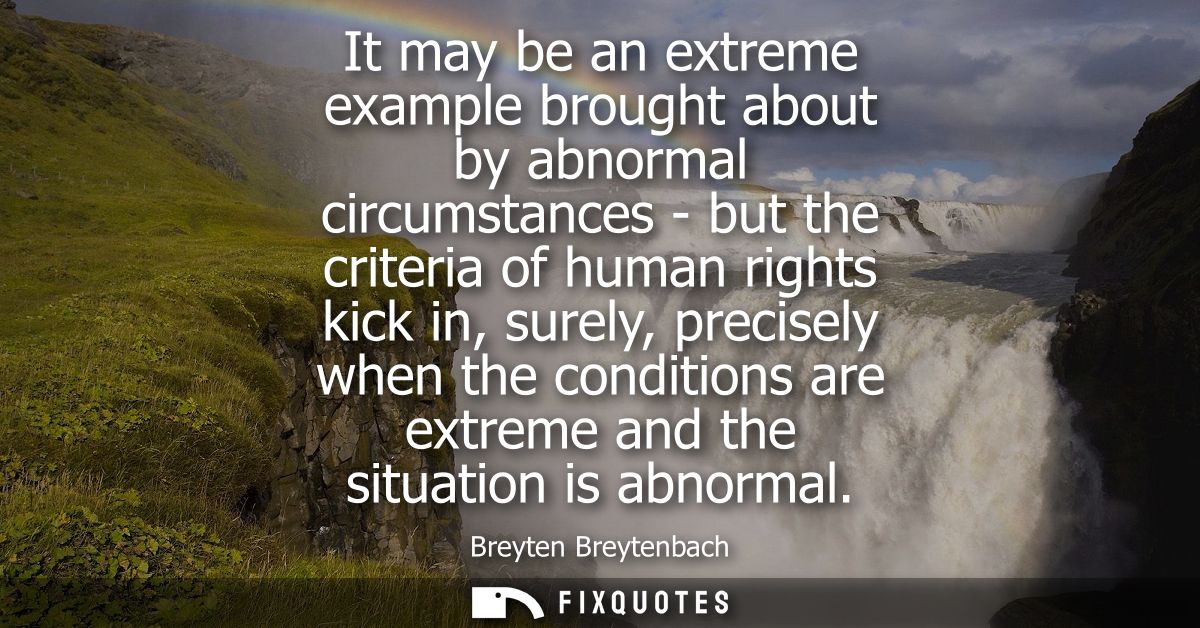
"It may be an extreme example brought about by abnormal circumstances - but the criteria of human rights kick in, surely, precisely when the conditions are extreme and the situation is abnormal"
About this Quote
The intent is accusatory but disciplined: it targets the bureaucratic language that sanitizes abuse (“abnormal circumstances,” “extreme example”) and uses that same diction to spring the trap. The quiet punch is “kick in,” a phrase drawn from mechanics and policy manuals, implying a system that is supposed to activate automatically. Breytenbach is asking why the machine keeps failing exactly when it’s needed most - and who benefits from calling the moment an exception.
Subtext: emergency is the favorite costume of power. Once the state (or any authority) labels a situation “extreme,” it claims permission to downgrade the person into a problem to be managed. Breytenbach insists on the reverse hierarchy: the more frightening the context, the more vigilant the moral standard, because fear is when communities are most willing to barter away other people’s dignity for a sensation of control.
Context matters because Breytenbach isn’t speaking abstractly. As a South African writer and anti-apartheid dissident who was imprisoned by the apartheid regime, he knew how “abnormal” gets manufactured and then used as a permanent alibi. The sentence reads like a rebuttal to every tribunal, memo, and press conference that ever tried to make cruelty sound like crisis management.
Quote Details
| Topic | Human Rights |
|---|---|
| Source | Help us find the source |
| Cite |
Citation Formats
APA Style (7th ed.)
Breytenbach, Breyten. (2026, January 17). It may be an extreme example brought about by abnormal circumstances - but the criteria of human rights kick in, surely, precisely when the conditions are extreme and the situation is abnormal. FixQuotes. https://fixquotes.com/quotes/it-may-be-an-extreme-example-brought-about-by-50155/
Chicago Style
Breytenbach, Breyten. "It may be an extreme example brought about by abnormal circumstances - but the criteria of human rights kick in, surely, precisely when the conditions are extreme and the situation is abnormal." FixQuotes. January 17, 2026. https://fixquotes.com/quotes/it-may-be-an-extreme-example-brought-about-by-50155/.
MLA Style (9th ed.)
"It may be an extreme example brought about by abnormal circumstances - but the criteria of human rights kick in, surely, precisely when the conditions are extreme and the situation is abnormal." FixQuotes, 17 Jan. 2026, https://fixquotes.com/quotes/it-may-be-an-extreme-example-brought-about-by-50155/. Accessed 12 Feb. 2026.