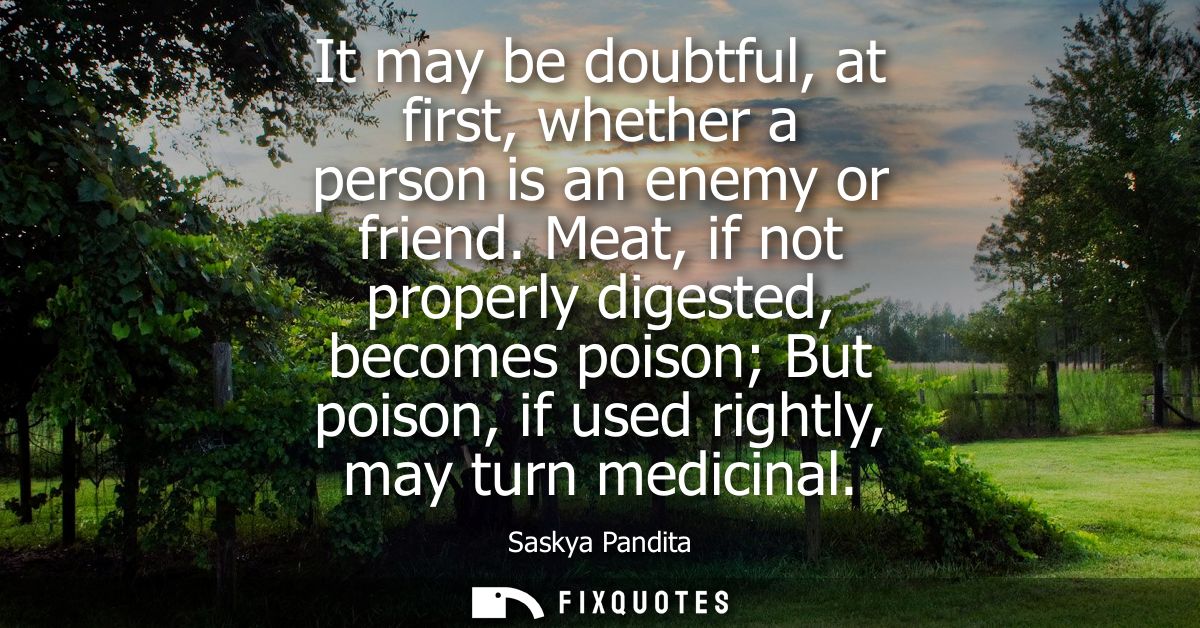
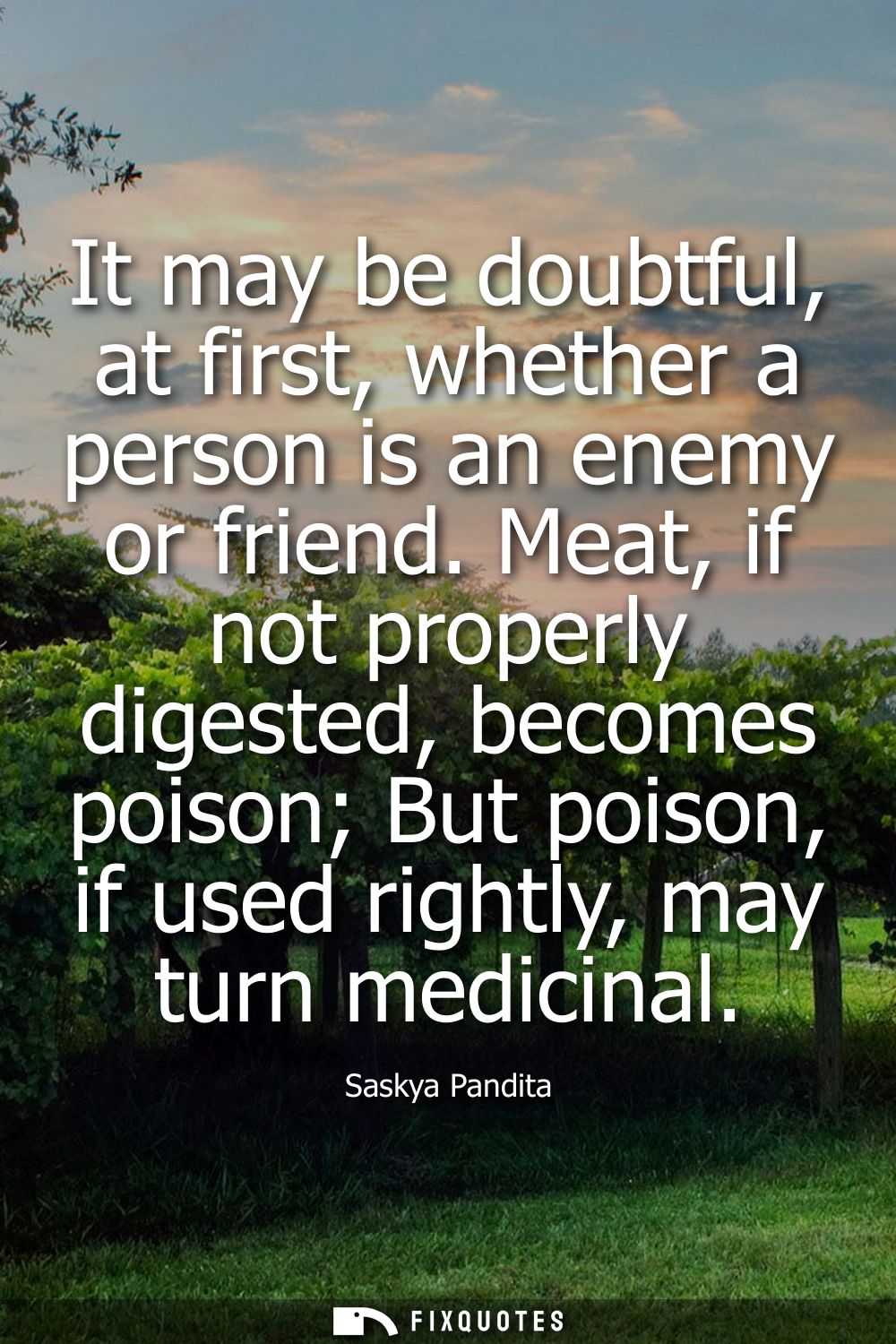
"It may be doubtful, at first, whether a person is an enemy or friend. Meat, if not properly digested, becomes poison; but poison, if used rightly, may turn medicinal"
About this Quote
The meat-and-poison pairing does more than offer a memorable analogy. Meat is normally nourishing, so its turning toxic highlights a moral and psychological truth: even “good” relationships and advice can rot if swallowed whole, rushed, or consumed without discernment. “Properly digested” implies discipline: patience, reflection, and ethical metabolism. It’s a leadership ethic disguised as a dietary tip.
The second turn is sharper. Poison is the archetypal threat, yet “used rightly” it becomes medicine. That’s a philosophy of transformation, central to many Buddhist traditions: affliction can be converted into insight; hostility can be worked into compassion or clear-eyed strategy. Subtext: don’t romanticize friends, don’t demonize enemies. Your task is to cultivate the skill that converts inputs - praise, betrayal, uncertainty - into something that heals rather than harms. In a leader’s mouth, it’s also political realism: danger doesn’t disappear; it’s managed, repurposed, sometimes even made useful.
Quote Details
| Topic | Wisdom |
|---|---|
| Source | Help us find the source |
| Cite |
Citation Formats
APA Style (7th ed.)
Pandita, Saskya. (2026, February 18). It may be doubtful, at first, whether a person is an enemy or friend. Meat, if not properly digested, becomes poison; but poison, if used rightly, may turn medicinal. FixQuotes. https://fixquotes.com/quotes/it-may-be-doubtful-at-first-whether-a-person-is-86209/
Chicago Style
Pandita, Saskya. "It may be doubtful, at first, whether a person is an enemy or friend. Meat, if not properly digested, becomes poison; but poison, if used rightly, may turn medicinal." FixQuotes. February 18, 2026. https://fixquotes.com/quotes/it-may-be-doubtful-at-first-whether-a-person-is-86209/.
MLA Style (9th ed.)
"It may be doubtful, at first, whether a person is an enemy or friend. Meat, if not properly digested, becomes poison; but poison, if used rightly, may turn medicinal." FixQuotes, 18 Feb. 2026, https://fixquotes.com/quotes/it-may-be-doubtful-at-first-whether-a-person-is-86209/. Accessed 28 Mar. 2026.