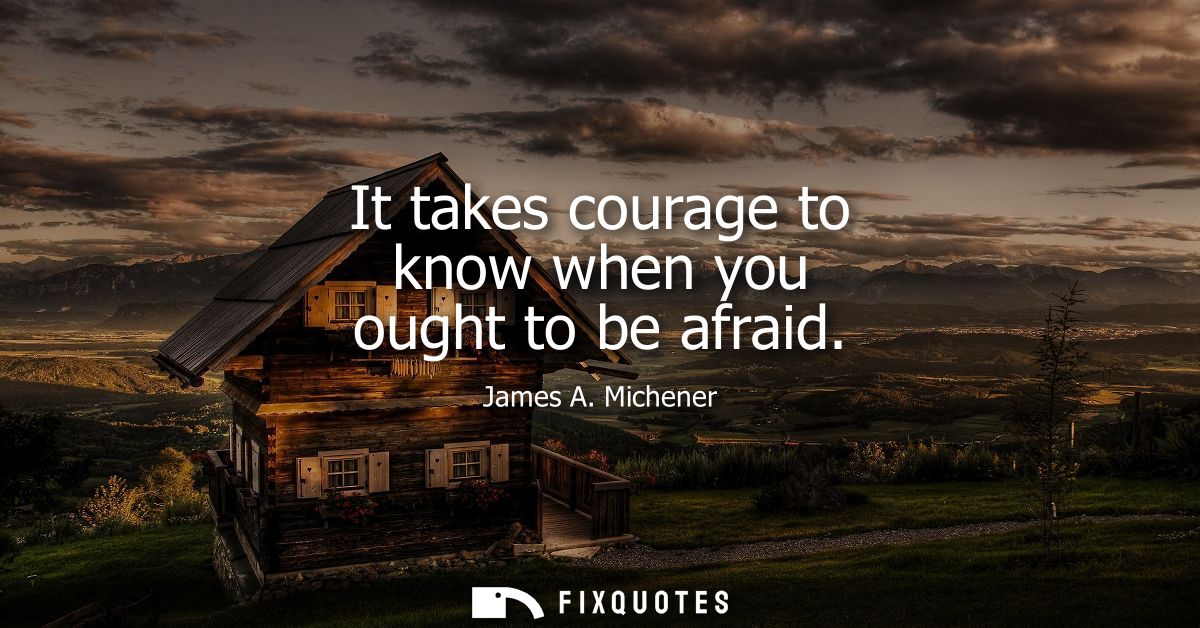
"It takes courage to know when you ought to be afraid"
About this Quote
Courage, in Michener's hands, isn't the Hollywood posture of charging ahead with a clenched jaw; it's the quieter, less flattering skill of recognizing fear as useful information. The line flips a common moral hierarchy. We like bravery because it flatters the ego and reads well in stories. Being afraid, by contrast, feels like failure. Michener argues the opposite: the brave act is often admitting that the situation actually warrants fear, and then letting that admission shape your choices.
The intent is corrective, almost stern. He's warning against the kind of "fearlessness" that is really vanity, denial, or social performance. "Know when you ought to be afraid" suggests discernment, not temperament: courage is cognitive before it's physical. The subtext is that people get hurt - and get others hurt - when they confuse panic with cowardice and numbness with strength. It takes backbone to say, "This is dangerous", especially in cultures (and workplaces, and relationships) that reward swagger and punish caution.
As a novelist who spent decades writing about war, exploration, and large systems grinding down individuals, Michener would have seen how often catastrophe begins with someone refusing to read the room: leaders gambling with lives, men mistaking risk for destiny, communities ignoring early warnings because they're inconvenient. The sentence lands because it's paradoxical and practical at once: it makes fear respectable, but only the honest kind, the kind that keeps you alive and keeps you accountable.
The intent is corrective, almost stern. He's warning against the kind of "fearlessness" that is really vanity, denial, or social performance. "Know when you ought to be afraid" suggests discernment, not temperament: courage is cognitive before it's physical. The subtext is that people get hurt - and get others hurt - when they confuse panic with cowardice and numbness with strength. It takes backbone to say, "This is dangerous", especially in cultures (and workplaces, and relationships) that reward swagger and punish caution.
As a novelist who spent decades writing about war, exploration, and large systems grinding down individuals, Michener would have seen how often catastrophe begins with someone refusing to read the room: leaders gambling with lives, men mistaking risk for destiny, communities ignoring early warnings because they're inconvenient. The sentence lands because it's paradoxical and practical at once: it makes fear respectable, but only the honest kind, the kind that keeps you alive and keeps you accountable.
Quote Details
| Topic | Wisdom |
|---|
More Quotes by James
Add to List