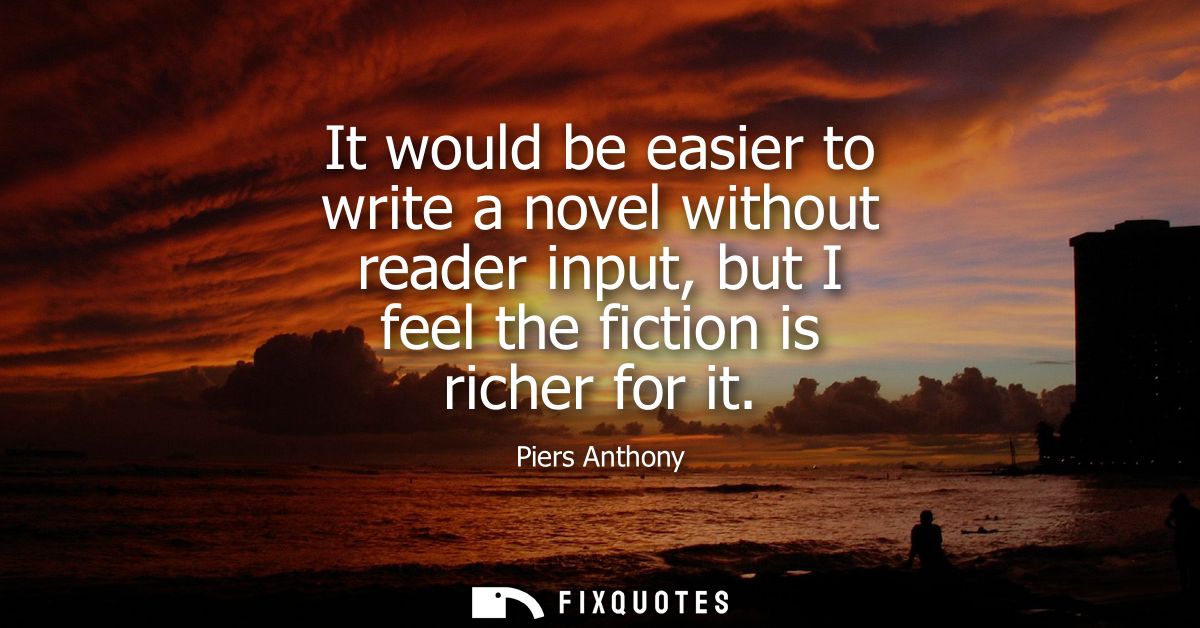
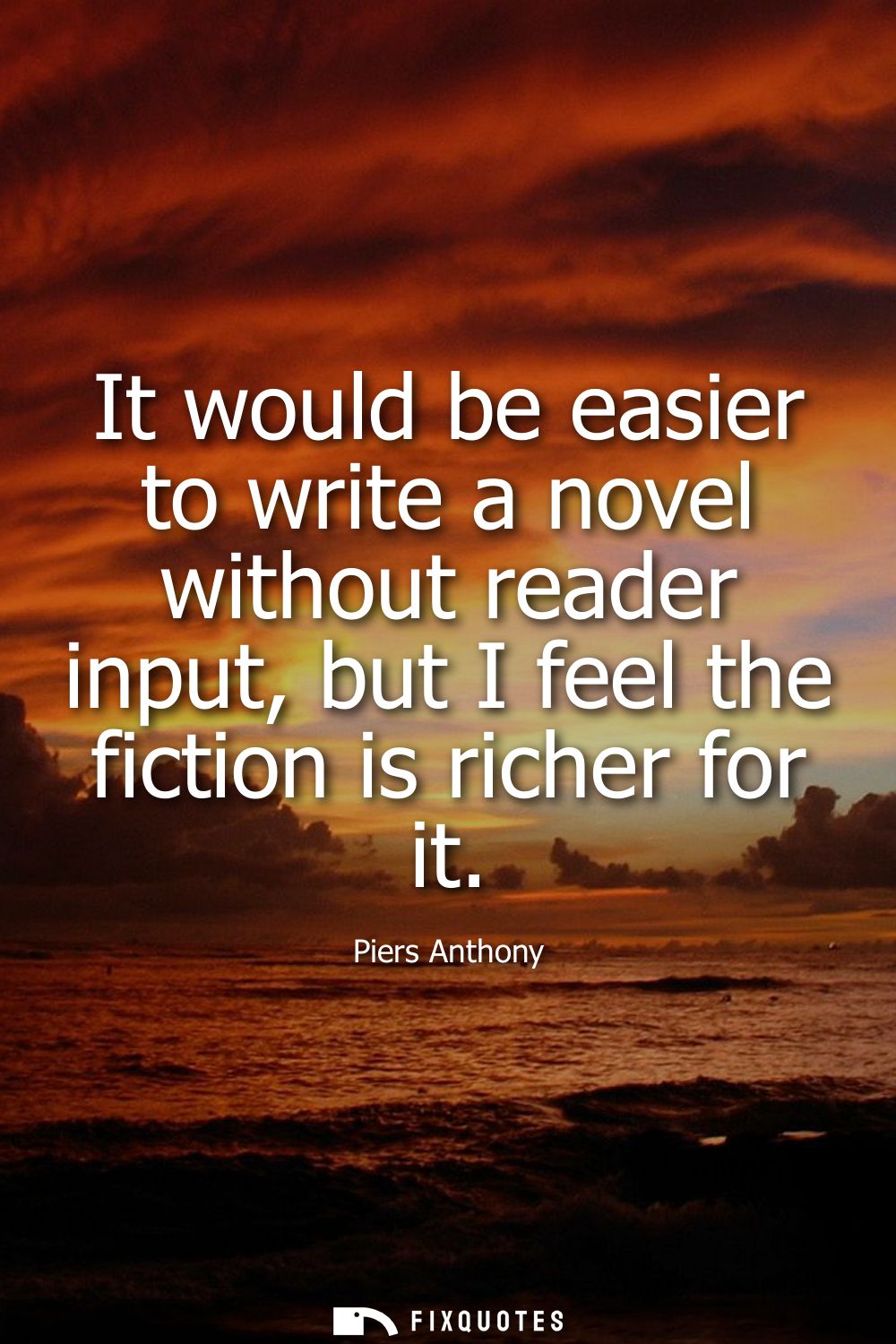
"It would be easier to write a novel without reader input, but I feel the fiction is richer for it"
About this Quote
The subtext is partly democratic and partly strategic. Anthony built a career in high-volume, high-concept genre fiction with an unusually direct relationship to fans. “Reader input” here suggests letters, feedback loops, expectations carried from one installment to the next - the informal editorial board of a fandom. He’s acknowledging that constraints created by an audience can function like formal constraints in art: they force invention. You can feel the writer telling on himself: left alone, he might indulge, meander, or repeat; with readers in the room, he has to sharpen plot, clarify stakes, and keep the imaginative promises he’s made.
Context matters because “input” is also a euphemism for market reality. Genre writers live closer to the visible pulse of readership than literary novelists who can pretend not to look at the comments. Anthony turns that proximity into a creative ethic. Instead of treating the audience as a contaminant, he treats it as compost: messy, alive, and capable of feeding better stories.
Quote Details
| Topic | Writing |
|---|---|
| Source | Help us find the source |
| Cite |
Citation Formats
APA Style (7th ed.)
Anthony, Piers. (2026, January 15). It would be easier to write a novel without reader input, but I feel the fiction is richer for it. FixQuotes. https://fixquotes.com/quotes/it-would-be-easier-to-write-a-novel-without-149900/
Chicago Style
Anthony, Piers. "It would be easier to write a novel without reader input, but I feel the fiction is richer for it." FixQuotes. January 15, 2026. https://fixquotes.com/quotes/it-would-be-easier-to-write-a-novel-without-149900/.
MLA Style (9th ed.)
"It would be easier to write a novel without reader input, but I feel the fiction is richer for it." FixQuotes, 15 Jan. 2026, https://fixquotes.com/quotes/it-would-be-easier-to-write-a-novel-without-149900/. Accessed 26 Mar. 2026.