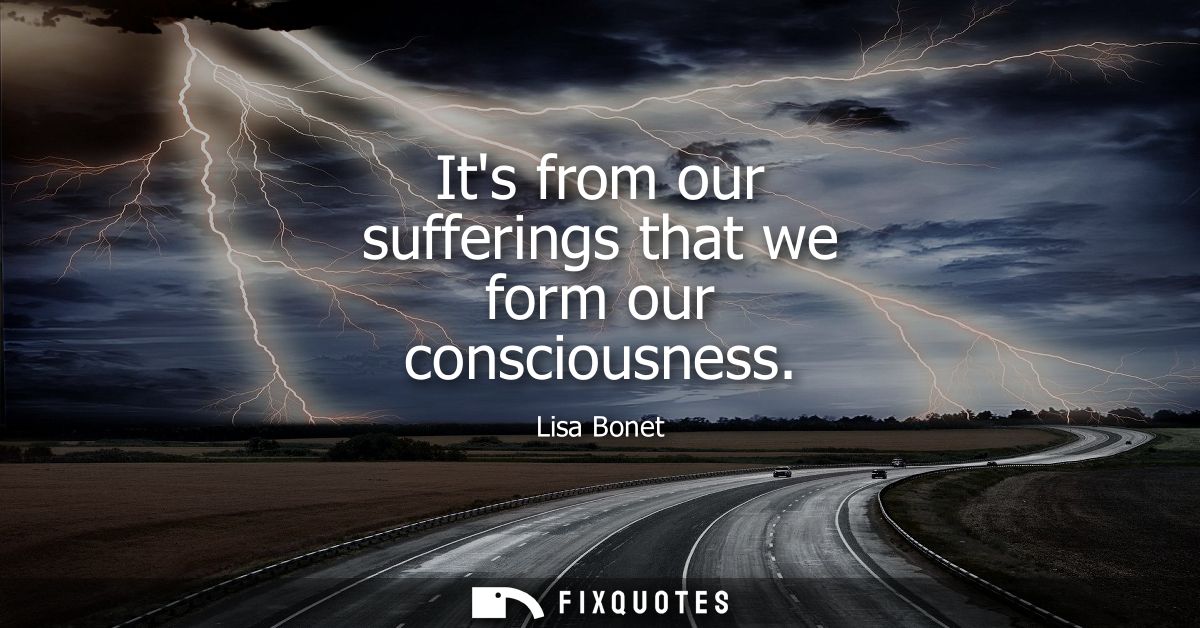
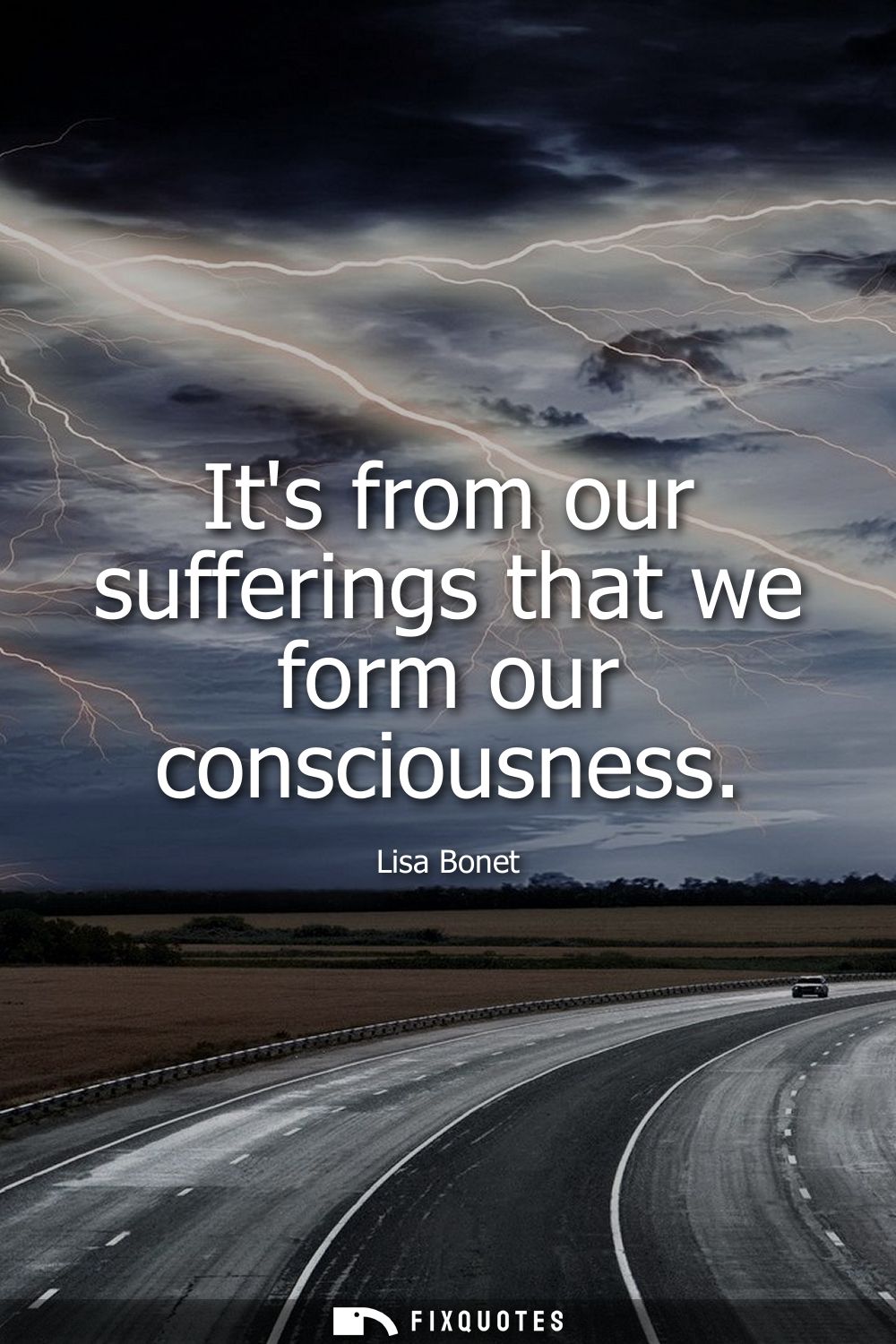
"It's from our sufferings that we form our consciousness"
About this Quote
Bonet’s line lands like a quiet corrective to the glossy self-help idea that consciousness arrives through “finding yourself.” She frames awareness as something earned under pressure: pain isn’t a detour from growth, it’s the furnace that forges it. Coming from an actress whose public life has been shaped by scrutiny, misreadings, and the particular policing of Black women’s image in American pop culture, the sentence carries an autobiographical hum even when it’s phrased as a general truth.
The intent is less to romanticize suffering than to insist on its cognitive aftermath. “Form” does a lot of work here: consciousness isn’t revealed, it’s built, assembled from fragments of what hurt and what survived. The subtext pushes back against a culture that treats discomfort as a glitch to be optimized away. Bonet implies that pain is data. It teaches you where power sits, what you’ll tolerate, which stories you’ve been handed, and which ones you refuse. That’s an argument for agency, not victimhood: suffering becomes a teacher only when it’s metabolized into perception.
The phrasing is spare, almost devotional, which helps it travel. No villain is named, no trauma is itemized; that restraint invites listeners to map their own history onto it. In a moment when “being conscious” is also political language - about race, gender, and who gets to be believed - the quote reads as both personal credo and cultural critique: wakefulness has a cost, and someone always pays it.
The intent is less to romanticize suffering than to insist on its cognitive aftermath. “Form” does a lot of work here: consciousness isn’t revealed, it’s built, assembled from fragments of what hurt and what survived. The subtext pushes back against a culture that treats discomfort as a glitch to be optimized away. Bonet implies that pain is data. It teaches you where power sits, what you’ll tolerate, which stories you’ve been handed, and which ones you refuse. That’s an argument for agency, not victimhood: suffering becomes a teacher only when it’s metabolized into perception.
The phrasing is spare, almost devotional, which helps it travel. No villain is named, no trauma is itemized; that restraint invites listeners to map their own history onto it. In a moment when “being conscious” is also political language - about race, gender, and who gets to be believed - the quote reads as both personal credo and cultural critique: wakefulness has a cost, and someone always pays it.
Quote Details
| Topic | Wisdom |
|---|---|
| Source | Help us find the source |
| Cite |
Citation Formats
APA Style (7th ed.)
Bonet, Lisa. (2026, January 16). It's from our sufferings that we form our consciousness. FixQuotes. https://fixquotes.com/quotes/its-from-our-sufferings-that-we-form-our-131274/
Chicago Style
Bonet, Lisa. "It's from our sufferings that we form our consciousness." FixQuotes. January 16, 2026. https://fixquotes.com/quotes/its-from-our-sufferings-that-we-form-our-131274/.
MLA Style (9th ed.)
"It's from our sufferings that we form our consciousness." FixQuotes, 16 Jan. 2026, https://fixquotes.com/quotes/its-from-our-sufferings-that-we-form-our-131274/. Accessed 14 Mar. 2026.
More Quotes by Lisa
Add to List