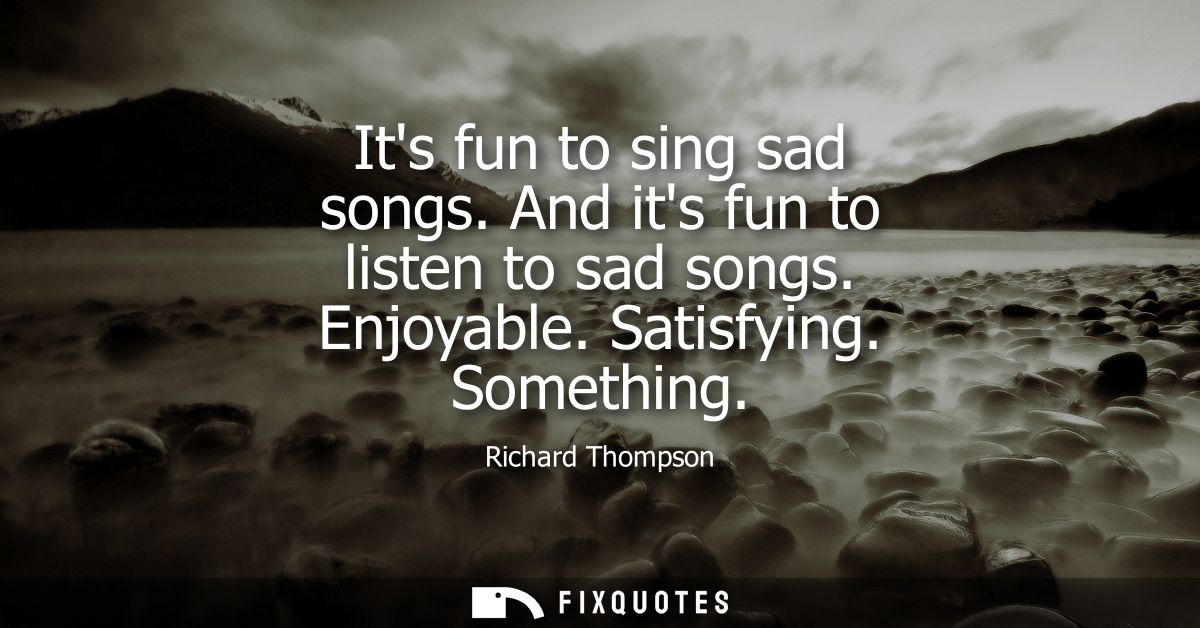
"It's fun to sing sad songs. And it's fun to listen to sad songs. Enjoyable. Satisfying. Something"
About this Quote
Thompson’s intent feels practical, almost craftsmanlike. “Sad songs” are a tool that works. They give shape to feelings that, in ordinary life, are messy and embarrassing and poorly timed. Put them in a verse-chorus structure and the emotion becomes manageable. You can rehearse grief without the consequences. You can borrow heartbreak for three minutes, then hand it back when the track ends.
The subtext is that music converts pain into a controlled environment: predictable chord changes, a voice you trust, a catharsis that doesn’t demand confession. “Something” is the tell. He can’t quite name the chemical reaction - the way melancholy, when aestheticized, turns into companionship, even relief. That last vague word also refuses the therapist’s neat explanation. He’s not selling “healing.” He’s admitting to an itch we scratch with art: the satisfaction of feeling deeply while staying safe, together, in tune.
Quote Details
| Topic | Music |
|---|---|
| Source | Help us find the source |
| Cite |
Citation Formats
APA Style (7th ed.)
Thompson, Richard. (2026, January 17). It's fun to sing sad songs. And it's fun to listen to sad songs. Enjoyable. Satisfying. Something. FixQuotes. https://fixquotes.com/quotes/its-fun-to-sing-sad-songs-and-its-fun-to-listen-75313/
Chicago Style
Thompson, Richard. "It's fun to sing sad songs. And it's fun to listen to sad songs. Enjoyable. Satisfying. Something." FixQuotes. January 17, 2026. https://fixquotes.com/quotes/its-fun-to-sing-sad-songs-and-its-fun-to-listen-75313/.
MLA Style (9th ed.)
"It's fun to sing sad songs. And it's fun to listen to sad songs. Enjoyable. Satisfying. Something." FixQuotes, 17 Jan. 2026, https://fixquotes.com/quotes/its-fun-to-sing-sad-songs-and-its-fun-to-listen-75313/. Accessed 14 Mar. 2026.