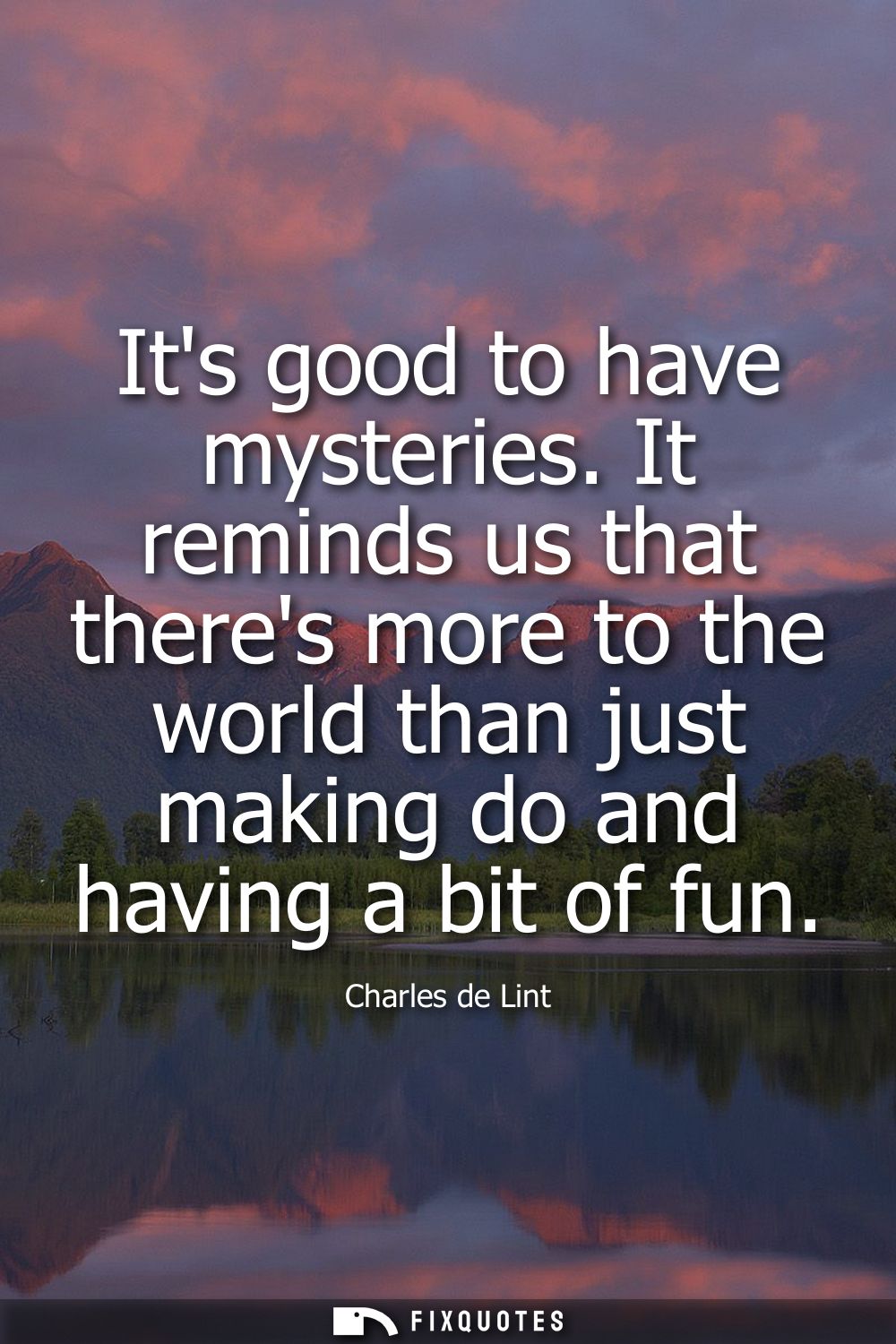
"It's good to have mysteries. It reminds us that there's more to the world than just making do and having a bit of fun"
About this Quote
That’s classic de Lint territory. As a writer associated with urban fantasy, he’s spent decades threading the uncanny through ordinary streets, suggesting that enchantment isn’t elsewhere - it’s adjacent, available if you’re willing to notice. The intent isn’t escapist; it’s corrective. “It reminds us” implies we forget. The forgetting is the point: adulthood as a slow narrowing, where practicality becomes a creed and pleasure becomes a pressure valve.
The subtext has a quiet moral bite. A culture that prides itself on being “realistic” often ends up being incurious, even spiritually malnourished. Mystery reintroduces humility - the admission that the world exceeds our categories - and with that comes meaning that can’t be purchased or scheduled. De Lint’s sentence doesn’t demand belief in fairies; it asks for something tougher: the willingness to live without total control, and to let wonder complicate the day’s tidy story about what matters.
Quote Details
| Topic | Meaning of Life |
|---|---|
| Source | Help us find the source |
| Cite |
Citation Formats
APA Style (7th ed.)
Lint, Charles de. (2026, January 17). It's good to have mysteries. It reminds us that there's more to the world than just making do and having a bit of fun. FixQuotes. https://fixquotes.com/quotes/its-good-to-have-mysteries-it-reminds-us-that-45816/
Chicago Style
Lint, Charles de. "It's good to have mysteries. It reminds us that there's more to the world than just making do and having a bit of fun." FixQuotes. January 17, 2026. https://fixquotes.com/quotes/its-good-to-have-mysteries-it-reminds-us-that-45816/.
MLA Style (9th ed.)
"It's good to have mysteries. It reminds us that there's more to the world than just making do and having a bit of fun." FixQuotes, 17 Jan. 2026, https://fixquotes.com/quotes/its-good-to-have-mysteries-it-reminds-us-that-45816/. Accessed 9 Mar. 2026.