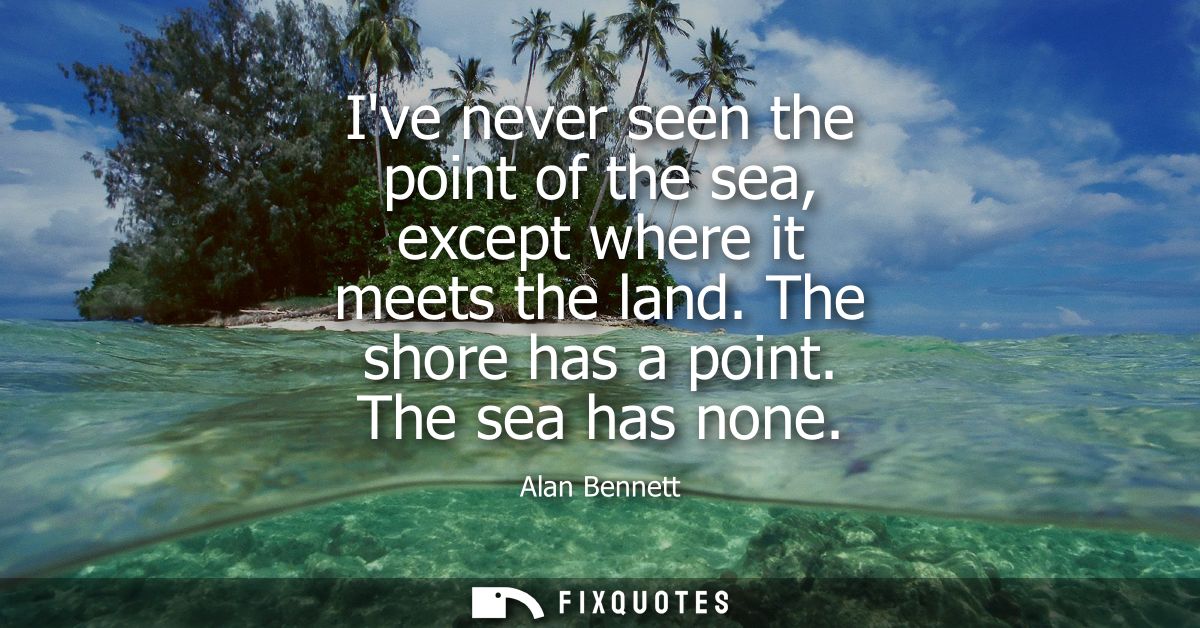
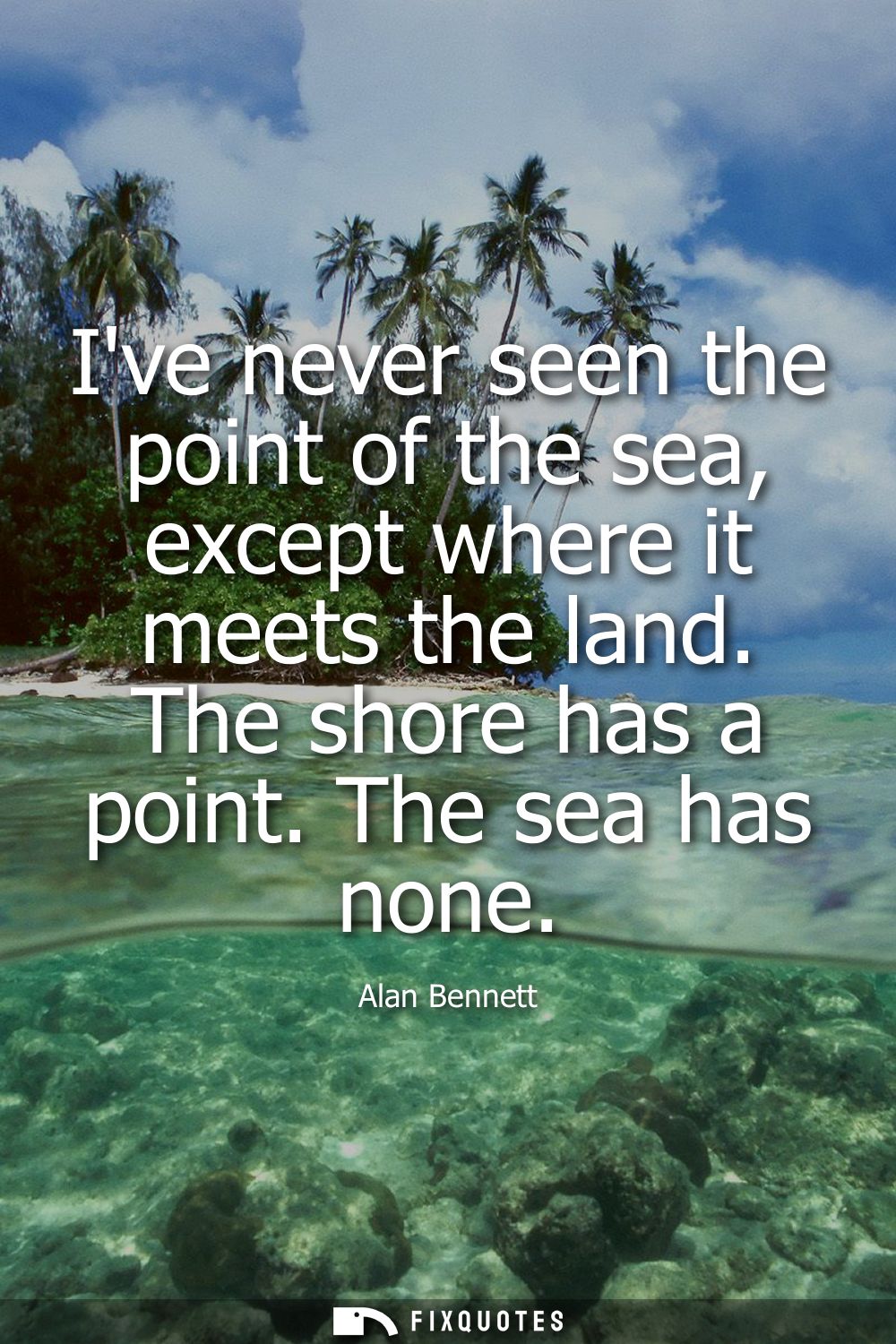
"I've never seen the point of the sea, except where it meets the land. The shore has a point. The sea has none"
About this Quote
The shore, by contrast, is where things happen. It's a border, a meeting, a negotiated settlement between two incompatible elements. "Point" is doing double duty: the shore has a purpose (a destination, a use) and it has literal points (jetties, promontories), places you can stand and orient yourself. The sea "has none" because it can't be possessed, marked, or domesticated in the same way. Bennett isn't just being unimpressed; he's sketching a temperament: skeptical of grand, undifferentiated experiences and more interested in the specific, the habitable, the observed.
As a dramatist, Bennett's bias toward the shoreline makes formal sense. Drama thrives on thresholds: doors, stations, hospital wards, front gardens - spaces where private lives brush against public forces. The sea is too pure, too endless, too resistant to narrative punctuation. The shore offers conflict and consequence: arrivals and departures, erosion and return, the romance of the horizon with the practicality of footing.
Under the dry wit sits an English cultural reflex, too: a wariness of spectacle and a preference for places that come with manners, limits, and a good view of what's approaching.
Quote Details
| Topic | Witty One-Liners |
|---|---|
| Source | Help us find the source |
| Cite |
Citation Formats
APA Style (7th ed.)
Bennett, Alan. (2026, January 15). I've never seen the point of the sea, except where it meets the land. The shore has a point. The sea has none. FixQuotes. https://fixquotes.com/quotes/ive-never-seen-the-point-of-the-sea-except-where-27660/
Chicago Style
Bennett, Alan. "I've never seen the point of the sea, except where it meets the land. The shore has a point. The sea has none." FixQuotes. January 15, 2026. https://fixquotes.com/quotes/ive-never-seen-the-point-of-the-sea-except-where-27660/.
MLA Style (9th ed.)
"I've never seen the point of the sea, except where it meets the land. The shore has a point. The sea has none." FixQuotes, 15 Jan. 2026, https://fixquotes.com/quotes/ive-never-seen-the-point-of-the-sea-except-where-27660/. Accessed 27 Mar. 2026.