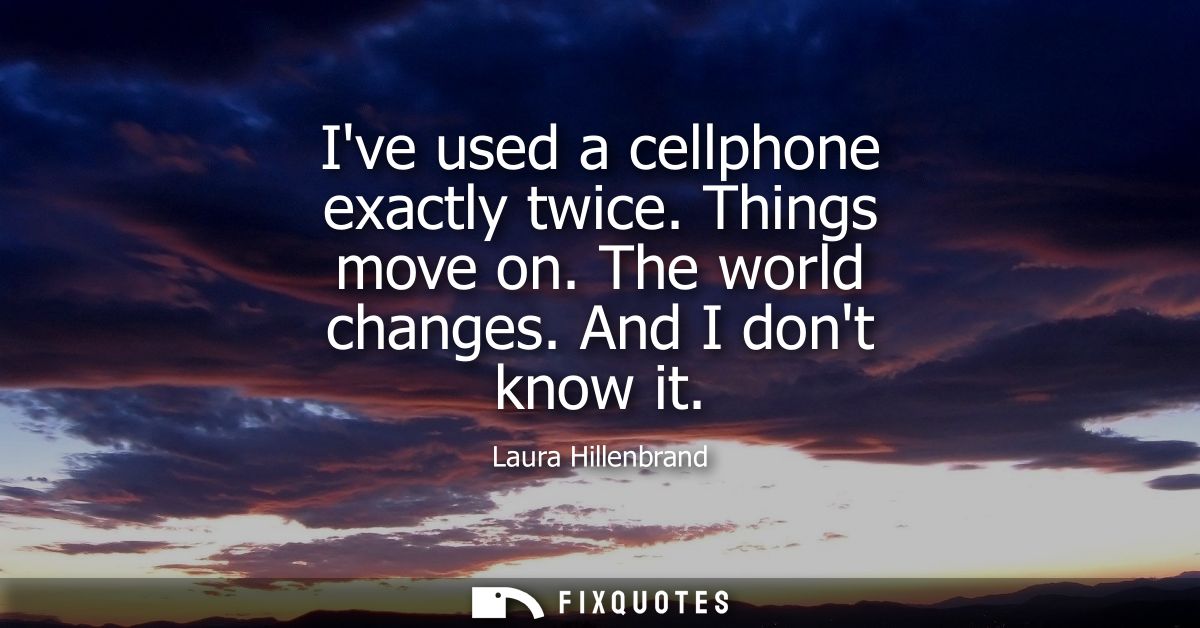
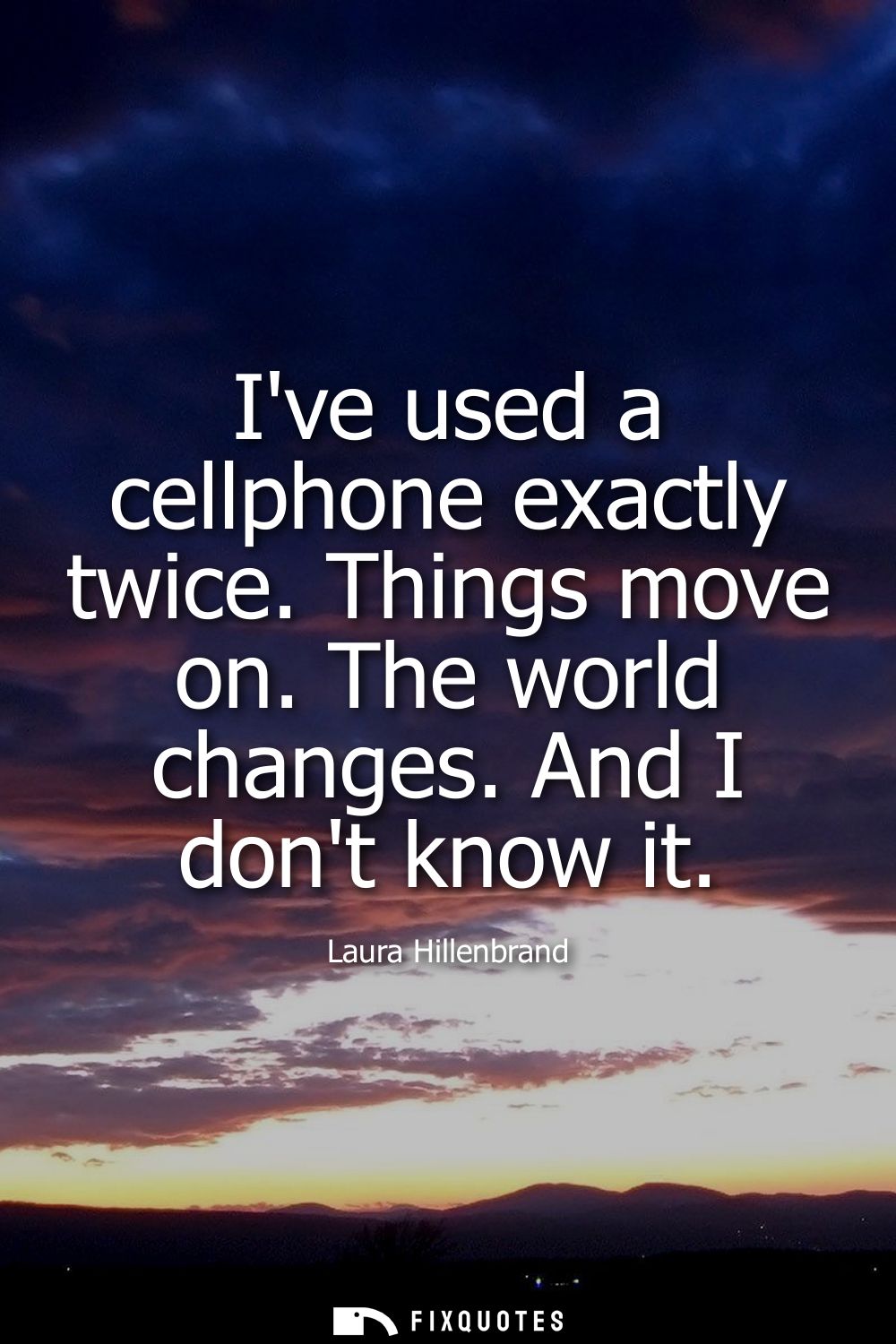
"I've used a cellphone exactly twice. Things move on. The world changes. And I don't know it"
About this Quote
The rhythm is the trick. “I’ve used a cellphone exactly twice” is comic in its specificity, a deadpan statistic that sounds like a punchline. Then she widens the lens: “Things move on. The world changes.” Those short clauses mimic the blunt inevitability of progress, like the ticking of a clock you can’t argue with. The final sentence, “And I don’t know it,” is where the emotional voltage hides. It’s not “I don’t like it” or “I refuse it,” but “I don’t know it” - a statement about access, energy, and participation. It suggests a life lived partly outside the feedback loop of constant updates and constant reachability.
In context, Hillenbrand has been open about chronic illness and a working life built on intense focus, research, and solitude. Read that way, the quote becomes less about technophobia and more about the cost of contemporary belonging: to keep up is to submit to a world that never stops asking for your attention.
Quote Details
| Topic | Change |
|---|---|
| Source | Help us find the source |
| Cite |
Citation Formats
APA Style (7th ed.)
Hillenbrand, Laura. (2026, January 16). I've used a cellphone exactly twice. Things move on. The world changes. And I don't know it. FixQuotes. https://fixquotes.com/quotes/ive-used-a-cellphone-exactly-twice-things-move-on-114708/
Chicago Style
Hillenbrand, Laura. "I've used a cellphone exactly twice. Things move on. The world changes. And I don't know it." FixQuotes. January 16, 2026. https://fixquotes.com/quotes/ive-used-a-cellphone-exactly-twice-things-move-on-114708/.
MLA Style (9th ed.)
"I've used a cellphone exactly twice. Things move on. The world changes. And I don't know it." FixQuotes, 16 Jan. 2026, https://fixquotes.com/quotes/ive-used-a-cellphone-exactly-twice-things-move-on-114708/. Accessed 13 Feb. 2026.