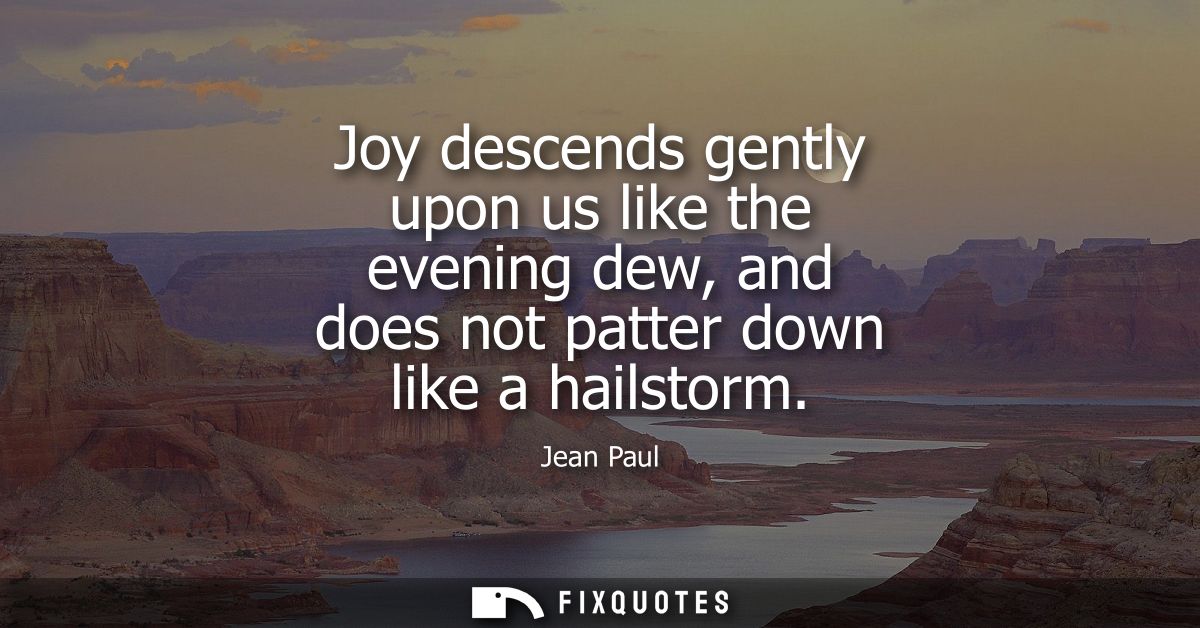
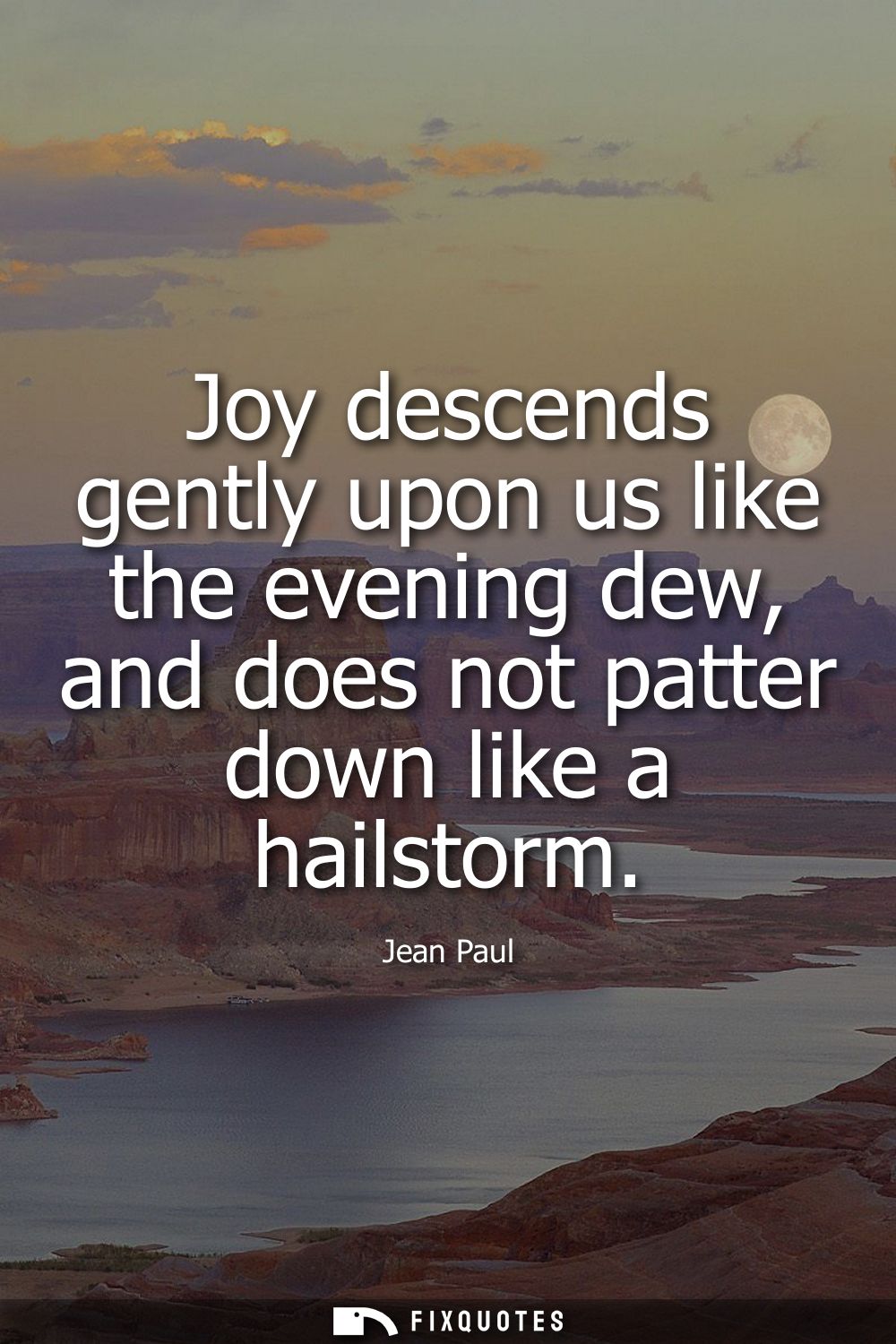
"Joy descends gently upon us like the evening dew, and does not patter down like a hailstorm"
About this Quote
The intent is corrective. Jean Paul is drawing a boundary between joy and excitement, between nourishment and stimulation. Hail is loud, dramatic, and destructive; it demands attention and leaves damage in its wake. Dew is modest but sustaining, the kind of moisture that keeps things alive. The subtext is almost anti-theatrical: if you need your happiness to arrive like a crisis, you’re confusing intensity with wellbeing.
Context matters. Writing in the late 18th and early 19th centuries, Jean Paul sits in the thick of German Romanticism, where inner life is expansive and nature is a serious vocabulary for the psyche. The image flatters a certain bourgeois domestic spirituality: real contentment is incremental, intimate, and often private. It’s also a warning against mistaking the violent rush of sensation for the steadier, harder-to-post emotion that actually lasts.
Quote Details
| Topic | Joy |
|---|---|
| Source | Help us find the source |
| Cite |
Citation Formats
APA Style (7th ed.)
Paul, Jean. (2026, January 14). Joy descends gently upon us like the evening dew, and does not patter down like a hailstorm. FixQuotes. https://fixquotes.com/quotes/joy-descends-gently-upon-us-like-the-evening-dew-142892/
Chicago Style
Paul, Jean. "Joy descends gently upon us like the evening dew, and does not patter down like a hailstorm." FixQuotes. January 14, 2026. https://fixquotes.com/quotes/joy-descends-gently-upon-us-like-the-evening-dew-142892/.
MLA Style (9th ed.)
"Joy descends gently upon us like the evening dew, and does not patter down like a hailstorm." FixQuotes, 14 Jan. 2026, https://fixquotes.com/quotes/joy-descends-gently-upon-us-like-the-evening-dew-142892/. Accessed 13 Feb. 2026.