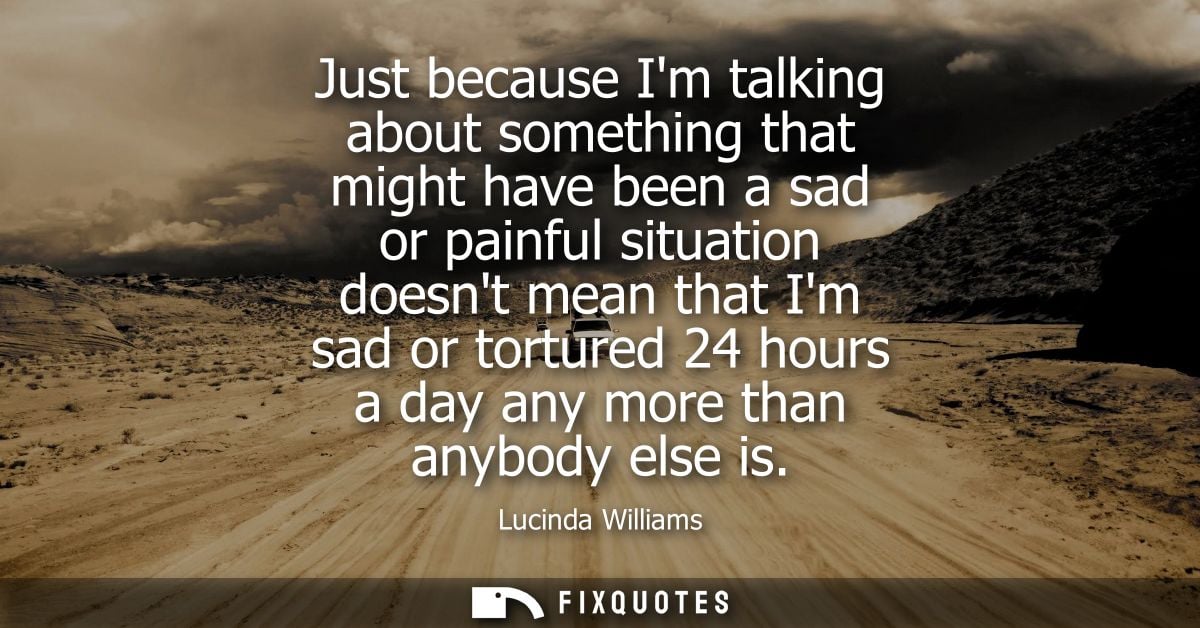
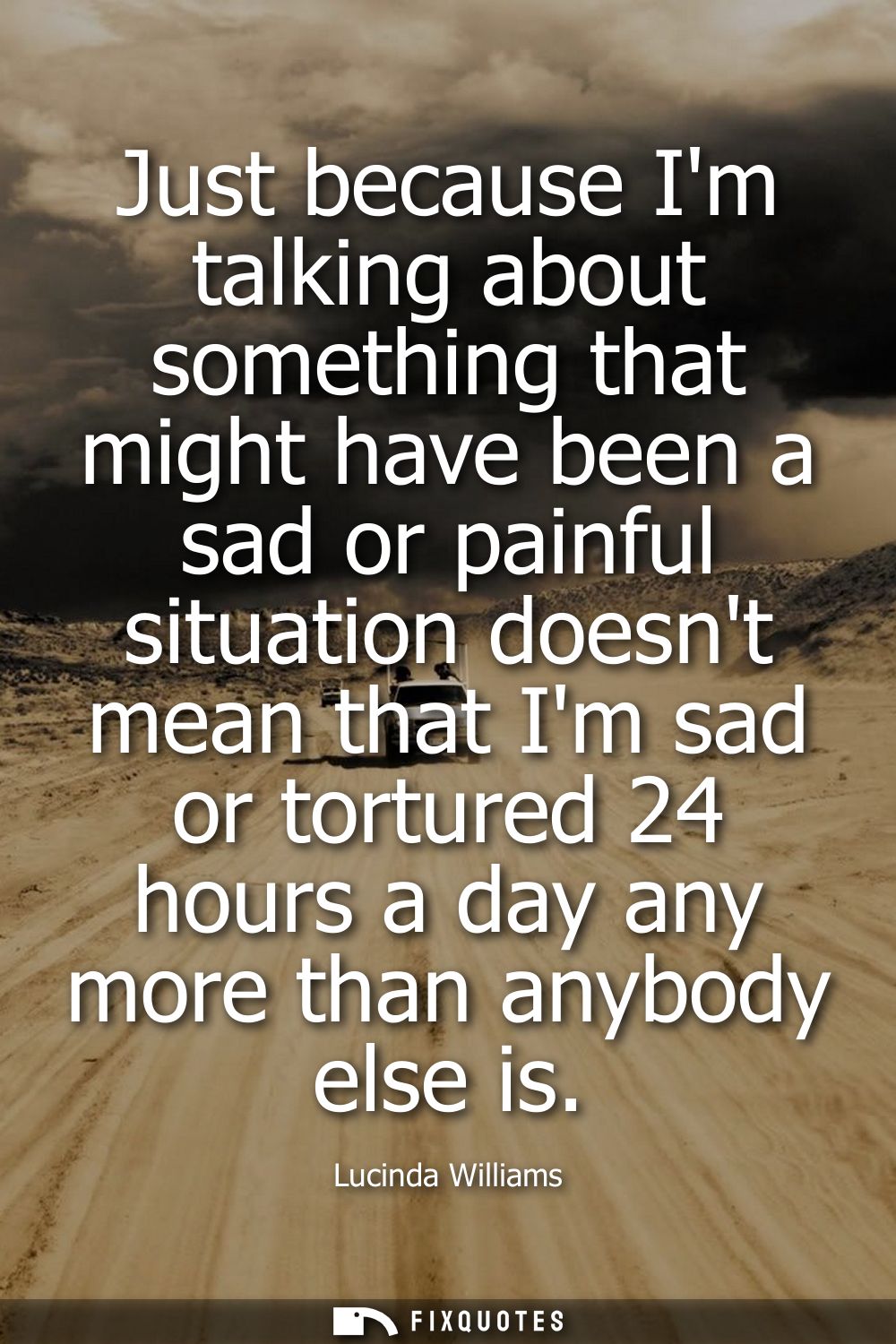
"Just because I'm talking about something that might have been a sad or painful situation doesn't mean that I'm sad or tortured 24 hours a day, any more than anybody else is"
About this Quote
The intent is pragmatic: stop reading the stage persona as a medical chart. Williams has long worked in the emotional grain of heartbreak, regret, and hard-won tenderness; listeners and interviewers often treat that as evidence she must be perpetually wrecked. The subtext is a rebuke to an industry that markets “authenticity” as perpetual bleeding, where the artist is rewarded for staying open-wounded. She’s saying: I can write from a scar without reopening it on demand.
Context matters because Americana and roots music fetishize “realness” more than most genres. The sadness is supposed to be proof, the cracked voice a credential. Williams flips that logic: art isn’t a surveillance feed of someone’s mental state; it’s selective, shaped, performed. The line also sneaks in a democratizing shrug - “any more than anybody else is” - reminding us the audience has pain too, just less monetized. The result is grounded, slightly defiant, and quietly feminist: a woman refusing to be packaged as damage so her work can be taken seriously.
Quote Details
| Topic | Sadness |
|---|---|
| Source | Help us find the source |
| Cite |
Citation Formats
APA Style (7th ed.)
Williams, Lucinda. (2026, February 18). Just because I'm talking about something that might have been a sad or painful situation doesn't mean that I'm sad or tortured 24 hours a day, any more than anybody else is. FixQuotes. https://fixquotes.com/quotes/just-because-im-talking-about-something-that-76008/
Chicago Style
Williams, Lucinda. "Just because I'm talking about something that might have been a sad or painful situation doesn't mean that I'm sad or tortured 24 hours a day, any more than anybody else is." FixQuotes. February 18, 2026. https://fixquotes.com/quotes/just-because-im-talking-about-something-that-76008/.
MLA Style (9th ed.)
"Just because I'm talking about something that might have been a sad or painful situation doesn't mean that I'm sad or tortured 24 hours a day, any more than anybody else is." FixQuotes, 18 Feb. 2026, https://fixquotes.com/quotes/just-because-im-talking-about-something-that-76008/. Accessed 27 Mar. 2026.