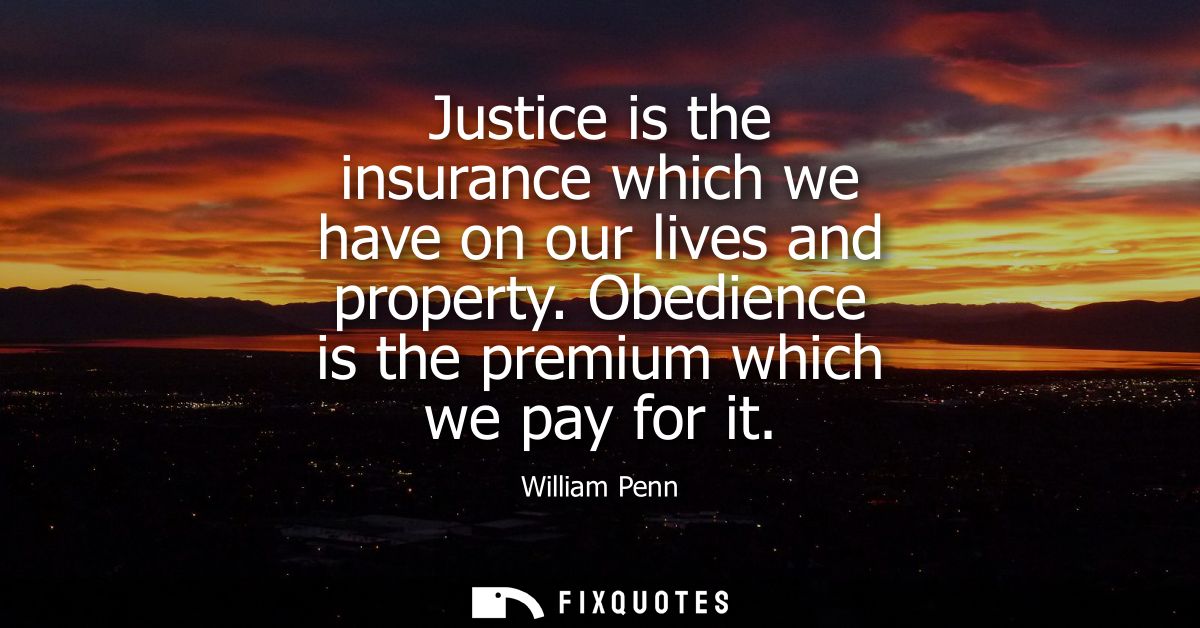
"Justice is the insurance which we have on our lives and property. Obedience is the premium which we pay for it"
About this Quote
The subtext is transactional and quietly coercive. Insurance is optional in theory, but only fools go without it, and only the reckless refuse to pay premiums. Penn’s phrasing nudges obedience into the realm of rational self-interest: you comply not because rulers are saintly, but because the alternative is exposure. That’s a leader’s move - morality recast as prudence.
Context matters. Penn, a Quaker and founder of Pennsylvania, argued for religious toleration and due process, but he also needed stable civic order in a colony built from negotiation: between settlers and Indigenous nations, between sects, between Crown oversight and local autonomy. His metaphor attempts to solve that volatility. It promises citizens that law can be something they rely on, not fear, while reminding them that social peace requires disciplined participation. The line walks a tightrope: it legitimizes authority by making it sound like a service, even as it normalizes compliance as the price of being protected.
Quote Details
| Topic | Justice |
|---|---|
| Source | Help us find the source |
| Cite |
Citation Formats
APA Style (7th ed.)
Penn, William. (2026, January 16). Justice is the insurance which we have on our lives and property. Obedience is the premium which we pay for it. FixQuotes. https://fixquotes.com/quotes/justice-is-the-insurance-which-we-have-on-our-91576/
Chicago Style
Penn, William. "Justice is the insurance which we have on our lives and property. Obedience is the premium which we pay for it." FixQuotes. January 16, 2026. https://fixquotes.com/quotes/justice-is-the-insurance-which-we-have-on-our-91576/.
MLA Style (9th ed.)
"Justice is the insurance which we have on our lives and property. Obedience is the premium which we pay for it." FixQuotes, 16 Jan. 2026, https://fixquotes.com/quotes/justice-is-the-insurance-which-we-have-on-our-91576/. Accessed 18 Feb. 2026.