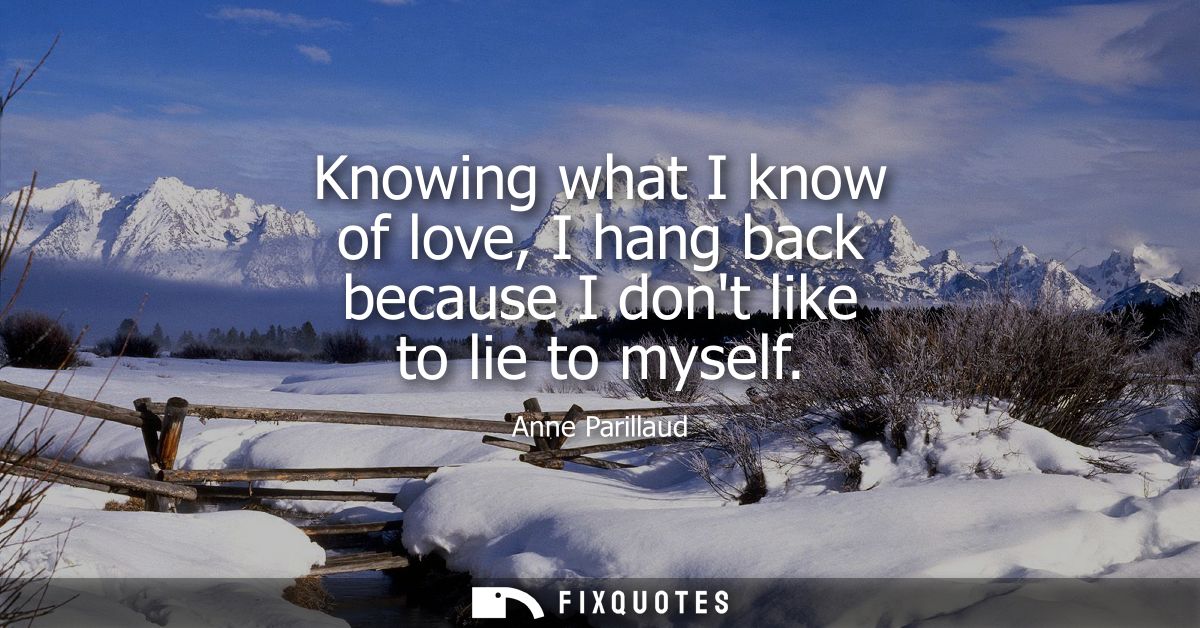
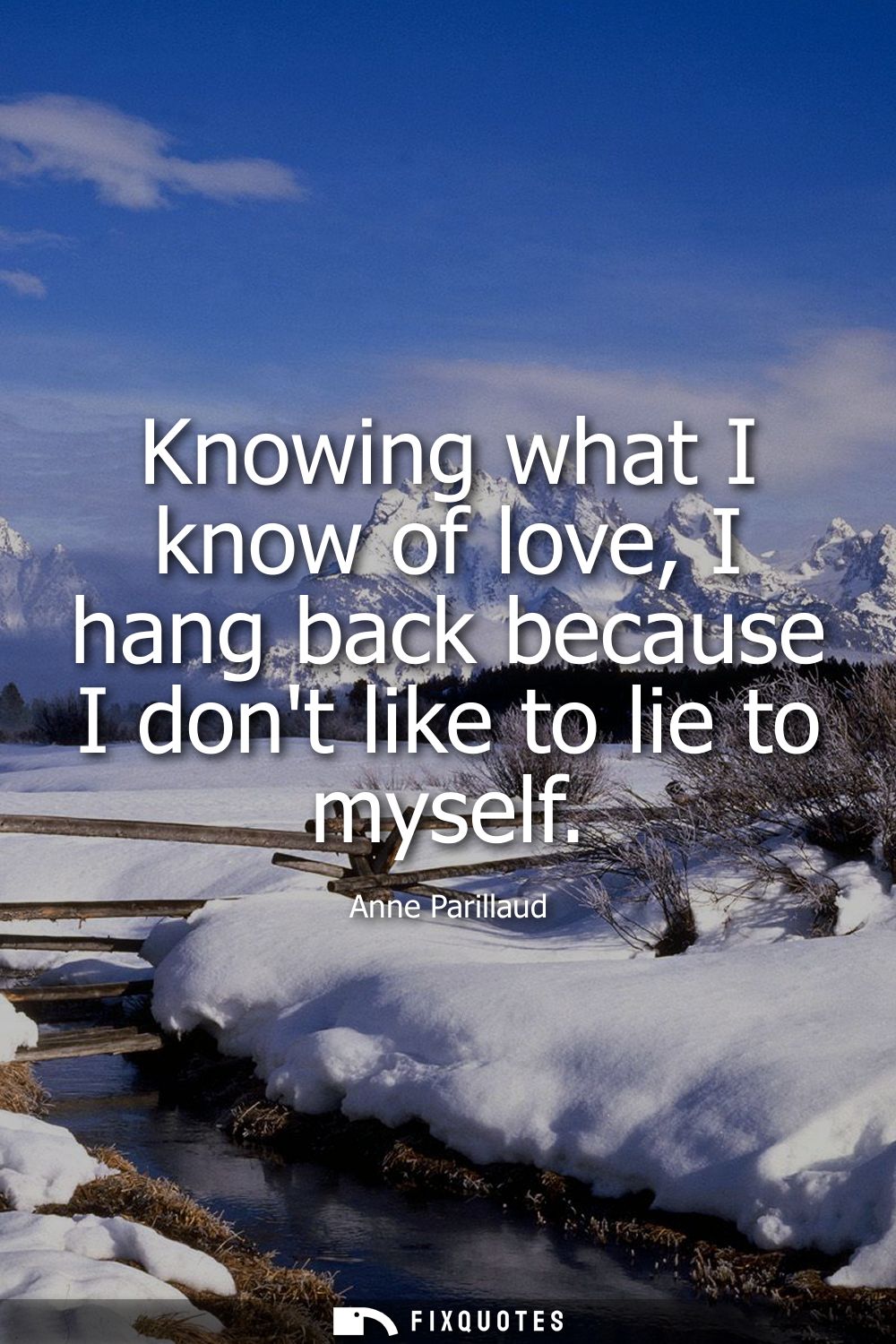
"Knowing what I know of love, I hang back because I don't like to lie to myself"
About this Quote
"I hang back" is the key move. It sounds modest, even passive, but the subtext is control: stepping away before the story swallows you. In a culture that often sells emotional risk as virtue - jump, fall, surrender - she makes restraint feel like a form of courage. The usual romantic script rewards people for wanting more; Parillaud suggests the real test is admitting when wanting more becomes self-deception.
Then comes the sharp turn: "because I don't like to lie to myself". Not "because I'm scared", not "because it never works", but because self-honesty is her non-negotiable. The line implies past versions of the self who cooperated with fantasy, who edited red flags into plot twists. It also hints at the particular pressure on women, especially in public life, to perform desire on cue - to be the kind of person love happens to. Parillaud refuses that performance. The intent isn't cynicism for its own sake; it's a boundary drawn with emotional intelligence, making the least glamorous choice - caution - sound like dignity.
Quote Details
| Topic | Love |
|---|---|
| Source | Help us find the source |
| Cite |
Citation Formats
APA Style (7th ed.)
Parillaud, Anne. (2026, January 16). Knowing what I know of love, I hang back because I don't like to lie to myself. FixQuotes. https://fixquotes.com/quotes/knowing-what-i-know-of-love-i-hang-back-because-i-100830/
Chicago Style
Parillaud, Anne. "Knowing what I know of love, I hang back because I don't like to lie to myself." FixQuotes. January 16, 2026. https://fixquotes.com/quotes/knowing-what-i-know-of-love-i-hang-back-because-i-100830/.
MLA Style (9th ed.)
"Knowing what I know of love, I hang back because I don't like to lie to myself." FixQuotes, 16 Jan. 2026, https://fixquotes.com/quotes/knowing-what-i-know-of-love-i-hang-back-because-i-100830/. Accessed 11 Mar. 2026.