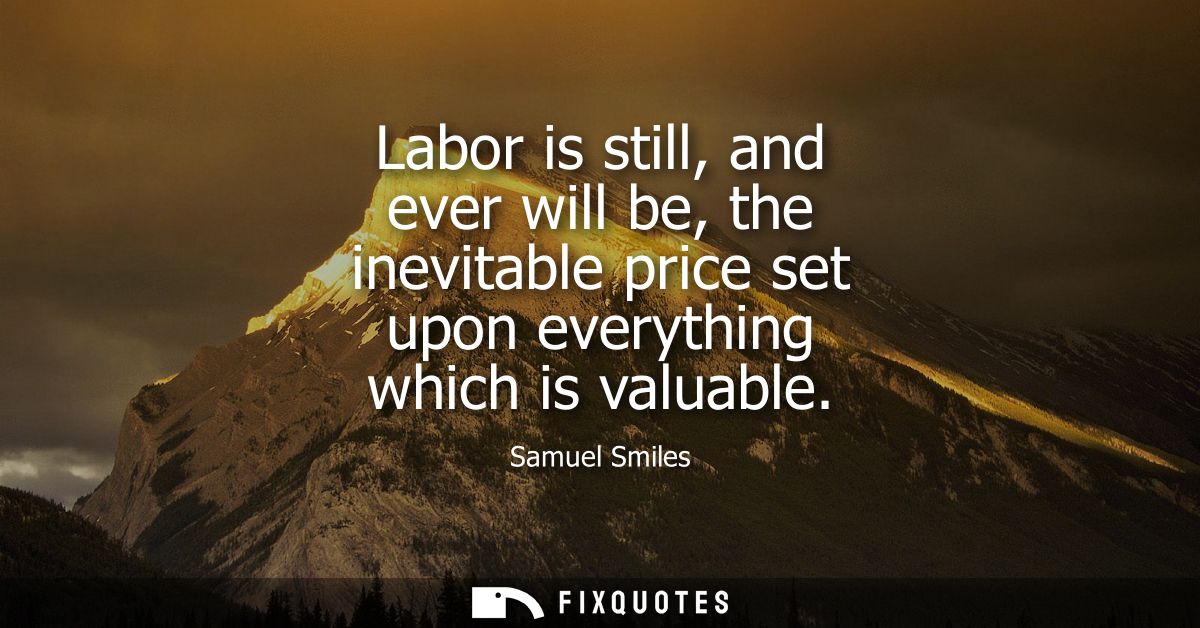
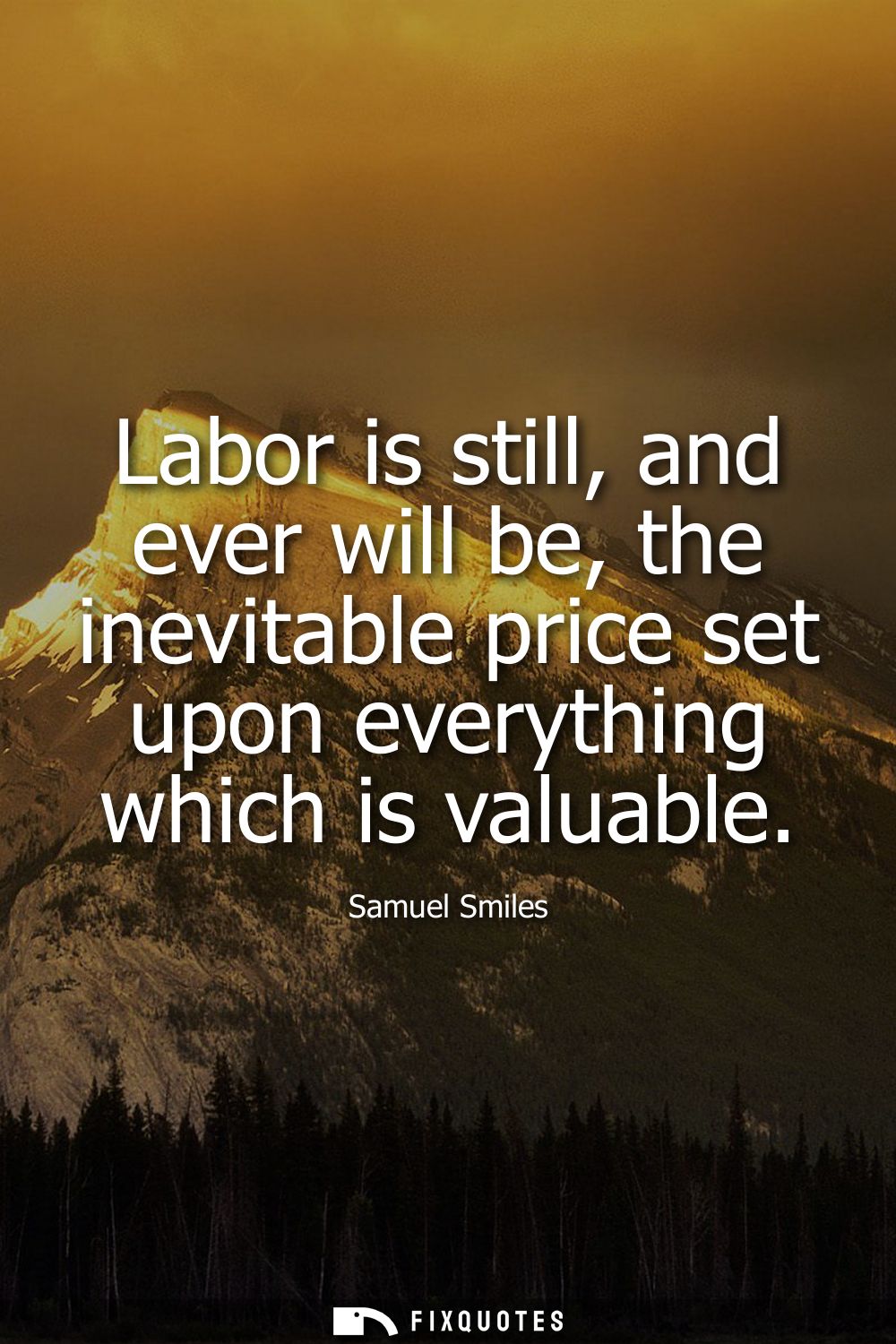
"Labor is still, and ever will be, the inevitable price set upon everything which is valuable"
About this Quote
That’s classic Samuel Smiles, the Victorian evangelist of self-help whose 1859 bestseller was equal parts motivation and social policy. In an era of industrial expansion and brutal labor conditions, this idea worked because it converted economic necessity into ethical virtue. If the factory, the office, the mine demand your time and body, Smiles offers a consoling reframe: labor isn’t exploitation; it’s the proof that the thing you’re chasing is worthy. The subtext is political as much as personal: reforms can tinker, but don’t expect society to make life easier without making it less "valuable."
The rhetorical trick is its sweeping definition of "valuable". It can mean character, success, art, dignity, even love. That vagueness is strategic: it universalizes a particular Victorian middle-class credo and makes it portable, uplifting, and hard to contest without sounding lazy.
Quote Details
| Topic | Work Ethic |
|---|---|
| Source | Help us find the source |
| Cite |
Citation Formats
APA Style (7th ed.)
Smiles, Samuel. (2026, January 17). Labor is still, and ever will be, the inevitable price set upon everything which is valuable. FixQuotes. https://fixquotes.com/quotes/labor-is-still-and-ever-will-be-the-inevitable-36596/
Chicago Style
Smiles, Samuel. "Labor is still, and ever will be, the inevitable price set upon everything which is valuable." FixQuotes. January 17, 2026. https://fixquotes.com/quotes/labor-is-still-and-ever-will-be-the-inevitable-36596/.
MLA Style (9th ed.)
"Labor is still, and ever will be, the inevitable price set upon everything which is valuable." FixQuotes, 17 Jan. 2026, https://fixquotes.com/quotes/labor-is-still-and-ever-will-be-the-inevitable-36596/. Accessed 29 Mar. 2026.