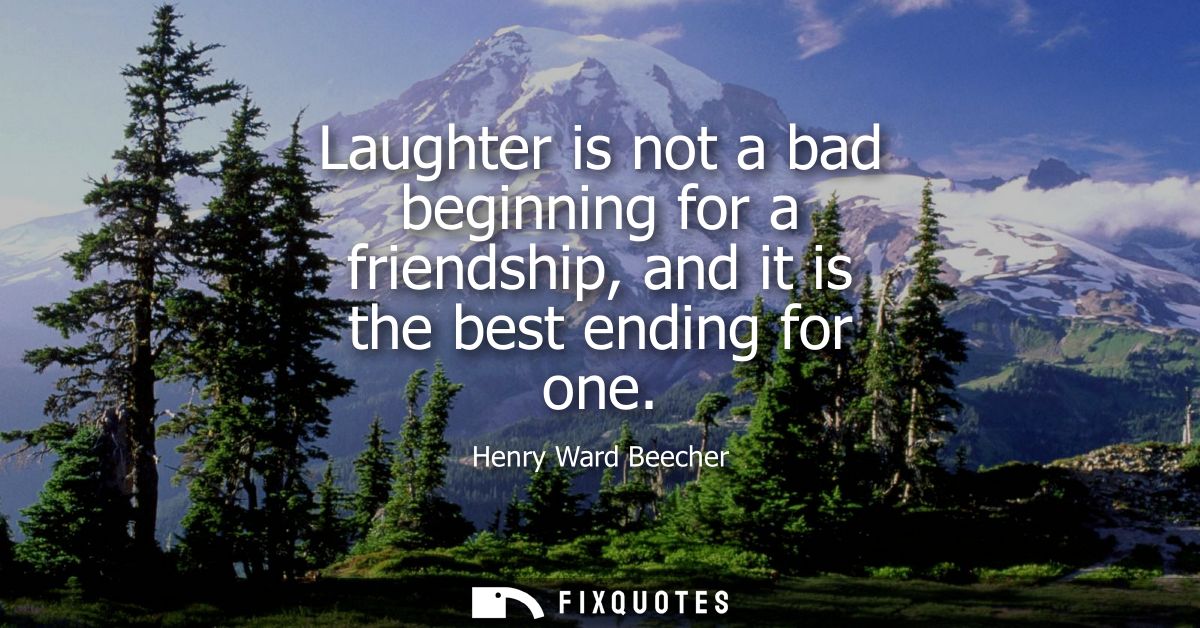
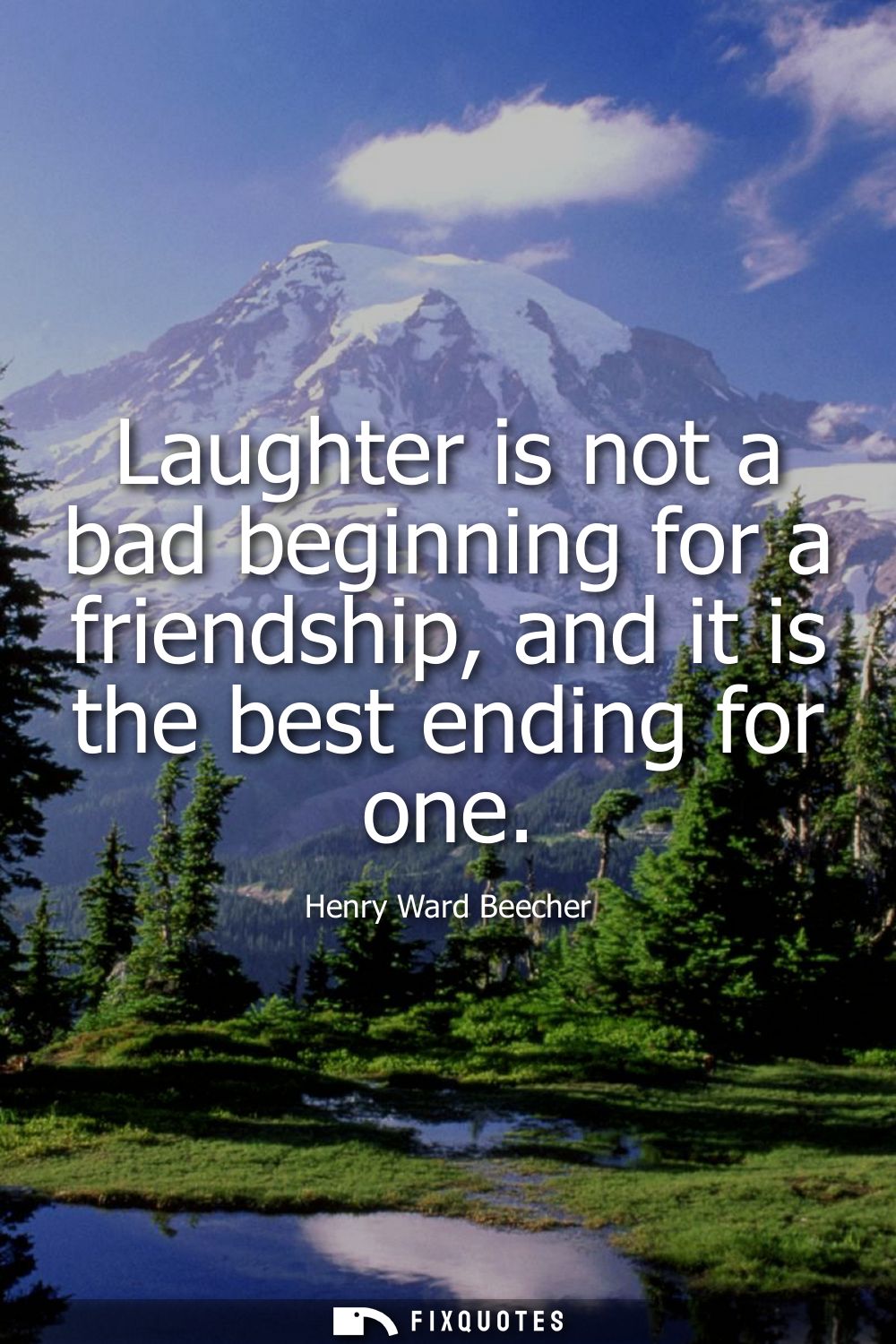
"Laughter is not a bad beginning for a friendship, and it is the best ending for one"
About this Quote
The first half flatters friendship’s origin story. Most relationships don’t begin with declarations of loyalty; they begin with a small conspiracy - the private joke, the mutual sense that the world is slightly absurd. Beecher treats that as “not a bad beginning,” a wry understatement that signals restraint. He’s not romanticizing friendship as instant profundity; he’s validating its humble entry point.
The second half is the knife-turn. “Best ending” is a quiet rebuke to the ways friendships often die: with scorekeeping, moral grandstanding, or icy silence. Beecher suggests a superior exit strategy: leave with levity, with grace, without rewriting the past as a trial transcript. In a culture that prized respectability and public reputation, the line argues for warmth over vindication - a form of emotional discipline dressed up as charm. Laughter, here, isn’t denial. It’s the refusal to make the breakup the final authority over what the friendship was.
Quote Details
| Topic | Friendship |
|---|---|
| Source | Help us find the source |
| Cite |
Citation Formats
APA Style (7th ed.)
Beecher, Henry Ward. (2026, January 17). Laughter is not a bad beginning for a friendship, and it is the best ending for one. FixQuotes. https://fixquotes.com/quotes/laughter-is-not-a-bad-beginning-for-a-friendship-42211/
Chicago Style
Beecher, Henry Ward. "Laughter is not a bad beginning for a friendship, and it is the best ending for one." FixQuotes. January 17, 2026. https://fixquotes.com/quotes/laughter-is-not-a-bad-beginning-for-a-friendship-42211/.
MLA Style (9th ed.)
"Laughter is not a bad beginning for a friendship, and it is the best ending for one." FixQuotes, 17 Jan. 2026, https://fixquotes.com/quotes/laughter-is-not-a-bad-beginning-for-a-friendship-42211/. Accessed 12 Feb. 2026.