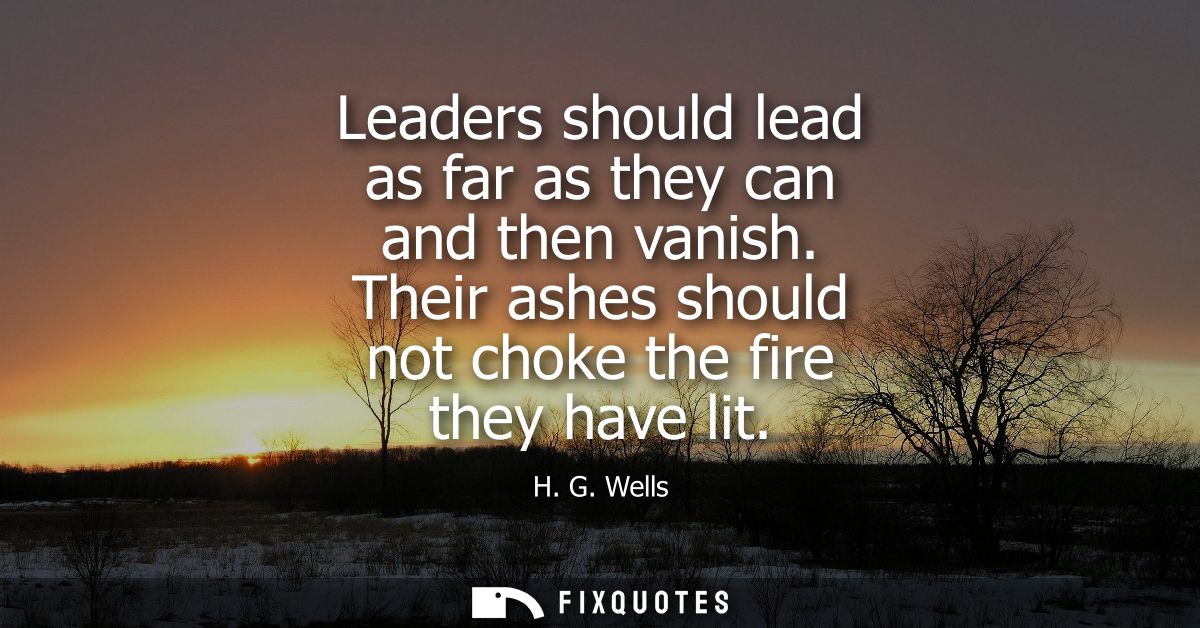
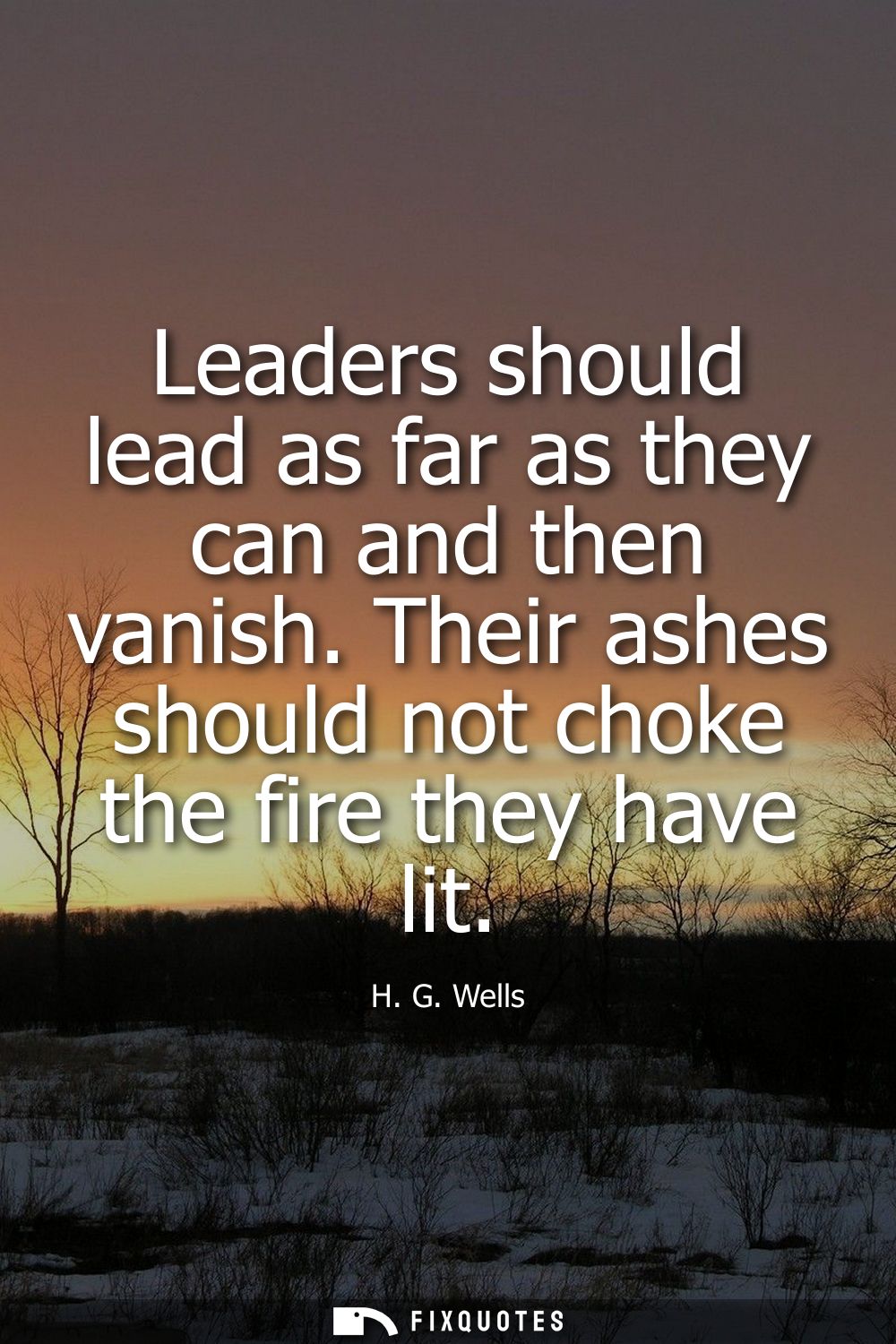
"Leaders should lead as far as they can and then vanish. Their ashes should not choke the fire they have lit"
About this Quote
The subtext is a warning against the afterlife of ego. Movements rot when they become museums to their originators: doctrines harden, followers become custodians, and every new idea gets filtered through what the leader “would have wanted.” Wells had watched Victorian “great men” politics and imperial certainties calcify into institutions that prized continuity over imagination. Coming through an era of rapid technological change and looming mass conflict, he understood that the future punishes sentimentality. Fire needs oxygen, not relics.
The line also carries a sly democratic impulse. If your leadership is real, it should produce leaders, not dependents. You light the blaze, you don’t stand in front of it taking credit until the smoke kills it. There’s a quiet ethic here: build systems that outlive you without worshipping you, and step aside before your name becomes an argument against renewal. Wells isn’t romantic about leaders; he’s protective of the thing leadership is supposed to serve: momentum.
Quote Details
| Topic | Servant Leadership |
|---|---|
| Source | Help us find the source |
| Cite |
Citation Formats
APA Style (7th ed.)
Wells, H.G. (2026, January 18). Leaders should lead as far as they can and then vanish. Their ashes should not choke the fire they have lit. FixQuotes. https://fixquotes.com/quotes/leaders-should-lead-as-far-as-they-can-and-then-12834/
Chicago Style
Wells, H.G. "Leaders should lead as far as they can and then vanish. Their ashes should not choke the fire they have lit." FixQuotes. January 18, 2026. https://fixquotes.com/quotes/leaders-should-lead-as-far-as-they-can-and-then-12834/.
MLA Style (9th ed.)
"Leaders should lead as far as they can and then vanish. Their ashes should not choke the fire they have lit." FixQuotes, 18 Jan. 2026, https://fixquotes.com/quotes/leaders-should-lead-as-far-as-they-can-and-then-12834/. Accessed 3 Apr. 2026.