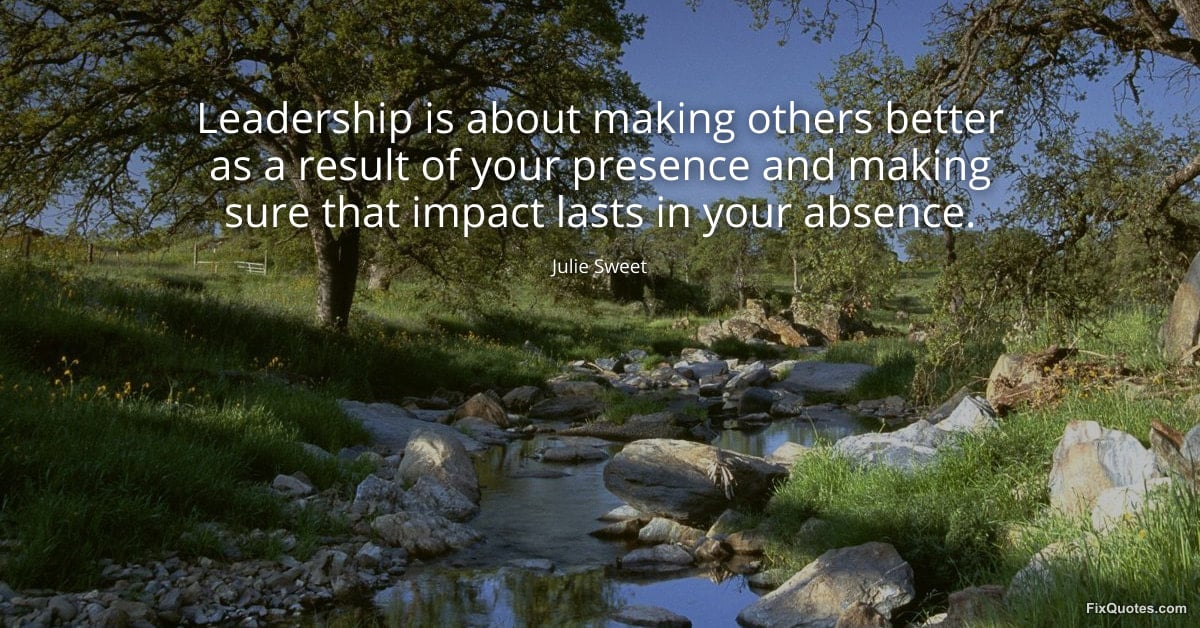
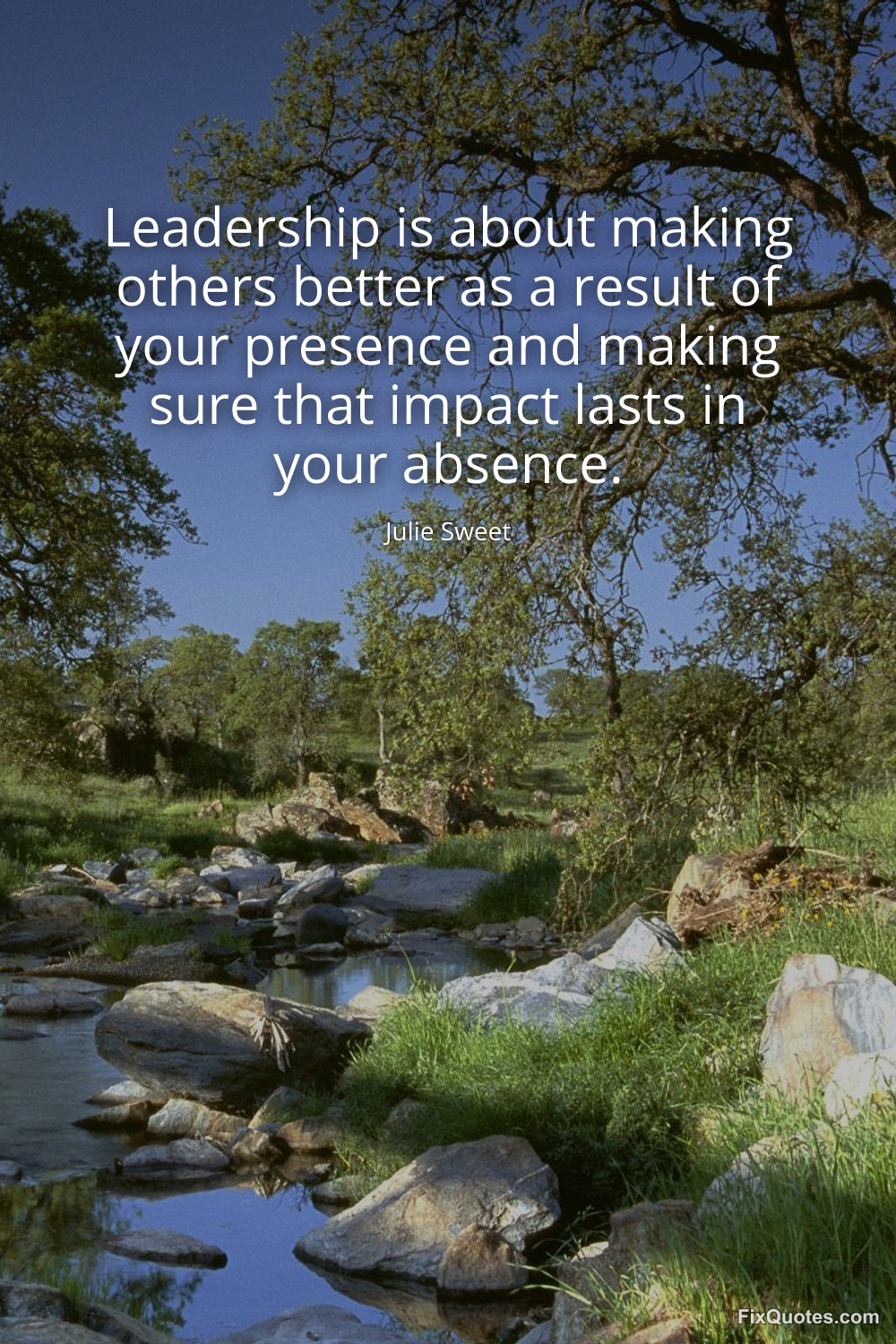
"Leadership is about making others better as a result of your presence, and making sure that impact lasts in your absence"
About this Quote
The intent is motivational, but the subtext is managerial accountability. If your team collapses on your day off, you’re not indispensable; you’ve built dependency. Sweet’s formulation calls out the kind of leader who hoards decisions, monopolizes client relationships, and treats knowledge like leverage. “Presence” becomes a temporary catalyst, not the main event. What matters is what you leave behind: capability, confidence, processes, decision rights, culture.
Context matters here because Sweet is a contemporary CEO in a corporate environment where “talent” is the dominant scarce resource and where turnover, hybrid work, and fast reorgs punish hero-style management. The quote also reads as a critique of performative leadership: the meeting-room virtuoso who sounds decisive but doesn’t develop successors. “Lasts in your absence” is a subtle succession plan embedded in a sentence, implying that real leaders design themselves out of bottlenecks.
It works because it flatters the listener’s ambition while raising the bar: your value isn’t your visibility, it’s your residue.
Quote Details
| Topic | Leadership |
|---|---|
| Source | Julie Sweet remarks at an Accenture leadership event (date not captured) |
| Cite |
Citation Formats
APA Style (7th ed.)
Sweet, Julie. (2026, February 16). Leadership is about making others better as a result of your presence, and making sure that impact lasts in your absence. FixQuotes. https://fixquotes.com/quotes/leadership-is-about-making-others-better-as-a-184295/
Chicago Style
Sweet, Julie. "Leadership is about making others better as a result of your presence, and making sure that impact lasts in your absence." FixQuotes. February 16, 2026. https://fixquotes.com/quotes/leadership-is-about-making-others-better-as-a-184295/.
MLA Style (9th ed.)
"Leadership is about making others better as a result of your presence, and making sure that impact lasts in your absence." FixQuotes, 16 Feb. 2026, https://fixquotes.com/quotes/leadership-is-about-making-others-better-as-a-184295/. Accessed 2 Apr. 2026.