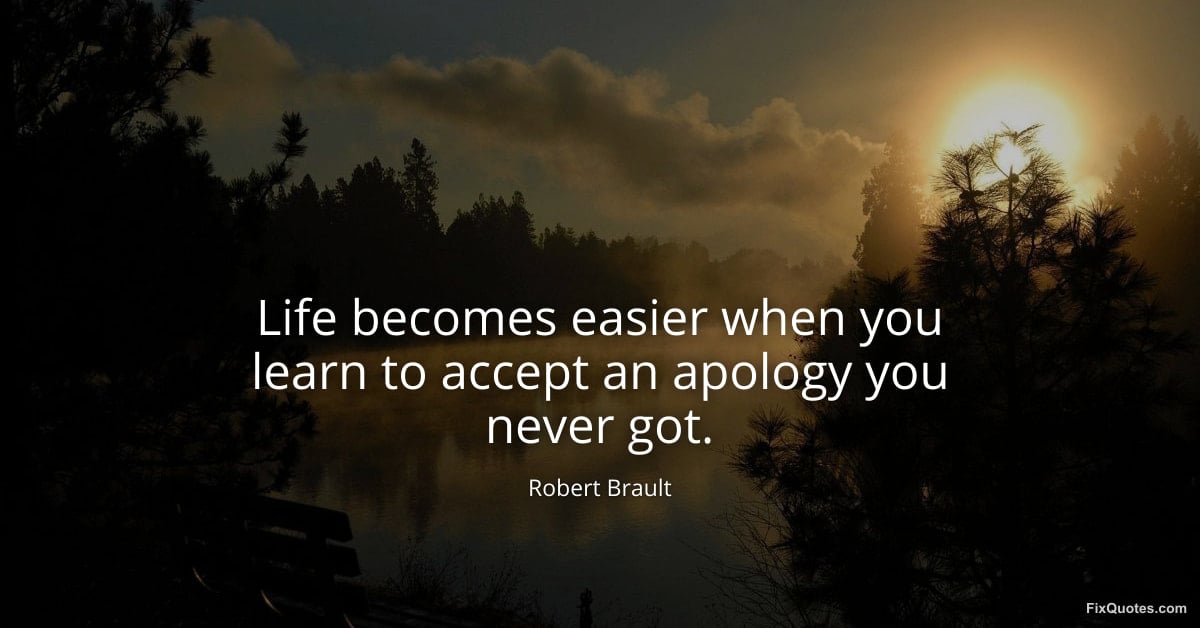
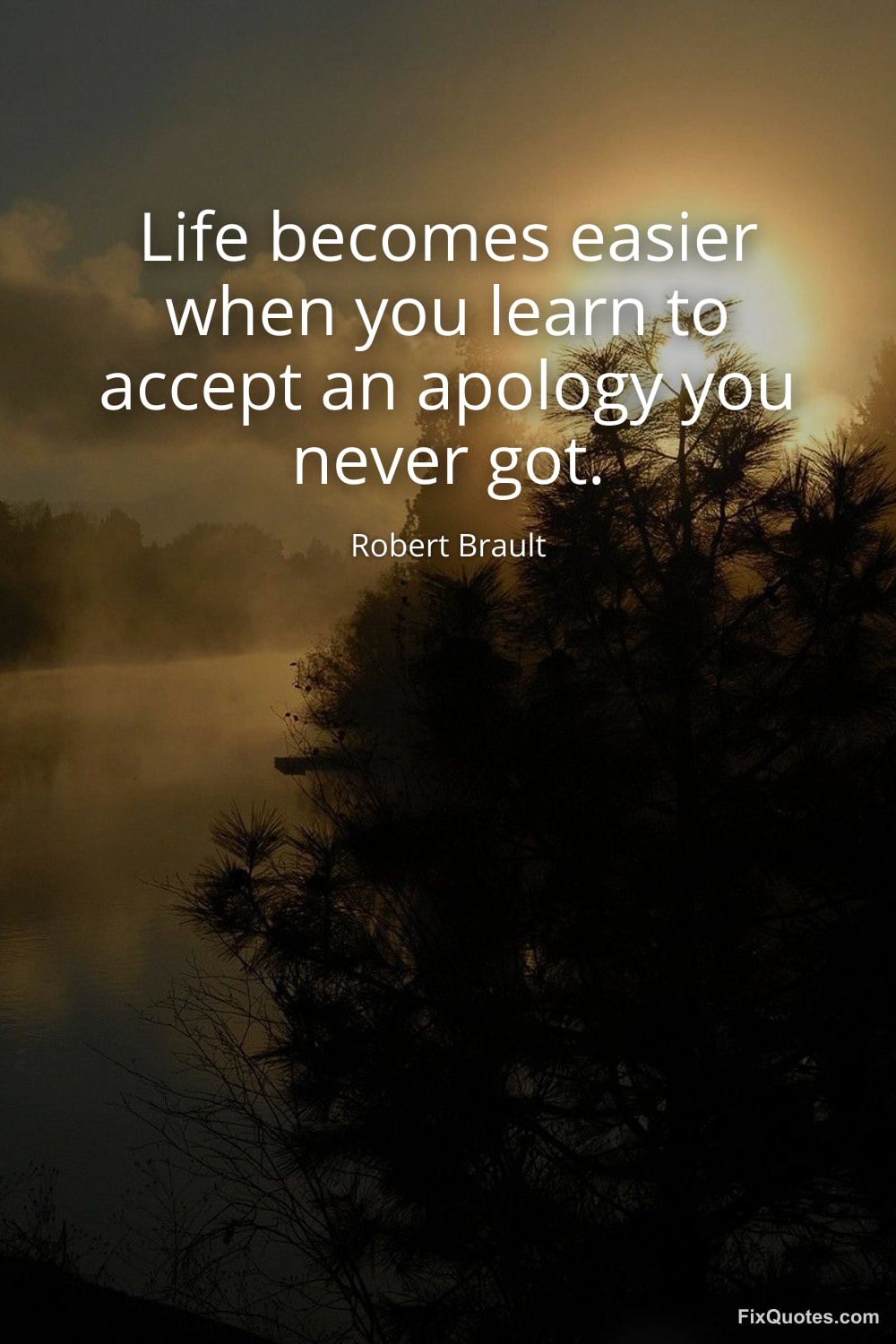
"Life becomes easier when you learn to accept an apology you never got"
About this Quote
Brault’s line has the calm bluntness of a hard-earned truth: closure is often a solo project. The hook is the small betrayal embedded in “an apology you never got.” It admits what most self-help language tries to airbrush out - that the world routinely fails at basic moral accounting. People don’t just hurt you; they also decline to name the hurt. The quote works because it refuses to romanticize reconciliation. It shifts the target from justice to survivability.
The intent isn’t to excuse the offender or to declare apologies meaningless. It’s to relocate agency. “Life becomes easier” frames acceptance as a pragmatic technology, not a saintly virtue. Brault isn’t selling forgiveness as purity; he’s selling it as relief from the bureaucratic waiting room of resentment, where your emotional schedule is controlled by someone else’s conscience.
The subtext is psychologically modern: you can be right and still be trapped. Waiting for an apology can function like an ongoing contract with the person who wronged you - a demand that they finally validate your experience. Accepting the apology you never receive is, quietly, a refusal to keep litigating the past in your head. It’s also a recognition that some people are incapable of the language of repair, or too invested in their self-image to risk it.
Culturally, this lands in an era obsessed with accountability yet familiar with its limits. Public apologies are often performative; private ones are frequently absent. Brault offers a third option: stop outsourcing peace to the person who took it.
The intent isn’t to excuse the offender or to declare apologies meaningless. It’s to relocate agency. “Life becomes easier” frames acceptance as a pragmatic technology, not a saintly virtue. Brault isn’t selling forgiveness as purity; he’s selling it as relief from the bureaucratic waiting room of resentment, where your emotional schedule is controlled by someone else’s conscience.
The subtext is psychologically modern: you can be right and still be trapped. Waiting for an apology can function like an ongoing contract with the person who wronged you - a demand that they finally validate your experience. Accepting the apology you never receive is, quietly, a refusal to keep litigating the past in your head. It’s also a recognition that some people are incapable of the language of repair, or too invested in their self-image to risk it.
Culturally, this lands in an era obsessed with accountability yet familiar with its limits. Public apologies are often performative; private ones are frequently absent. Brault offers a third option: stop outsourcing peace to the person who took it.
Quote Details
| Topic | Forgiveness |
|---|---|
| Source | Help us find the source |
More Quotes by Robert
Add to List