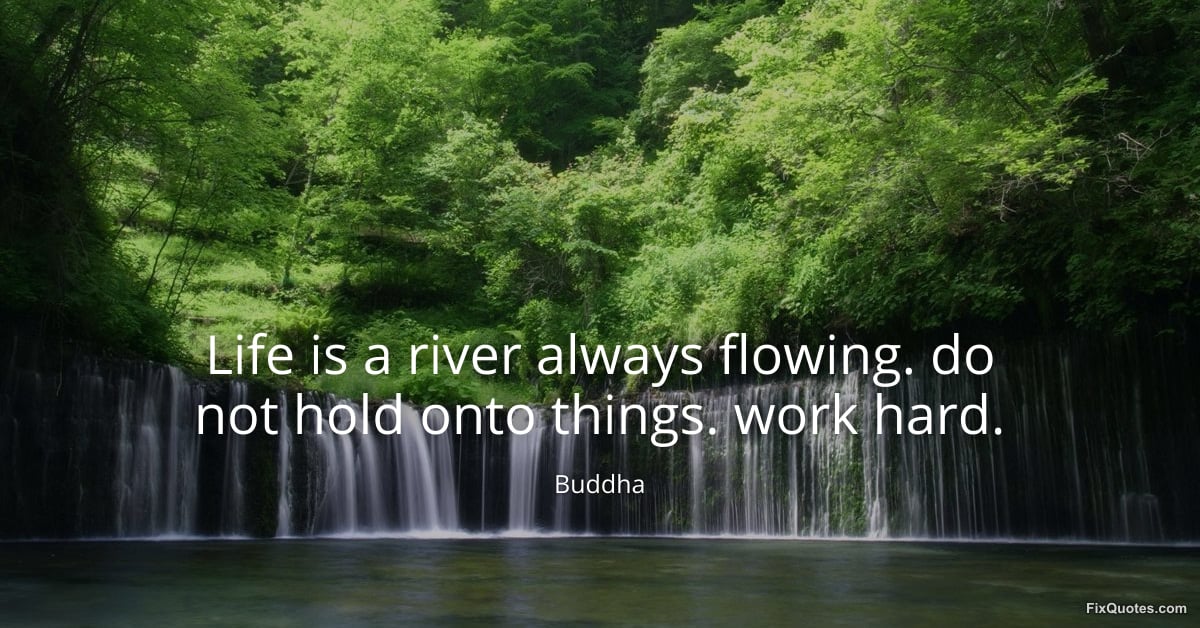
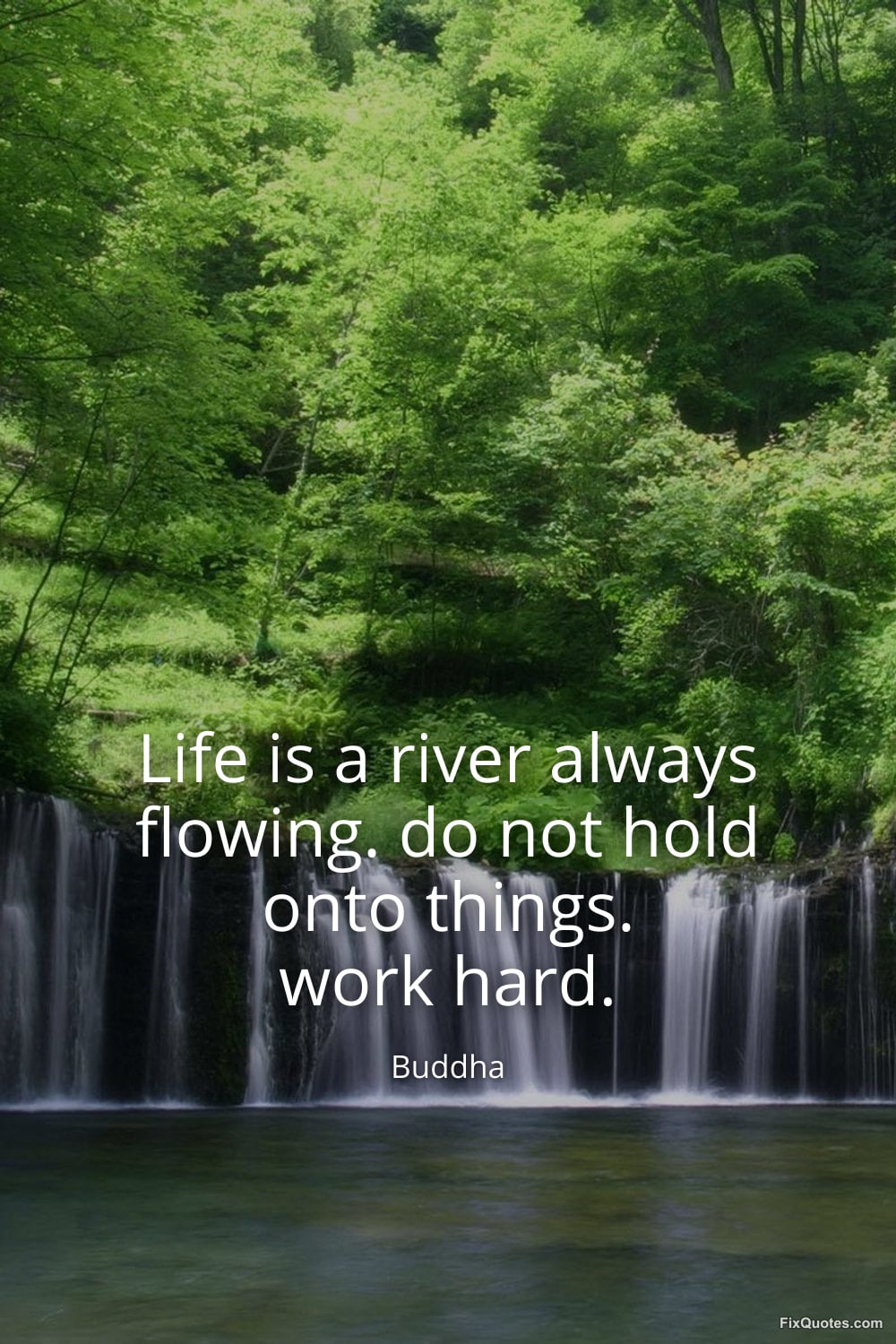
"Life is a river always flowing. do not hold onto things. work hard"
About this Quote
What gives this line its staying power is the tension it holds together: accept change, release attachment, and still exert yourself fully. That combination is more demanding than it first appears. Plenty of philosophies praise serenity; fewer insist that serenity is not passivity. "Life is a river always flowing" frames existence as movement rather than possession. The image matters. A river cannot be gripped, paused, or owned. Any attempt to clutch it is absurd, and that absurdity is the point: suffering begins when we treat the temporary as if it were permanent.
The second command, "do not hold onto things", carries the moral and psychological weight of Buddhist teaching. Its target is not only material objects, but identities, grudges, ambitions, even the fantasy of a fixed self. The subtext is severe but liberating: pain is often sharpened by our refusal to let change be change.
Then comes the hardest part: "work hard". In the mouth of a spiritual teacher, that phrase cuts against the lazy caricature of Buddhism as retreat from the world. The labor here is inward discipline, ethical action, and steady attention. It is the effort required to live without illusion. That makes the line feel less like comfort than instruction.
Placed in the context of a leader whose teachings emerged from renunciation and meditation, the rhetoric is plain by design. No ornament, no thunder. Its authority comes from compression. It reduces a vast spiritual system to three linked demands: see reality clearly, loosen your grasp, practice relentlessly.
The second command, "do not hold onto things", carries the moral and psychological weight of Buddhist teaching. Its target is not only material objects, but identities, grudges, ambitions, even the fantasy of a fixed self. The subtext is severe but liberating: pain is often sharpened by our refusal to let change be change.
Then comes the hardest part: "work hard". In the mouth of a spiritual teacher, that phrase cuts against the lazy caricature of Buddhism as retreat from the world. The labor here is inward discipline, ethical action, and steady attention. It is the effort required to live without illusion. That makes the line feel less like comfort than instruction.
Placed in the context of a leader whose teachings emerged from renunciation and meditation, the rhetoric is plain by design. No ornament, no thunder. Its authority comes from compression. It reduces a vast spiritual system to three linked demands: see reality clearly, loosen your grasp, practice relentlessly.
Quote Details
| Topic | Letting Go |
|---|---|
| Source | Help us find the source |
| Cite |
Citation Formats
APA Style (7th ed.)
Buddha. (2026, March 10). Life is a river always flowing. do not hold onto things. work hard. FixQuotes. https://fixquotes.com/quotes/life-is-a-river-always-flowing-do-not-hold-onto-185871/
Chicago Style
Buddha. "Life is a river always flowing. do not hold onto things. work hard." FixQuotes. March 10, 2026. https://fixquotes.com/quotes/life-is-a-river-always-flowing-do-not-hold-onto-185871/.
MLA Style (9th ed.)
"Life is a river always flowing. do not hold onto things. work hard." FixQuotes, 10 Mar. 2026, https://fixquotes.com/quotes/life-is-a-river-always-flowing-do-not-hold-onto-185871/. Accessed 3 Apr. 2026.
More Quotes by Buddha
Add to List