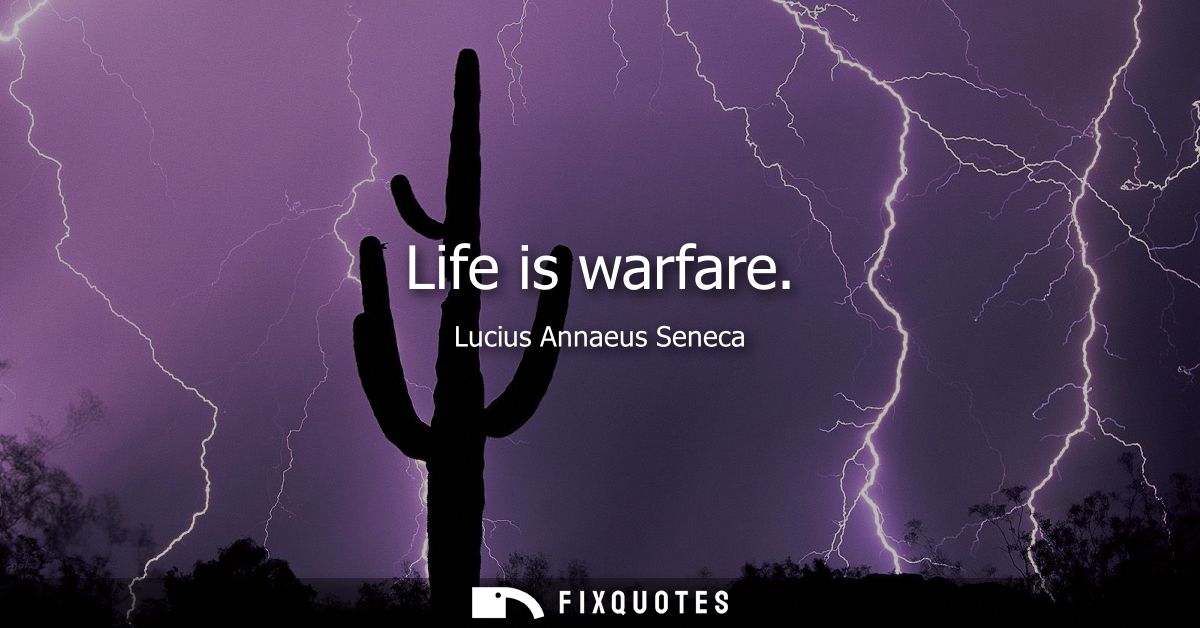
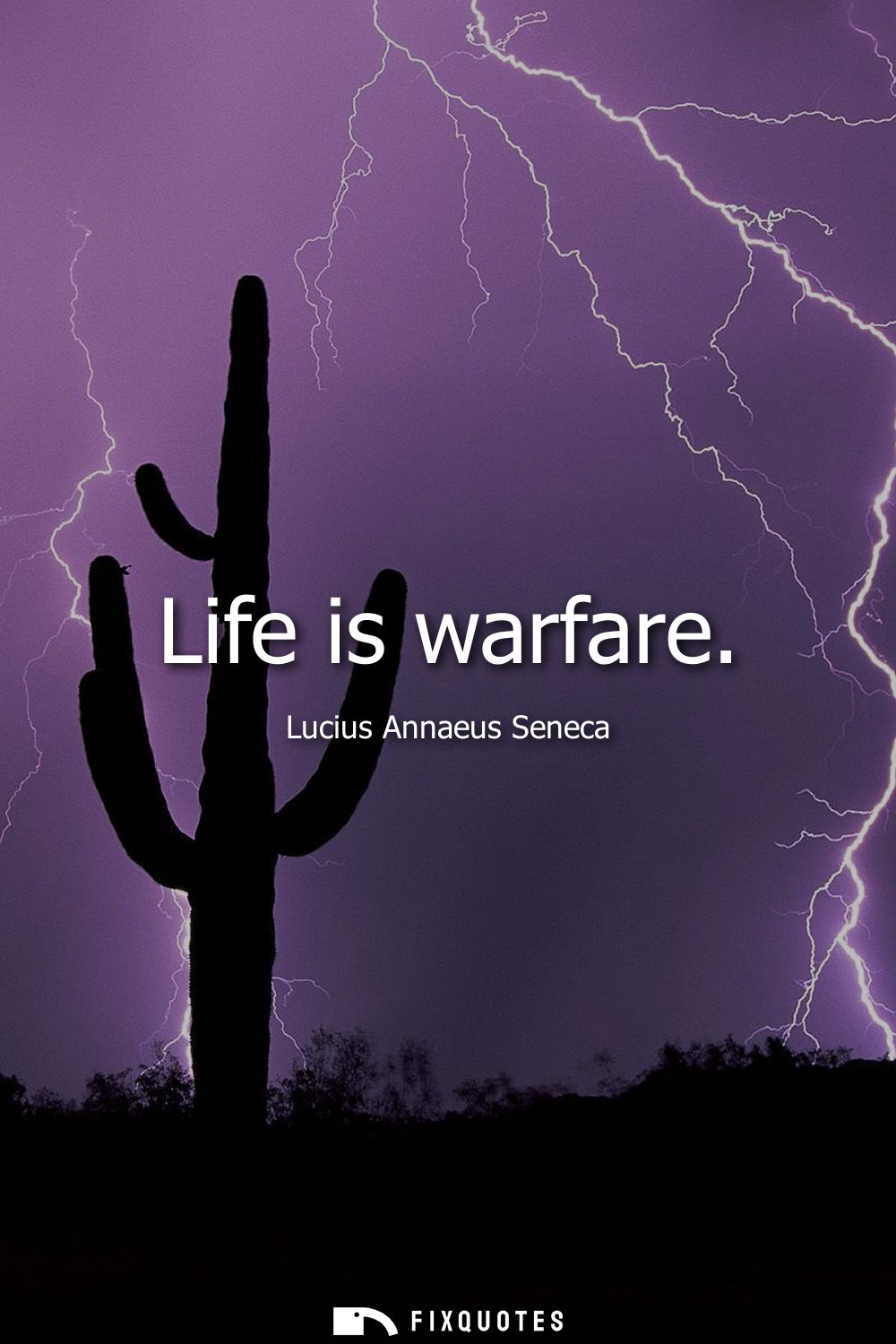
"Life is warfare"
About this Quote
Seneca’s "Life is warfare" lands less like a pep talk than a diagnosis. As a Roman statesman and Stoic writing under the shadow of imperial paranoia, he isn’t romanticizing combat; he’s naming the psychological condition of living in a world where stability is a story the powerful tell and then revoke. Under Nero, survival meant reading rooms, calibrating speech, and accepting that fortune could pivot on rumor. "Warfare" is the blunt metaphor for that constant exposure: not one heroic battle, but an everyday campaign against fear, impulse, vanity, and the state’s whims.
The intent is practical. Stoicism isn’t about serene vibes; it’s about training. By framing life as war, Seneca turns ethics into discipline: you prepare, you endure, you don’t assume peace is your natural habitat. The subtext is an argument against softness and against surprise. If you expect comfort, adversity feels like injustice; if you expect conflict, adversity becomes weather. That reframing is the point. It strips complaint of its glamour and makes composure a kind of victory.
There’s also a quiet political edge. A courtier-philosopher can’t openly denounce tyranny, but he can teach readers to relocate their freedom inward, where emperors can’t legislate. The line is stark because the consolation has to be sturdier than the world. Seneca’s warfare is fought in the self, but it’s forged in public life, where losing control of your mind was the fastest way to lose everything else.
The intent is practical. Stoicism isn’t about serene vibes; it’s about training. By framing life as war, Seneca turns ethics into discipline: you prepare, you endure, you don’t assume peace is your natural habitat. The subtext is an argument against softness and against surprise. If you expect comfort, adversity feels like injustice; if you expect conflict, adversity becomes weather. That reframing is the point. It strips complaint of its glamour and makes composure a kind of victory.
There’s also a quiet political edge. A courtier-philosopher can’t openly denounce tyranny, but he can teach readers to relocate their freedom inward, where emperors can’t legislate. The line is stark because the consolation has to be sturdier than the world. Seneca’s warfare is fought in the self, but it’s forged in public life, where losing control of your mind was the fastest way to lose everything else.
Quote Details
| Topic | Wisdom |
|---|---|
| Source | Help us find the source |
| Cite |
Citation Formats
APA Style (7th ed.)
Younger, Seneca the. (2026, January 18). Life is warfare. FixQuotes. https://fixquotes.com/quotes/life-is-warfare-15846/
Chicago Style
Younger, Seneca the. "Life is warfare." FixQuotes. January 18, 2026. https://fixquotes.com/quotes/life-is-warfare-15846/.
MLA Style (9th ed.)
"Life is warfare." FixQuotes, 18 Jan. 2026, https://fixquotes.com/quotes/life-is-warfare-15846/. Accessed 5 Mar. 2026.
More Quotes by Seneca
Add to List