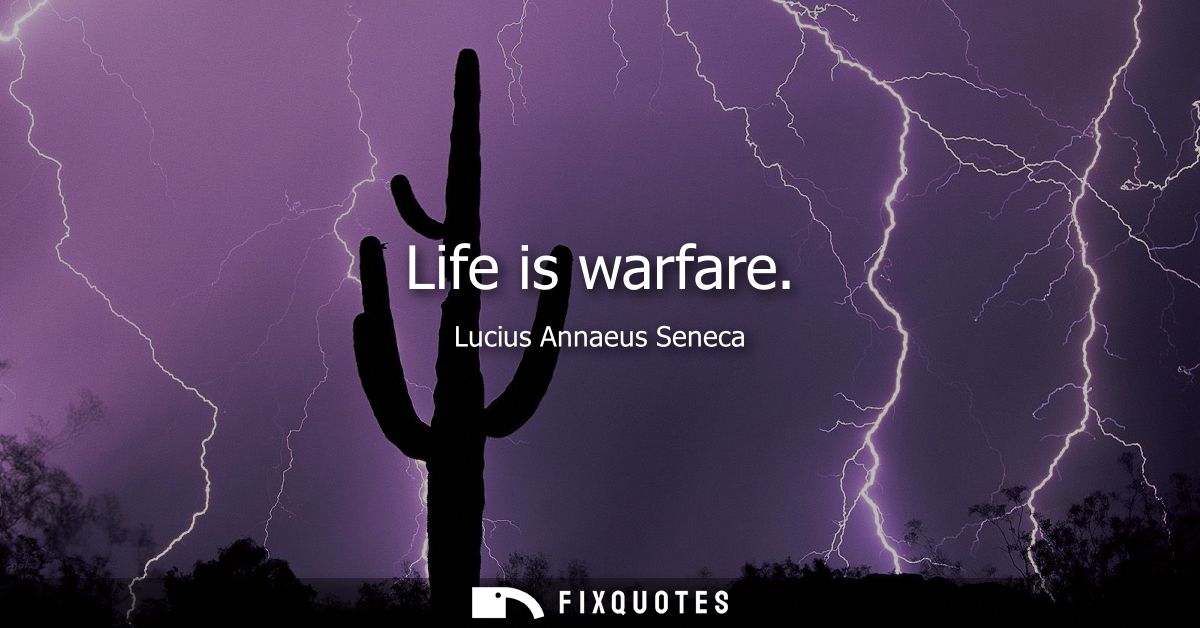
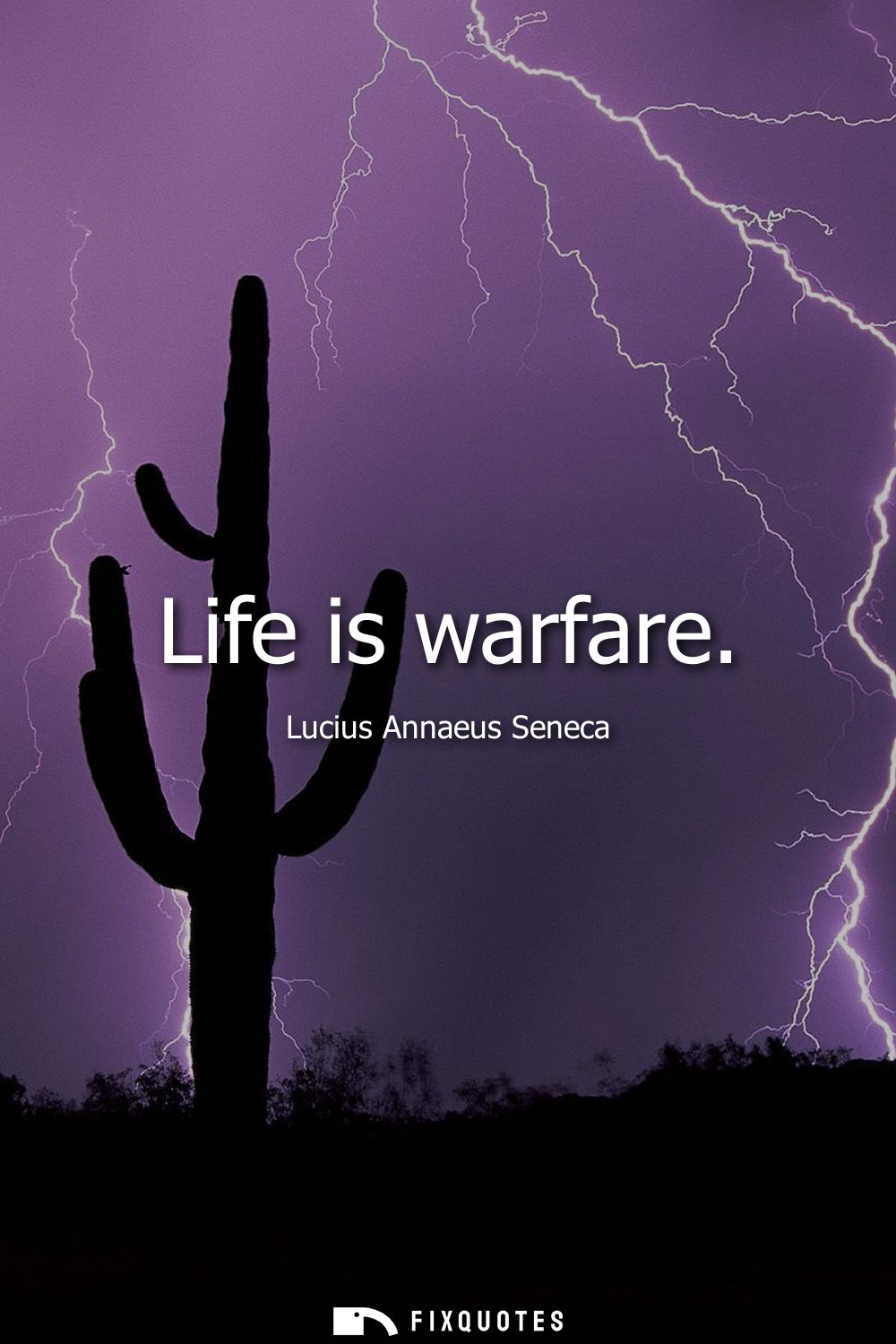
"Life is warfare"
About this Quote
Seneca compresses Stoic ethics into a hard metaphor: life is warfare. He is not calling for hostility toward other people, but for alertness against the real enemies within and around us: impulse, fear, vanity, pain, pleasure, and the unpredictable turns of Fortune. The battlefield is the mind. The campaign never ends, so the only durable victory is command of oneself.
The line comes from his Moral Letters to Lucilius, a late work written after power, wealth, exile, and danger had taught him how unstable externals are. As adviser to Nero and later a forced retiree under suspicion, Seneca knew there would be no peace treaty with circumstance. You either drift into disorder or hold a disciplined formation. Hence his stress on daily exercises of judgment, premeditation of setbacks, and the quick rallying of reason when struck by surprise.
The metaphor clarifies duty. A soldier does not choose the weather, terrain, or orders; he chooses how he stands his post. Likewise, we do not control illness, reputation, or politics, but we control our ruling principle. Virtue becomes the armor and kit: courage to face pain, temperance to resist allure, justice to restrain self-interest, wisdom to judge appearances. Each encounter with loss or praise is a skirmish where the mind learns either to break ranks or hold.
There is nothing bleak here. Warfare, for Seneca, means purposeful exertion, training, comradeship, and service to the common good. Habit makes the hard thing easier. Drilled responses become second nature: pause, assess, assent or refuse. Even setbacks become instruction, as a rout teaches where the line was thin.
The point is not to win a final battle in the world, but to become unassailable within it. Stand ready, expect ambushes, practice your moves, and keep your formation. Life is a campaign; philosophy is the camp where you learn to march.
The line comes from his Moral Letters to Lucilius, a late work written after power, wealth, exile, and danger had taught him how unstable externals are. As adviser to Nero and later a forced retiree under suspicion, Seneca knew there would be no peace treaty with circumstance. You either drift into disorder or hold a disciplined formation. Hence his stress on daily exercises of judgment, premeditation of setbacks, and the quick rallying of reason when struck by surprise.
The metaphor clarifies duty. A soldier does not choose the weather, terrain, or orders; he chooses how he stands his post. Likewise, we do not control illness, reputation, or politics, but we control our ruling principle. Virtue becomes the armor and kit: courage to face pain, temperance to resist allure, justice to restrain self-interest, wisdom to judge appearances. Each encounter with loss or praise is a skirmish where the mind learns either to break ranks or hold.
There is nothing bleak here. Warfare, for Seneca, means purposeful exertion, training, comradeship, and service to the common good. Habit makes the hard thing easier. Drilled responses become second nature: pause, assess, assent or refuse. Even setbacks become instruction, as a rout teaches where the line was thin.
The point is not to win a final battle in the world, but to become unassailable within it. Stand ready, expect ambushes, practice your moves, and keep your formation. Life is a campaign; philosophy is the camp where you learn to march.
Quote Details
| Topic | Wisdom |
|---|
More Quotes by Seneca
Add to List