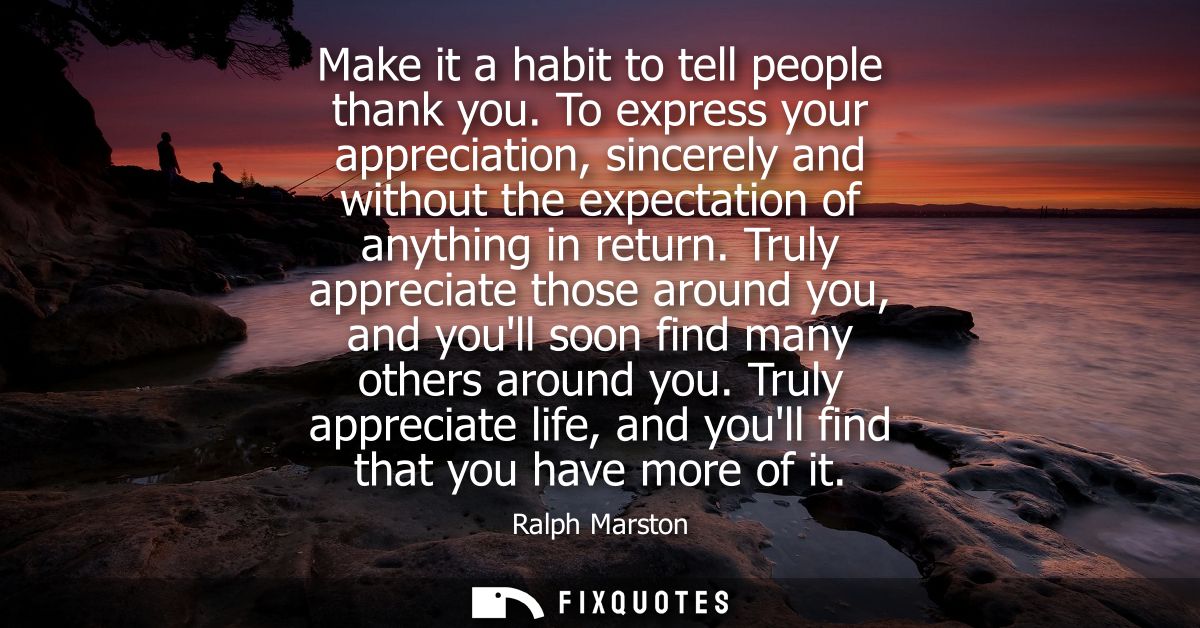
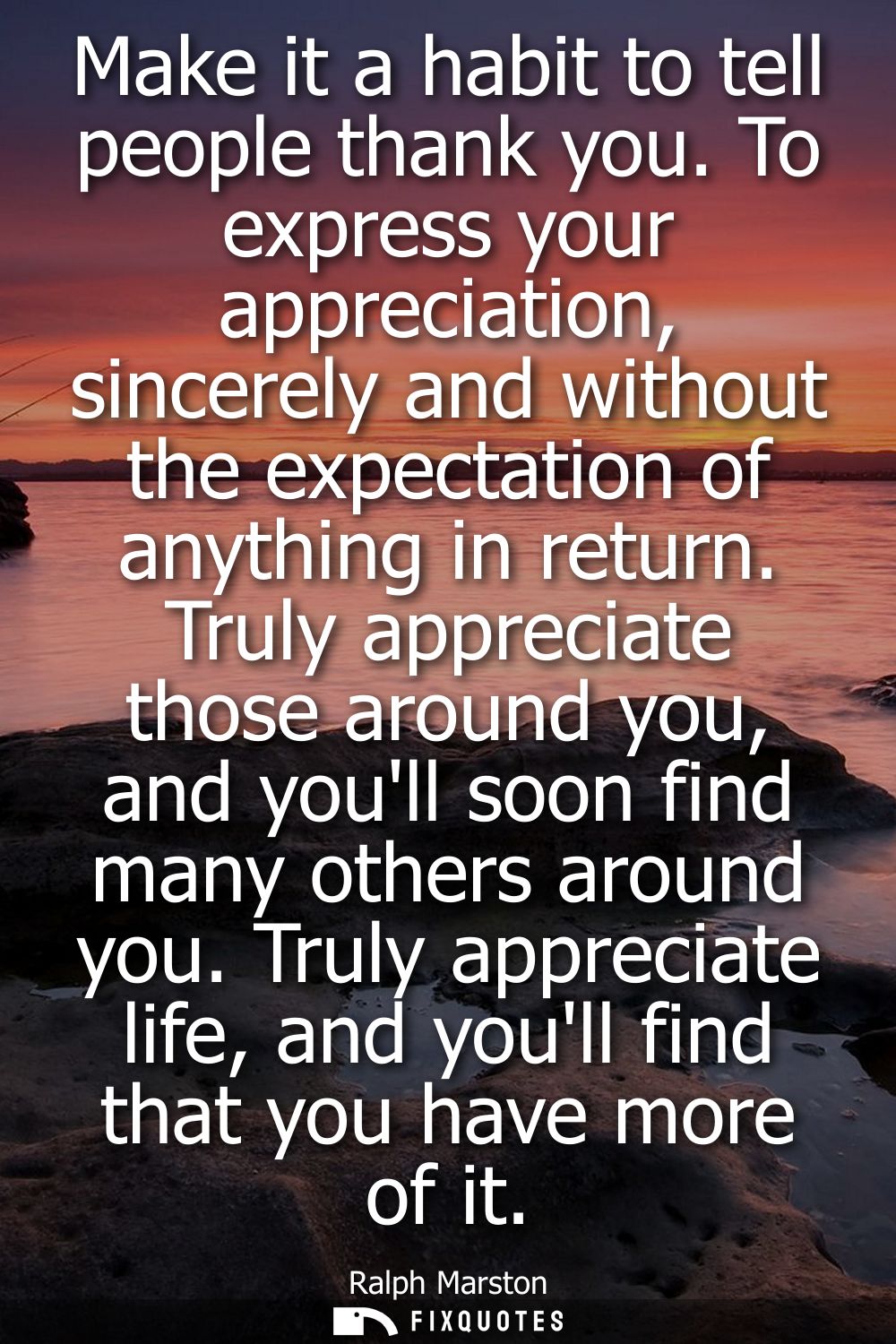
"Make it a habit to tell people thank you. To express your appreciation, sincerely and without the expectation of anything in return. Truly appreciate those around you, and you'll soon find many others around you. Truly appreciate life, and you'll find that you have more of it"
About this Quote
The subtext is transactional in the least cynical way possible. Marston insists on “without the expectation of anything in return,” then immediately sketches the return: “you’ll soon find many others around you.” He’s trying to launder reciprocity through sincerity. The move works rhetorically because it acknowledges a truth most etiquette advice avoids: appreciation changes how people treat you. Gratitude is framed as non-bargaining behavior that still yields dividends, not because you demanded them, but because you become the kind of person others want to orbit.
The final pivot, from people to life itself, expands the claim from social psychology to existential posture. “You’ll find that you have more of it” is deliberately slippery: life doesn’t literally increase, but perceived abundance can. Appreciating life makes it feel less like a scarce resource you’re burning through and more like a field you’re inhabiting. Coming from a mid-20th-century writer steeped in pragmatic uplift, it’s optimism with a work ethic: not “be thankful,” but practice thankfulness until your world reorganizes around it.
Quote Details
| Topic | Gratitude |
|---|---|
| Source | Help us find the source |
| Cite |
Citation Formats
APA Style (7th ed.)
Marston, Ralph. (2026, January 18). Make it a habit to tell people thank you. To express your appreciation, sincerely and without the expectation of anything in return. Truly appreciate those around you, and you'll soon find many others around you. Truly appreciate life, and you'll find that you have more of it. FixQuotes. https://fixquotes.com/quotes/make-it-a-habit-to-tell-people-thank-you-to-16253/
Chicago Style
Marston, Ralph. "Make it a habit to tell people thank you. To express your appreciation, sincerely and without the expectation of anything in return. Truly appreciate those around you, and you'll soon find many others around you. Truly appreciate life, and you'll find that you have more of it." FixQuotes. January 18, 2026. https://fixquotes.com/quotes/make-it-a-habit-to-tell-people-thank-you-to-16253/.
MLA Style (9th ed.)
"Make it a habit to tell people thank you. To express your appreciation, sincerely and without the expectation of anything in return. Truly appreciate those around you, and you'll soon find many others around you. Truly appreciate life, and you'll find that you have more of it." FixQuotes, 18 Jan. 2026, https://fixquotes.com/quotes/make-it-a-habit-to-tell-people-thank-you-to-16253/. Accessed 2 Apr. 2026.