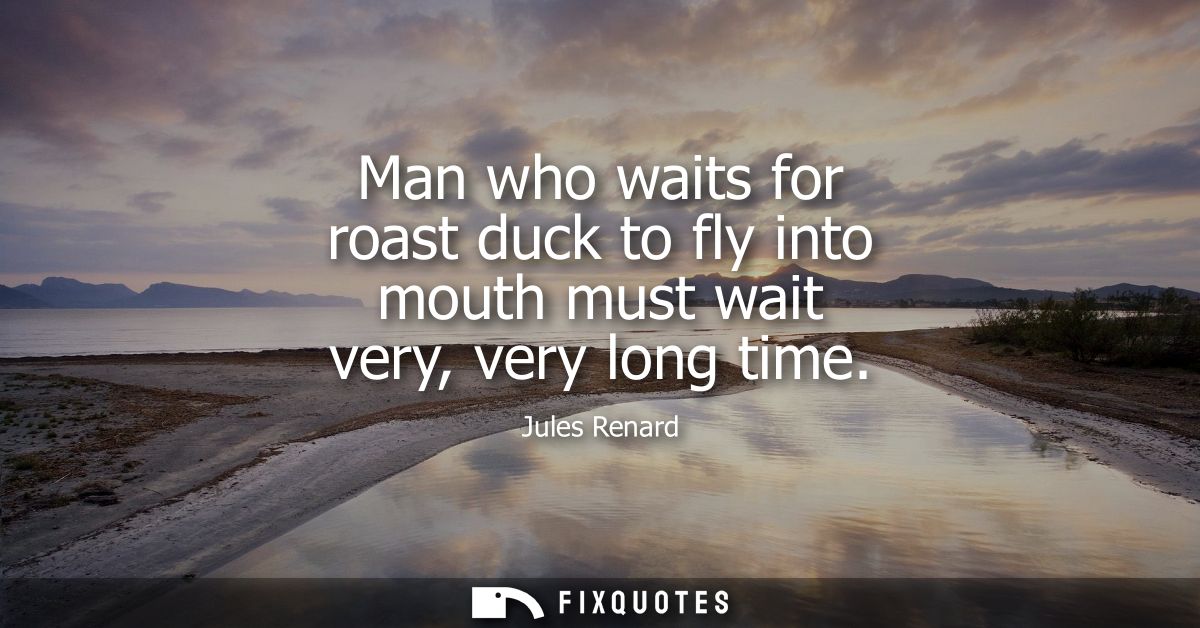
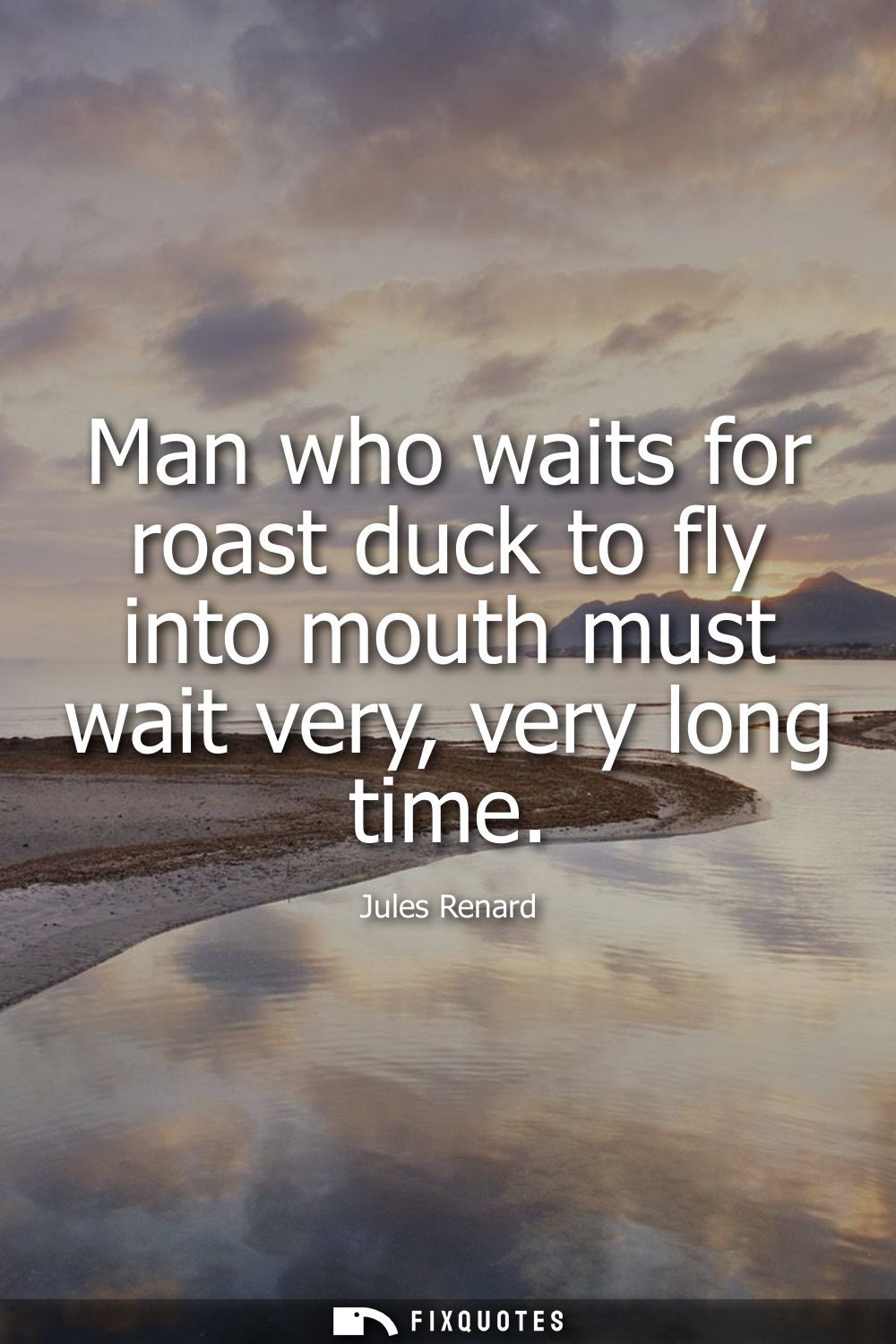
"Man who waits for roast duck to fly into mouth must wait very, very long time"
About this Quote
The phrasing matters. “Very, very long time” isn’t lyrical; it’s blunt, almost parental. Renard makes the consequence feel embarrassingly obvious, as if the listener should have known better. That mild humiliation is the engine of the wit. It converts a moral lesson into social satire: you can almost see the idle man being watched, judged, and quietly dismissed.
Context helps. Renard, writing in fin-de-siecle France, is steeped in the era’s distrust of grand postures and easy consolations. His work often favors small cruelties over big philosophies, exposing how people rationalize inertia. The roast duck functions as a luxury item, too: not bread, not soup, but something rich. The line isn’t just “work for your dinner.” It’s “stop expecting life’s treats to arrive without you moving at all.”
Quote Details
| Topic | Wisdom |
|---|---|
| Source | Help us find the source |
| Cite |
Citation Formats
APA Style (7th ed.)
Renard, Jules. (2026, January 14). Man who waits for roast duck to fly into mouth must wait very, very long time. FixQuotes. https://fixquotes.com/quotes/man-who-waits-for-roast-duck-to-fly-into-mouth-52521/
Chicago Style
Renard, Jules. "Man who waits for roast duck to fly into mouth must wait very, very long time." FixQuotes. January 14, 2026. https://fixquotes.com/quotes/man-who-waits-for-roast-duck-to-fly-into-mouth-52521/.
MLA Style (9th ed.)
"Man who waits for roast duck to fly into mouth must wait very, very long time." FixQuotes, 14 Jan. 2026, https://fixquotes.com/quotes/man-who-waits-for-roast-duck-to-fly-into-mouth-52521/. Accessed 7 Mar. 2026.