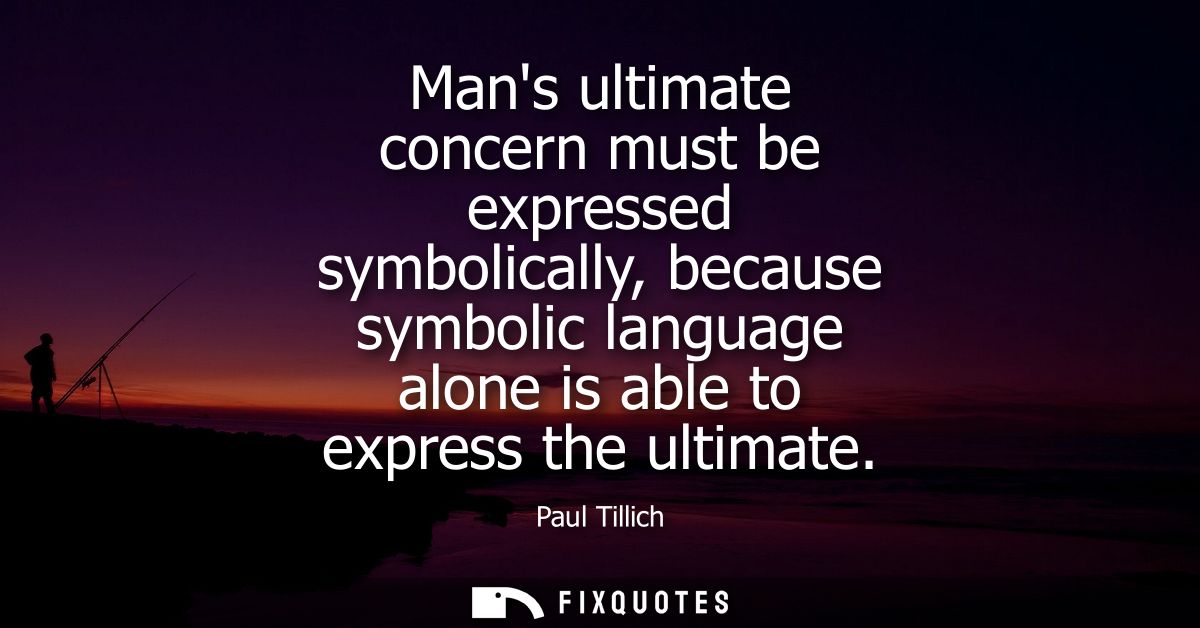
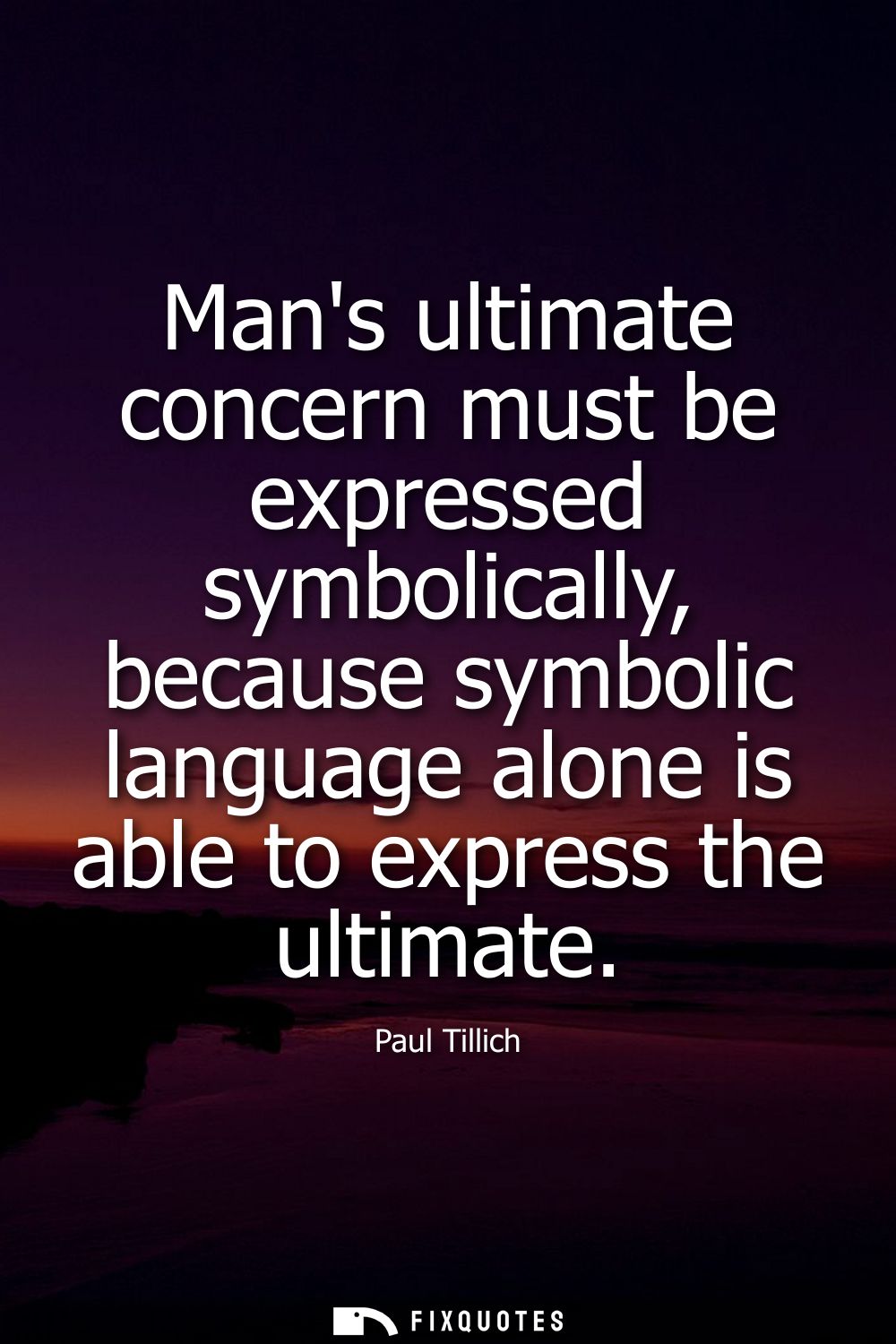
"Man's ultimate concern must be expressed symbolically, because symbolic language alone is able to express the ultimate"
About this Quote
The subtext is a defense of religion after the credibility crisis of the early 20th century, when science, historical criticism, and world war made traditional God-talk sound either naive or dangerous. Tillich, writing in the shadow of totalitarianism and exile, doesn't retreat into fundamentalism. He reframes faith as depth. Symbolic language becomes a disciplined honesty: an admission that literal statements about the divine tend to turn God into an object, a manageable thing among things - which, for Tillich, is idolatry.
The sentence also smuggles in a cultural critique. Modernity prizes "clear communication", but Tillich suggests clarity can be a form of evasion when it comes to ultimate commitments. Symbols don't just point; they participate, they open up levels of experience we can't access with straightforward propositions. He's not asking for vagueness. He's arguing for a language adequate to stakes that are total.
Quote Details
| Topic | Faith |
|---|---|
| Source | Help us find the source |
| Cite |
Citation Formats
APA Style (7th ed.)
Tillich, Paul. (2026, January 18). Man's ultimate concern must be expressed symbolically, because symbolic language alone is able to express the ultimate. FixQuotes. https://fixquotes.com/quotes/mans-ultimate-concern-must-be-expressed-22974/
Chicago Style
Tillich, Paul. "Man's ultimate concern must be expressed symbolically, because symbolic language alone is able to express the ultimate." FixQuotes. January 18, 2026. https://fixquotes.com/quotes/mans-ultimate-concern-must-be-expressed-22974/.
MLA Style (9th ed.)
"Man's ultimate concern must be expressed symbolically, because symbolic language alone is able to express the ultimate." FixQuotes, 18 Jan. 2026, https://fixquotes.com/quotes/mans-ultimate-concern-must-be-expressed-22974/. Accessed 1 Apr. 2026.