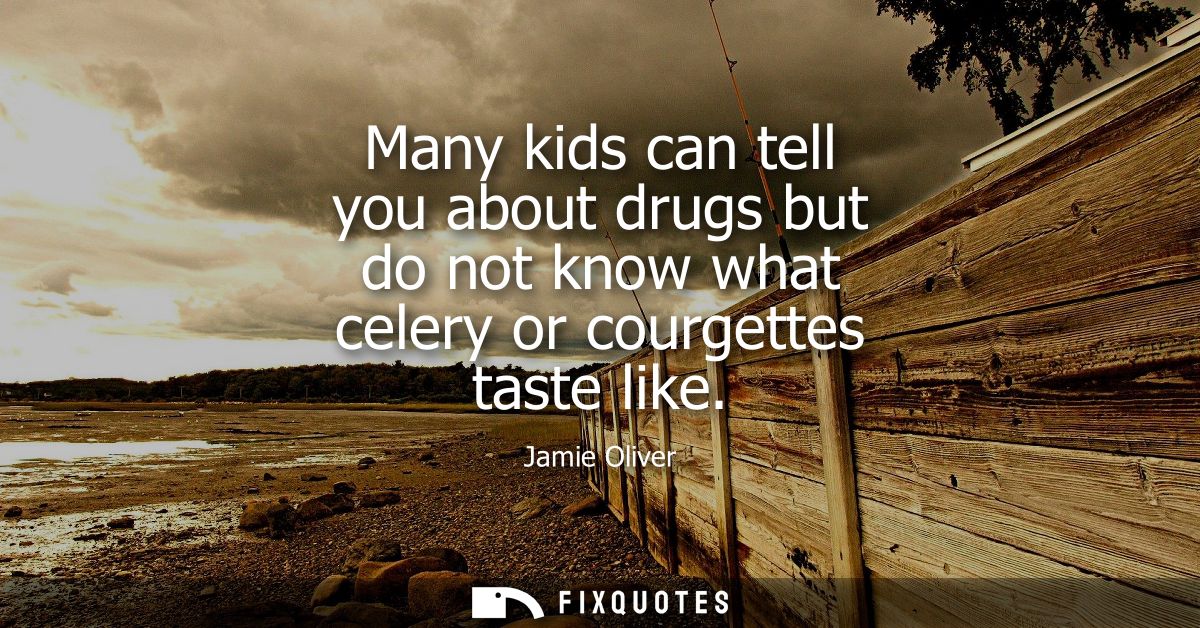
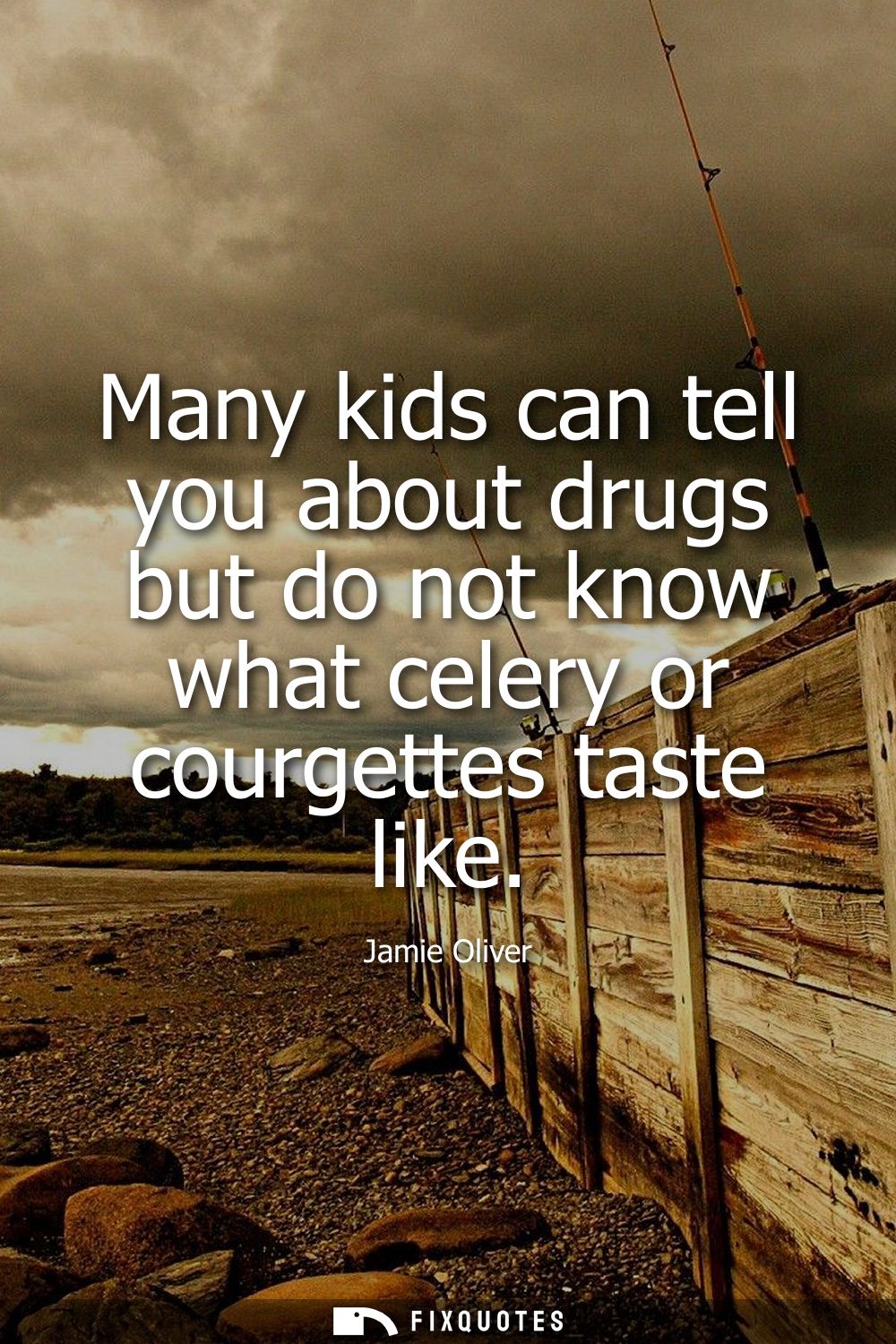
"Many kids can tell you about drugs, but do not know what celery or courgettes taste like"
About this Quote
Oliver’s intent is activist as much as culinary. He’s arguing that diet isn’t a private lifestyle choice; it’s infrastructure. If parents are overworked, schools are underfunded, and ultra-processed food is cheaper and louder than fresh produce, then the palate gets engineered early. “Celery or courgettes” aren’t gourmet signifiers - they’re deliberately ordinary, everyday vegetables. That ordinariness is the point: the baseline has slipped.
The subtext also carries a critique of adult hypocrisy. We stage huge campaigns about drugs, while letting children grow up in environments where knowing real food becomes optional. The quote’s rhetorical power comes from its asymmetry: drugs represent threat and taboo, vegetables represent care and routine. Put side by side, it suggests a society that’s become more fluent in crisis than in nourishment - and it dares you to feel that as an indictment, not a quirky observation.
Quote Details
| Topic | Food |
|---|---|
| Source | Help us find the source |
| Cite |
Citation Formats
APA Style (7th ed.)
Oliver, Jamie. (2026, February 16). Many kids can tell you about drugs, but do not know what celery or courgettes taste like. FixQuotes. https://fixquotes.com/quotes/many-kids-can-tell-you-about-drugs-but-do-not-121155/
Chicago Style
Oliver, Jamie. "Many kids can tell you about drugs, but do not know what celery or courgettes taste like." FixQuotes. February 16, 2026. https://fixquotes.com/quotes/many-kids-can-tell-you-about-drugs-but-do-not-121155/.
MLA Style (9th ed.)
"Many kids can tell you about drugs, but do not know what celery or courgettes taste like." FixQuotes, 16 Feb. 2026, https://fixquotes.com/quotes/many-kids-can-tell-you-about-drugs-but-do-not-121155/. Accessed 26 Mar. 2026.