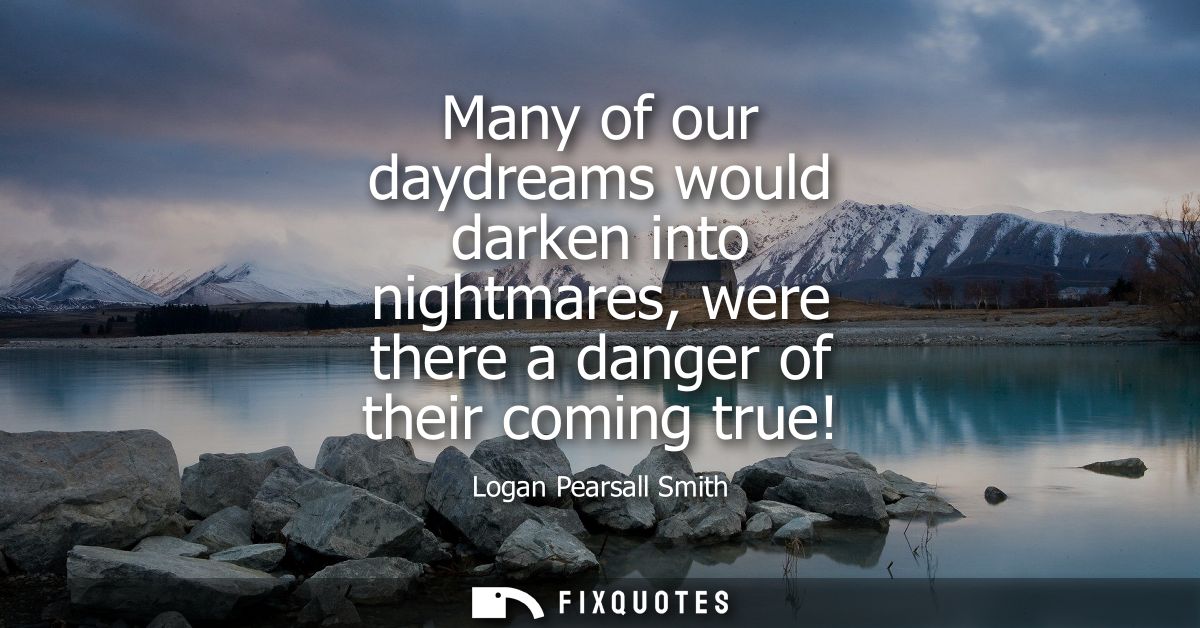
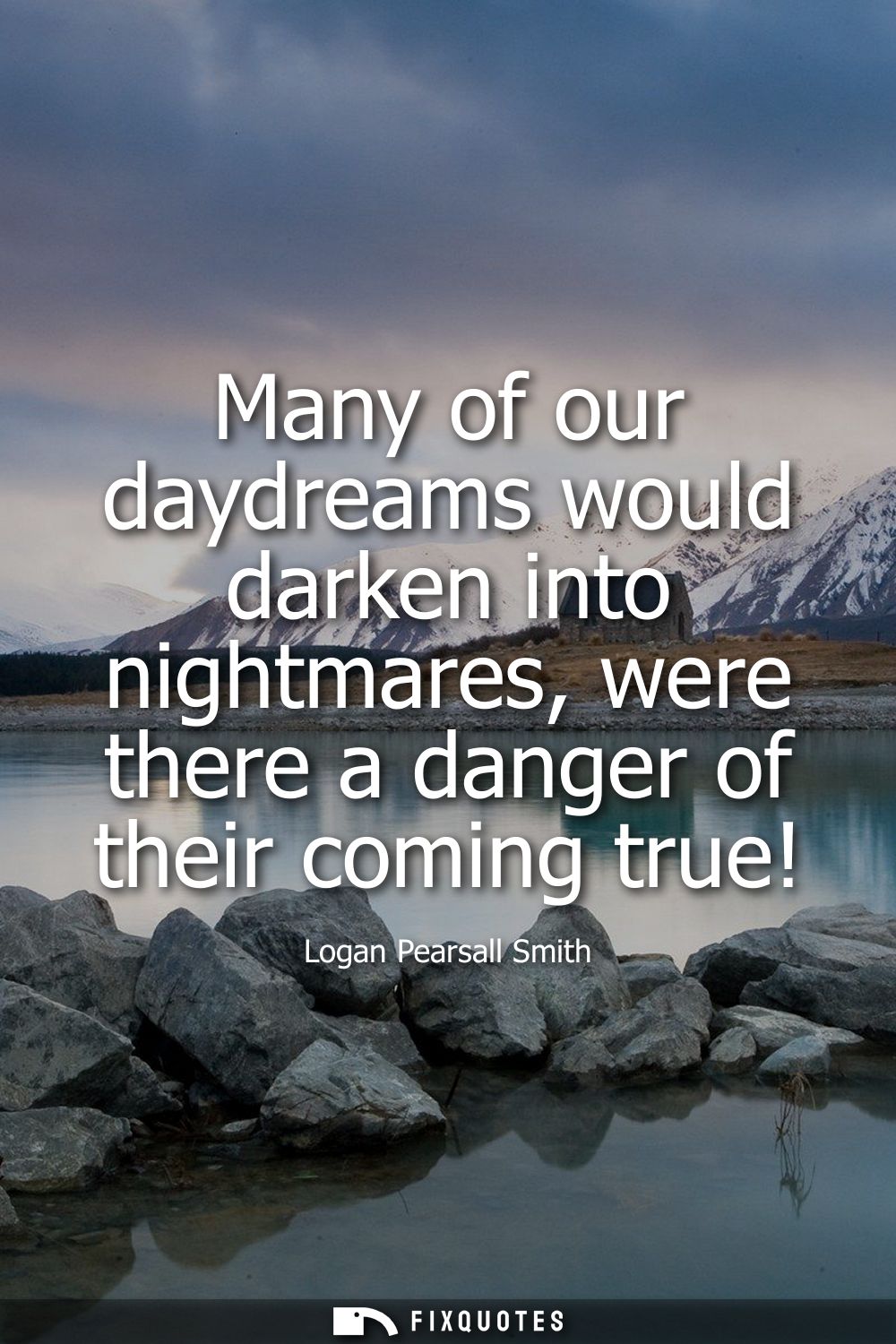
"Many of our daydreams would darken into nightmares, were there a danger of their coming true!"
About this Quote
Smith, a critic by trade and a master of the aphorism, is doing critic-work on the self. The subtext is that daydreams aren’t plans; they’re emotional prototypes. They’re allowed to be inconsistent, selfish, inflated, even a little cruel, because they don’t have to survive friction: other people’s needs, time, money, consequences, your own boredom once the chase is over. The dream’s power often depends on its unreality. Make it real and the fantasy loses its flattering edit - and you lose the excuse of “someday.”
Context matters: Smith writes out of an early 20th-century sensibility suspicious of grand romantic narratives and equally skeptical of modern ambition. He isn’t preaching prudence so much as exposing a quiet hypocrisy: we claim to want certain things, but we also rely on not having them. The nightmare isn’t failure; it’s contact.
Quote Details
| Topic | Wisdom |
|---|---|
| Source | Help us find the source |
| Cite |
Citation Formats
APA Style (7th ed.)
Smith, Logan Pearsall. (2026, January 17). Many of our daydreams would darken into nightmares, were there a danger of their coming true! FixQuotes. https://fixquotes.com/quotes/many-of-our-daydreams-would-darken-into-61115/
Chicago Style
Smith, Logan Pearsall. "Many of our daydreams would darken into nightmares, were there a danger of their coming true!" FixQuotes. January 17, 2026. https://fixquotes.com/quotes/many-of-our-daydreams-would-darken-into-61115/.
MLA Style (9th ed.)
"Many of our daydreams would darken into nightmares, were there a danger of their coming true!" FixQuotes, 17 Jan. 2026, https://fixquotes.com/quotes/many-of-our-daydreams-would-darken-into-61115/. Accessed 8 Mar. 2026.