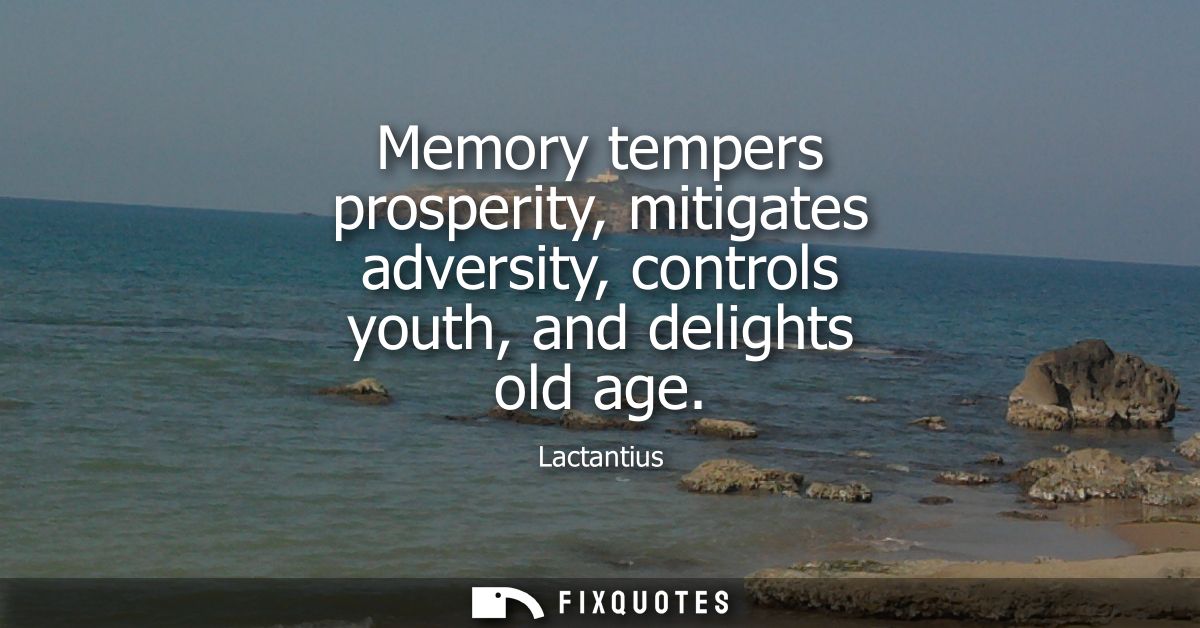
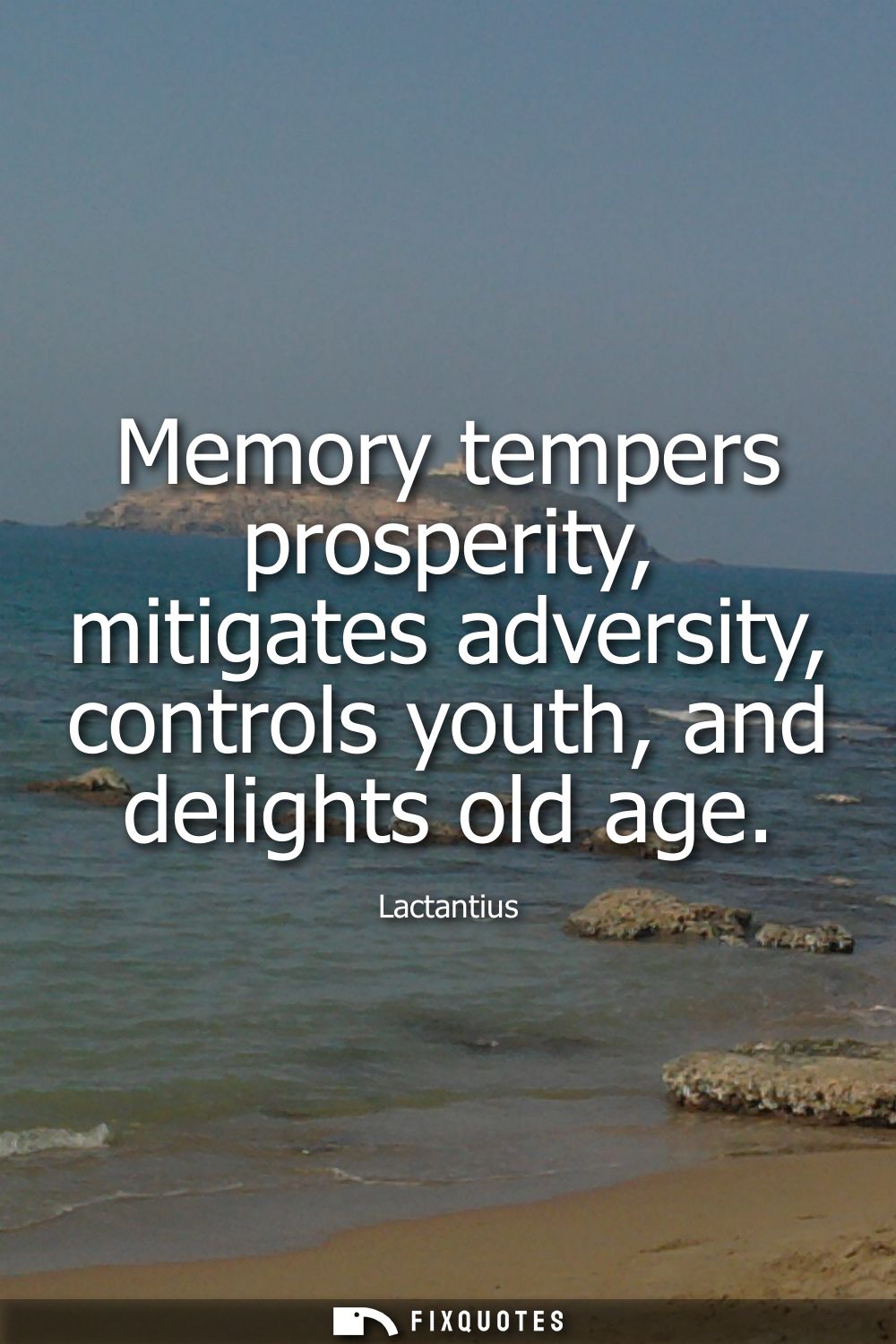
"Memory tempers prosperity, mitigates adversity, controls youth, and delights old age"
About this Quote
Prosperity is easy to mismanage because it feels like proof. Lactantius knows that, and he recruits memory as the one faculty that can puncture the arrogance of good fortune without turning it into self-loathing. “Tempers prosperity” reads like an ethical brake: remember earlier need, past mistakes, the fragility of status, and you become less likely to confuse luck with virtue. The line isn’t nostalgic; it’s preventative.
The second move is more bracing: memory “mitigates adversity.” That’s not sentimental reassurance. It’s psychological strategy. Recollection supplies evidence that pain is survivable because it’s been survived before; it also provides a library of meanings you can borrow when the present refuses to cohere. In a Christian late-Roman context, that can include the memory of martyrdom, scripture, and communal endurance - a curated past that makes suffering legible rather than merely brutal.
Then Lactantius turns memory into governance: it “controls youth.” The subtext is that youth has energy but not ballast, and memory - whether personal experience or inherited tradition - acts as a substitute for consequences not yet paid. It’s a conservative claim in the literal sense: preserve what was learned so the young don’t have to learn everything by collision.
“Delights old age” lands as the reward: when appetite and power narrow, memory becomes a durable pleasure, a private archive that still yields richness. The sentence works because it frames memory as a civic technology of the self, regulating mood across life’s swings, offering continuity when circumstances won’t.
The second move is more bracing: memory “mitigates adversity.” That’s not sentimental reassurance. It’s psychological strategy. Recollection supplies evidence that pain is survivable because it’s been survived before; it also provides a library of meanings you can borrow when the present refuses to cohere. In a Christian late-Roman context, that can include the memory of martyrdom, scripture, and communal endurance - a curated past that makes suffering legible rather than merely brutal.
Then Lactantius turns memory into governance: it “controls youth.” The subtext is that youth has energy but not ballast, and memory - whether personal experience or inherited tradition - acts as a substitute for consequences not yet paid. It’s a conservative claim in the literal sense: preserve what was learned so the young don’t have to learn everything by collision.
“Delights old age” lands as the reward: when appetite and power narrow, memory becomes a durable pleasure, a private archive that still yields richness. The sentence works because it frames memory as a civic technology of the self, regulating mood across life’s swings, offering continuity when circumstances won’t.
Quote Details
| Topic | Aging |
|---|
More Quotes by Lactantius
Add to List