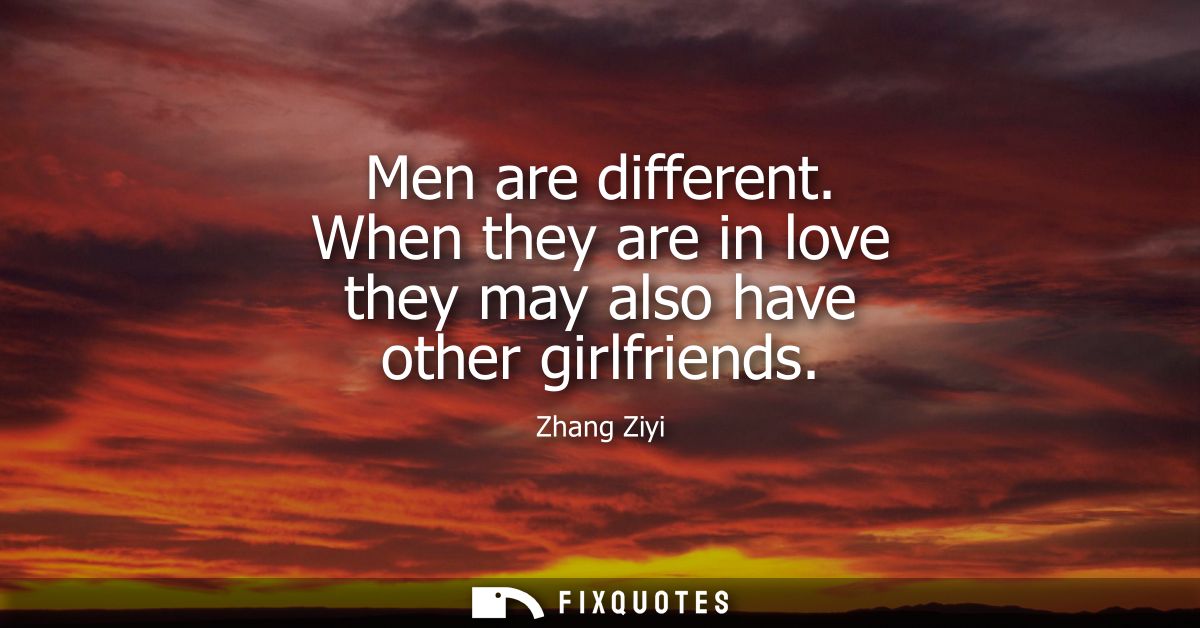
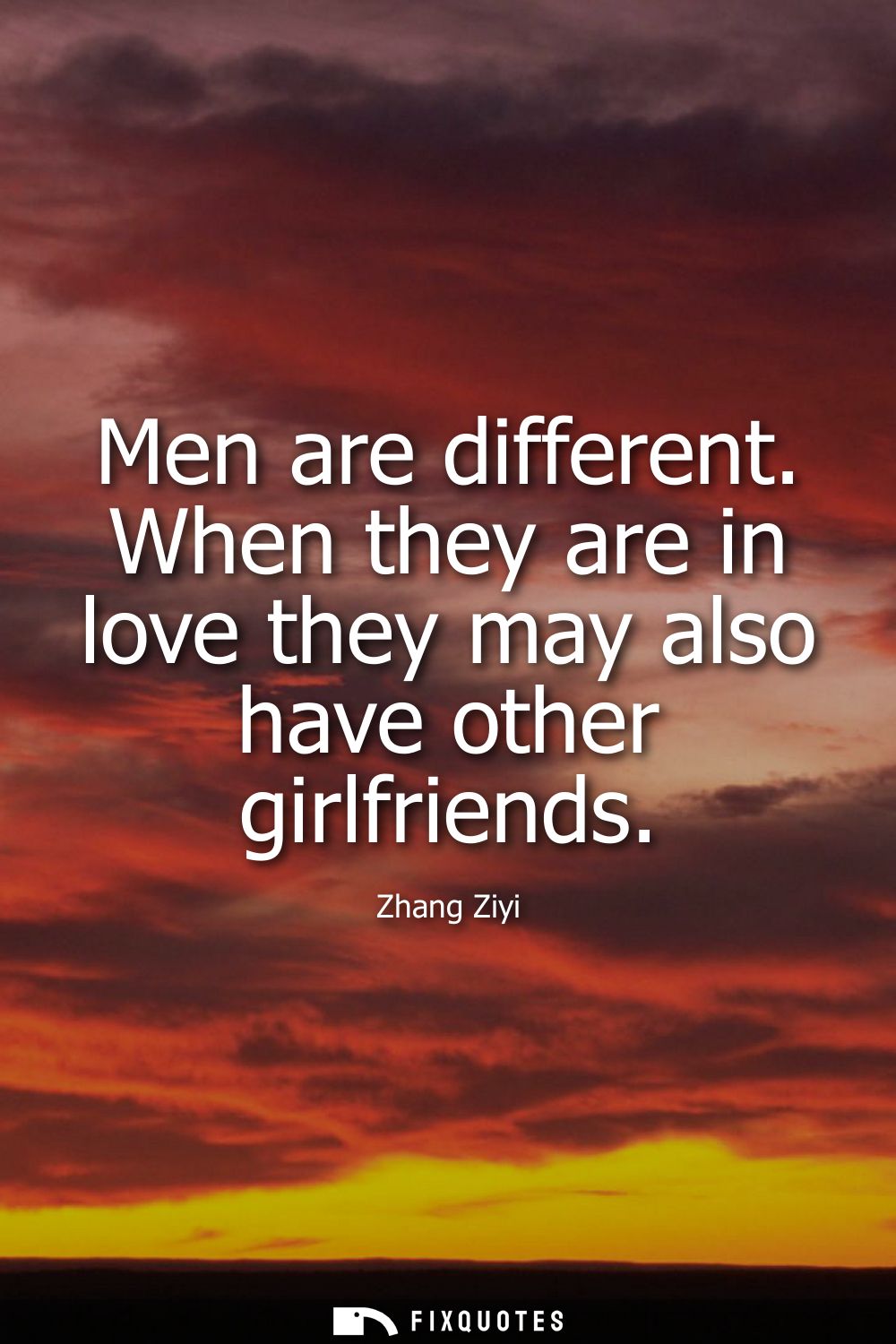
"Men are different. When they are in love they may also have other girlfriends"
About this Quote
The sting sits in the phrase “in love.” Zhang isn’t describing casual dating; she’s targeting the modern alibi that love and fidelity are separable, that emotional sincerity can coexist with parallel romantic arrangements. By adding “may also have other girlfriends,” she chooses a euphemism that’s almost comically understated. “Other girlfriends” sounds like spare umbrellas. The understatement is the point: it mimics how cheating is often normalized, especially for powerful men, as if it’s an accessory to status rather than a betrayal.
Contextually, it reads as an actress speaking from inside an industry where image management, male entitlement, and asymmetric consequences are common folklore. The subtext isn’t that women accept this; it’s that they’re expected to. The line works because it forces the listener to confront how quickly “difference” becomes excuse, and how often culture asks women to call that realism.
Quote Details
| Topic | Betrayal |
|---|---|
| Source | Help us find the source |
| Cite |
Citation Formats
APA Style (7th ed.)
Ziyi, Zhang. (2026, January 15). Men are different. When they are in love they may also have other girlfriends. FixQuotes. https://fixquotes.com/quotes/men-are-different-when-they-are-in-love-they-may-171260/
Chicago Style
Ziyi, Zhang. "Men are different. When they are in love they may also have other girlfriends." FixQuotes. January 15, 2026. https://fixquotes.com/quotes/men-are-different-when-they-are-in-love-they-may-171260/.
MLA Style (9th ed.)
"Men are different. When they are in love they may also have other girlfriends." FixQuotes, 15 Jan. 2026, https://fixquotes.com/quotes/men-are-different-when-they-are-in-love-they-may-171260/. Accessed 8 Apr. 2026.