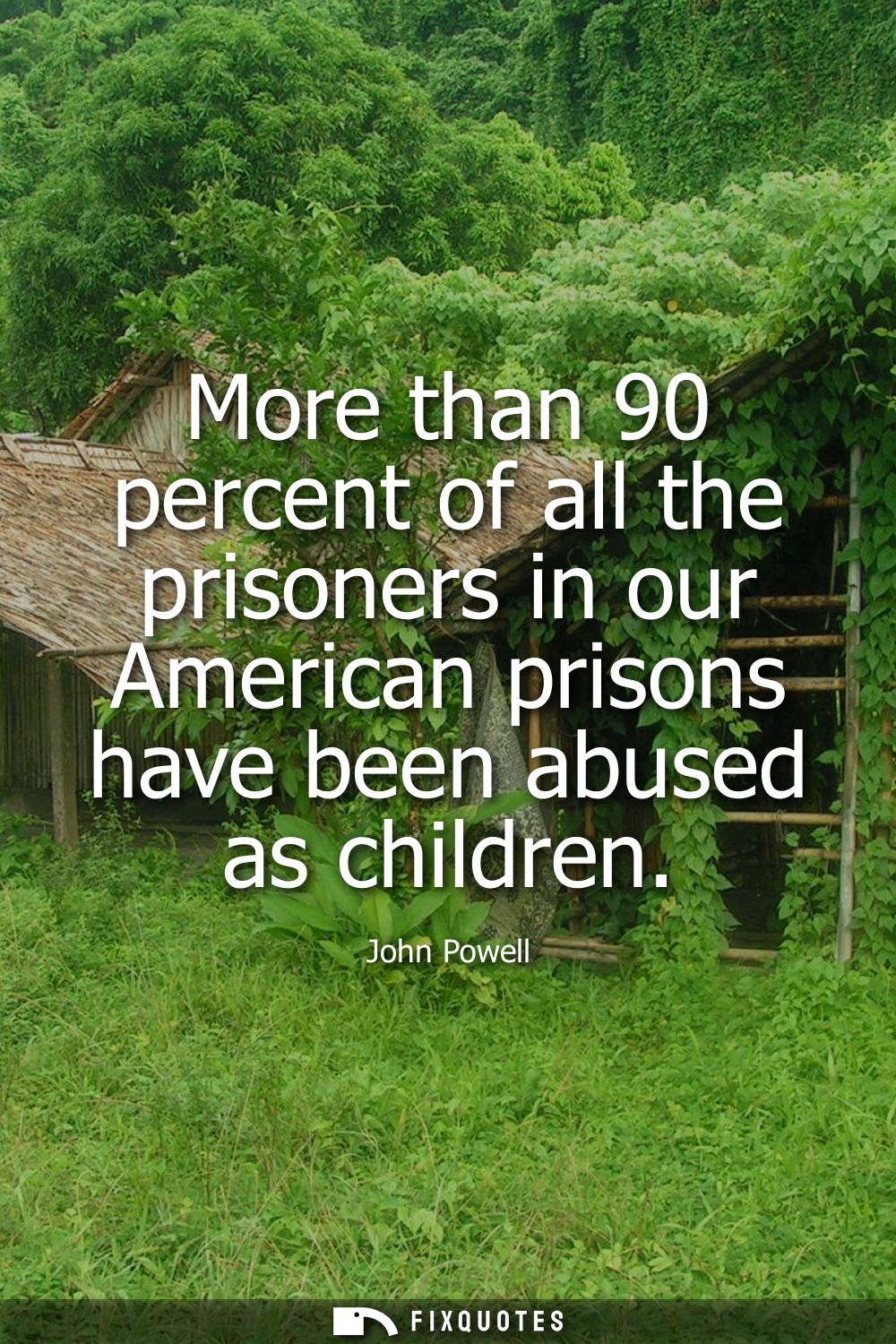
"More than 90 percent of all the prisoners in our American prisons have been abused as children"
About this Quote
The intent is quietly radical. It’s not asking for sympathy as a vibe; it’s trying to change causality. If abuse is the dominant common denominator, then punishment starts to look less like justice and more like a society managing the downstream costs of its own neglect. The subtext is an indictment of the American preference for dramatic endings over unglamorous prevention. We’ll fund cages more readily than counselors; we’ll demand “accountability” while refusing to account for what happened first.
As a cultural moment, the quote sits in the long shift from “tough on crime” certainty to trauma-informed unease. It uses the authority of a statistic to smuggle in a feeling: the unsettling recognition that violence and harm are often learned responses, not spontaneous moral failures. Even if the exact percentage gets debated, the rhetorical function holds. Powell is scoring a scene where the villain isn’t only the individual behind bars, but the earlier adults, institutions, and silences that wrote the first act.
Quote Details
| Topic | Justice |
|---|---|
| Source | Help us find the source |
| Cite |
Citation Formats
APA Style (7th ed.)
Powell, John. (2026, January 17). More than 90 percent of all the prisoners in our American prisons have been abused as children. FixQuotes. https://fixquotes.com/quotes/more-than-90-percent-of-all-the-prisoners-in-our-52332/
Chicago Style
Powell, John. "More than 90 percent of all the prisoners in our American prisons have been abused as children." FixQuotes. January 17, 2026. https://fixquotes.com/quotes/more-than-90-percent-of-all-the-prisoners-in-our-52332/.
MLA Style (9th ed.)
"More than 90 percent of all the prisoners in our American prisons have been abused as children." FixQuotes, 17 Jan. 2026, https://fixquotes.com/quotes/more-than-90-percent-of-all-the-prisoners-in-our-52332/. Accessed 27 Mar. 2026.