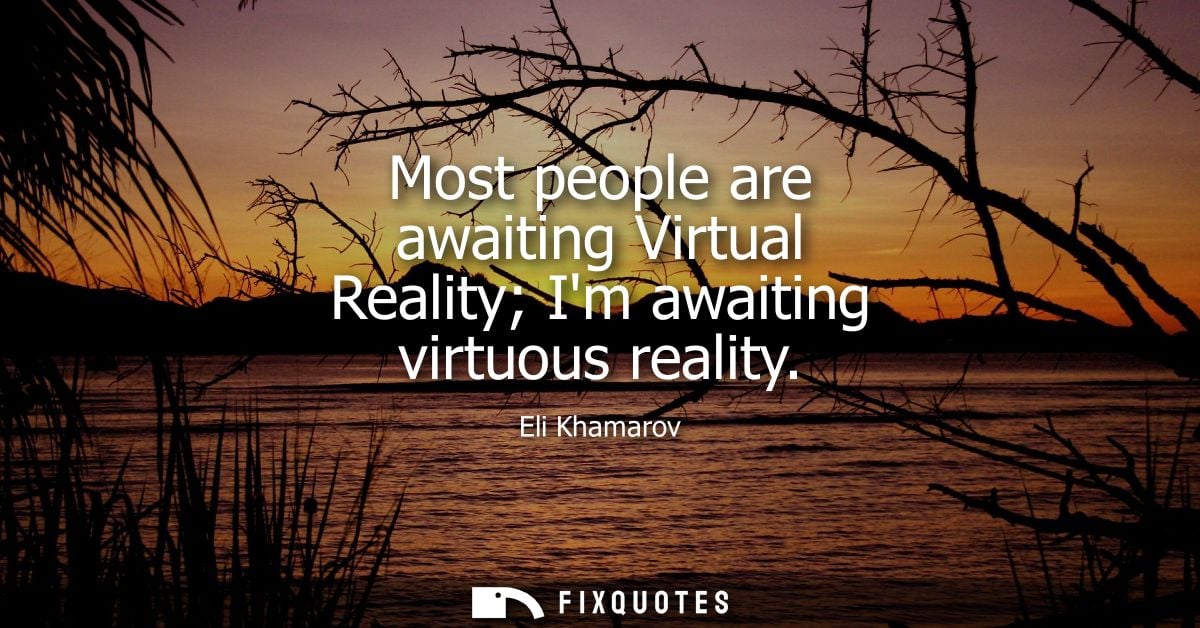
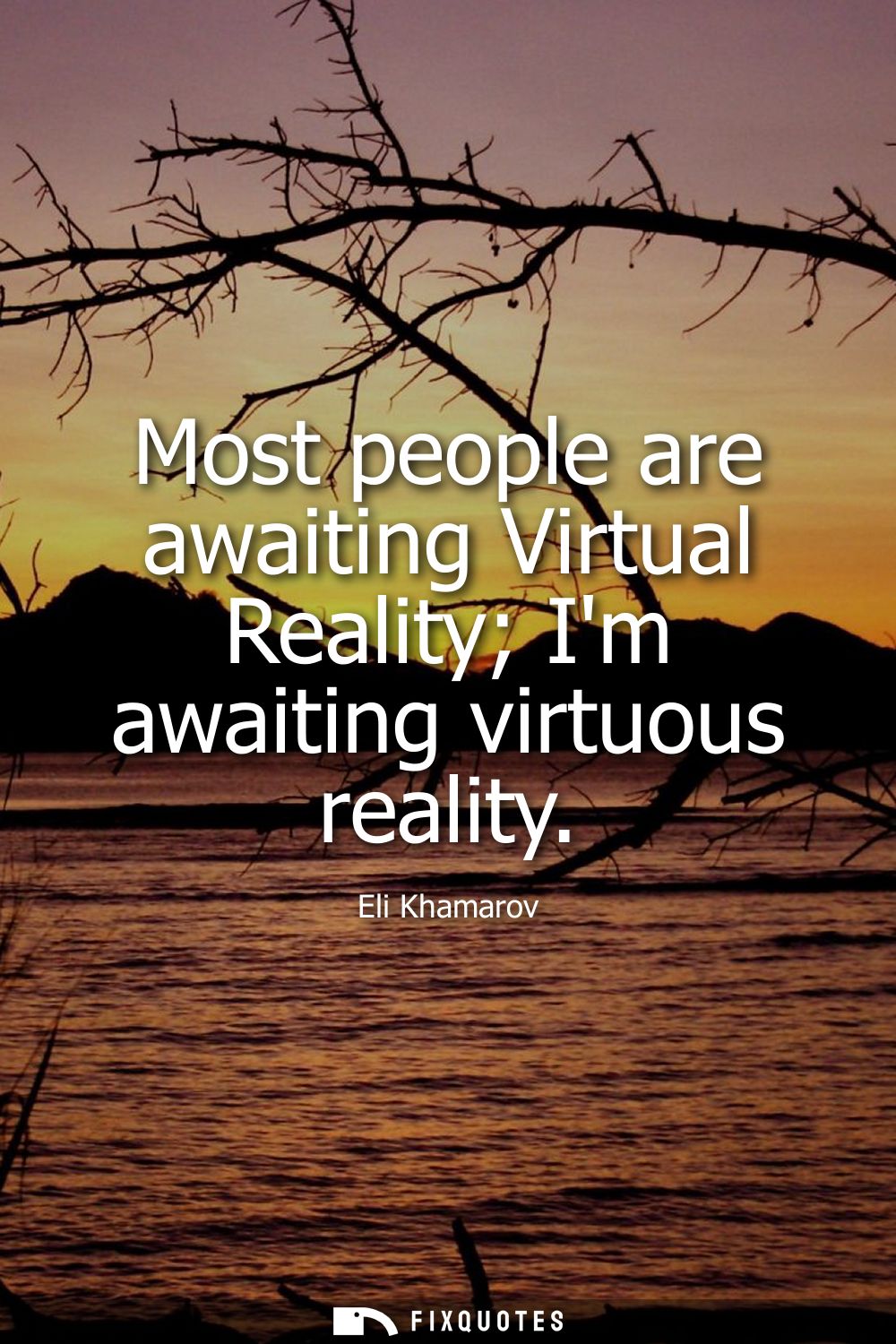
"Most people are awaiting Virtual Reality; I'm awaiting virtuous reality"
About this Quote
The line works because it hijacks a buzzword and turns it into a moral diagnosis. “Virtual Reality” arrives with the promise of immersion, escape, and upgraded experience; Khamarov treats that cultural anticipation as a kind of collective posture: eyes forward, waiting for the next headset, the next platform, the next simulation to make life feel vivid. Then he snaps the focus from spectacle to character with a pun that’s more scalpel than dad joke. “Virtuous reality” isn’t a new product category. It’s an accusation that what’s missing isn’t resolution, frame rate, or content, but conscience.
The subtext is less anti-technology than anti-displacement. Khamarov implies we outsource meaning the same way we outsource memory to phones: if reality is disappointing or ethically messy, we try to render it instead of repair it. “Awaiting” is crucial here. It paints both camps as passive consumers, but only one kind of waiting is absurd. Virtual Reality is coming whether you deserve it or not; a virtuous reality requires participation, sacrifice, and accountability. That’s why the phrase lands like a rebuke: it reframes progress not as innovation but as integrity.
Contextually, it reads as a late-20th/early-21st-century writer’s response to a culture intoxicated by futurism and convenience. The joke is that we treat morality like a software update, perpetually postponed, while we sprint toward the next immersive distraction. Khamarov’s punchline suggests the real “upgrade” is ethical, and it won’t be shipped to you.
The subtext is less anti-technology than anti-displacement. Khamarov implies we outsource meaning the same way we outsource memory to phones: if reality is disappointing or ethically messy, we try to render it instead of repair it. “Awaiting” is crucial here. It paints both camps as passive consumers, but only one kind of waiting is absurd. Virtual Reality is coming whether you deserve it or not; a virtuous reality requires participation, sacrifice, and accountability. That’s why the phrase lands like a rebuke: it reframes progress not as innovation but as integrity.
Contextually, it reads as a late-20th/early-21st-century writer’s response to a culture intoxicated by futurism and convenience. The joke is that we treat morality like a software update, perpetually postponed, while we sprint toward the next immersive distraction. Khamarov’s punchline suggests the real “upgrade” is ethical, and it won’t be shipped to you.
Quote Details
| Topic | Ethics & Morality |
|---|---|
| Source | Help us find the source |
| Cite |
Citation Formats
APA Style (7th ed.)
Khamarov, Eli. (2026, January 16). Most people are awaiting Virtual Reality; I'm awaiting virtuous reality. FixQuotes. https://fixquotes.com/quotes/most-people-are-awaiting-virtual-reality-im-125905/
Chicago Style
Khamarov, Eli. "Most people are awaiting Virtual Reality; I'm awaiting virtuous reality." FixQuotes. January 16, 2026. https://fixquotes.com/quotes/most-people-are-awaiting-virtual-reality-im-125905/.
MLA Style (9th ed.)
"Most people are awaiting Virtual Reality; I'm awaiting virtuous reality." FixQuotes, 16 Jan. 2026, https://fixquotes.com/quotes/most-people-are-awaiting-virtual-reality-im-125905/. Accessed 18 Mar. 2026.
More Quotes by Eli
Add to List