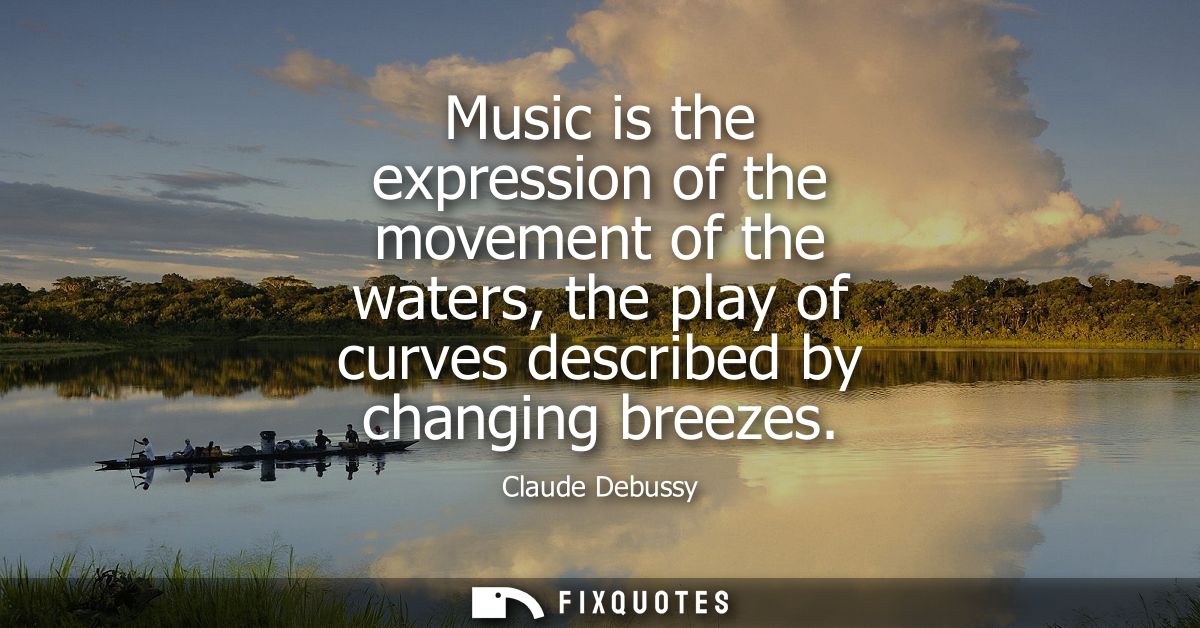
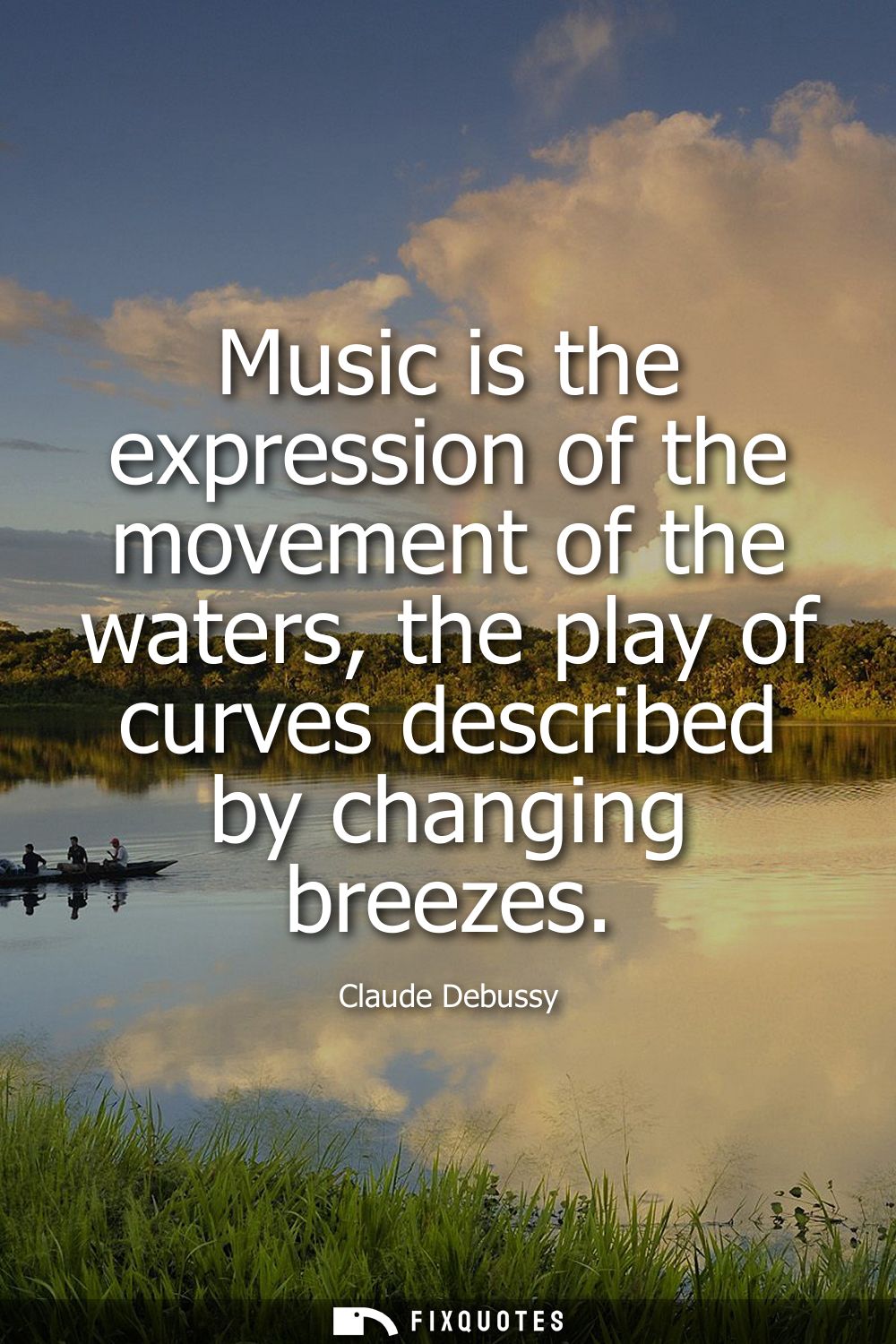
"Music is the expression of the movement of the waters, the play of curves described by changing breezes"
About this Quote
The second image sharpens the argument. “The play of curves described by changing breezes” is almost a manifesto against straight lines: against rigid forms, hard cadences, and the idea that beauty must arrive on schedule. Curves imply drift, contour, and softness; breezes imply forces you can’t see but can feel. Debussy is smuggling in his compositional priorities - timbre, color, the half-lit harmony that suggests rather than declares. He’s also making a quiet claim about perception: the listener shouldn’t “solve” the piece; they should inhabit it the way you watch ripples or clouds, alert to small shifts.
Context matters. Debussy’s Paris sits at the turn of the century, when painters were breaking realism into light and atmosphere, symbolist poets were chasing suggestion, and audiences were hungry for sensation over sermon. His metaphor aligns music with nature’s physics and with modern art’s refusal to spell everything out. The subtext is defiant: if you demand clear edges and tidy arguments, you’re listening for the wrong thing.
Quote Details
| Topic | Music |
|---|---|
| Source | Help us find the source |
| Cite |
Citation Formats
APA Style (7th ed.)
Debussy, Claude. (2026, January 17). Music is the expression of the movement of the waters, the play of curves described by changing breezes. FixQuotes. https://fixquotes.com/quotes/music-is-the-expression-of-the-movement-of-the-53583/
Chicago Style
Debussy, Claude. "Music is the expression of the movement of the waters, the play of curves described by changing breezes." FixQuotes. January 17, 2026. https://fixquotes.com/quotes/music-is-the-expression-of-the-movement-of-the-53583/.
MLA Style (9th ed.)
"Music is the expression of the movement of the waters, the play of curves described by changing breezes." FixQuotes, 17 Jan. 2026, https://fixquotes.com/quotes/music-is-the-expression-of-the-movement-of-the-53583/. Accessed 15 Mar. 2026.