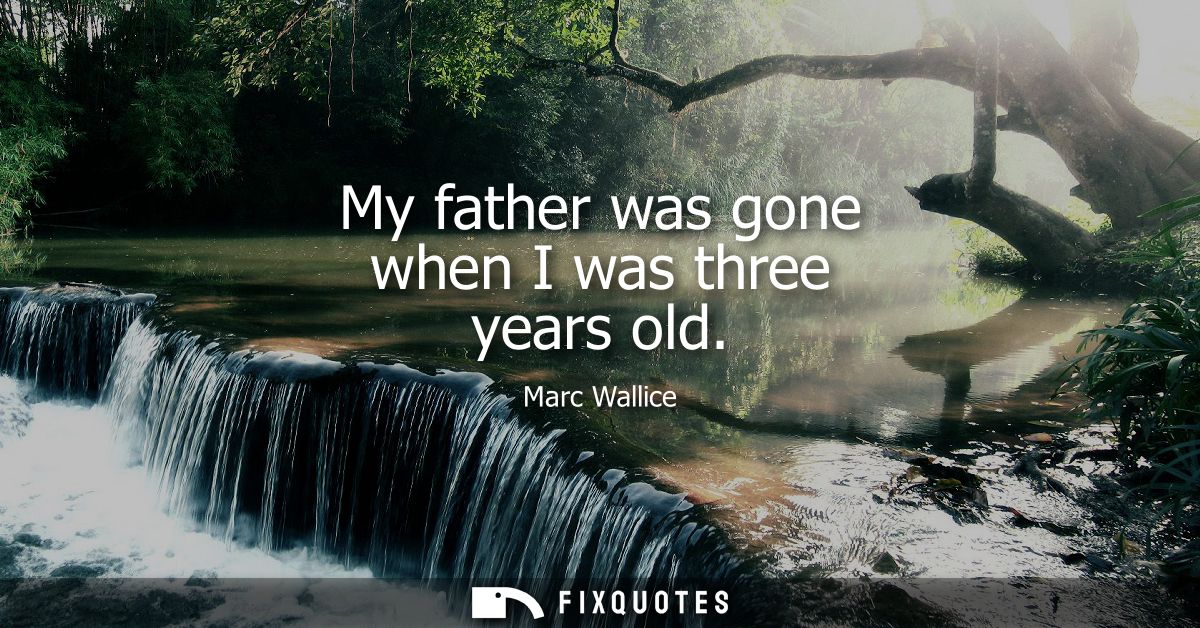
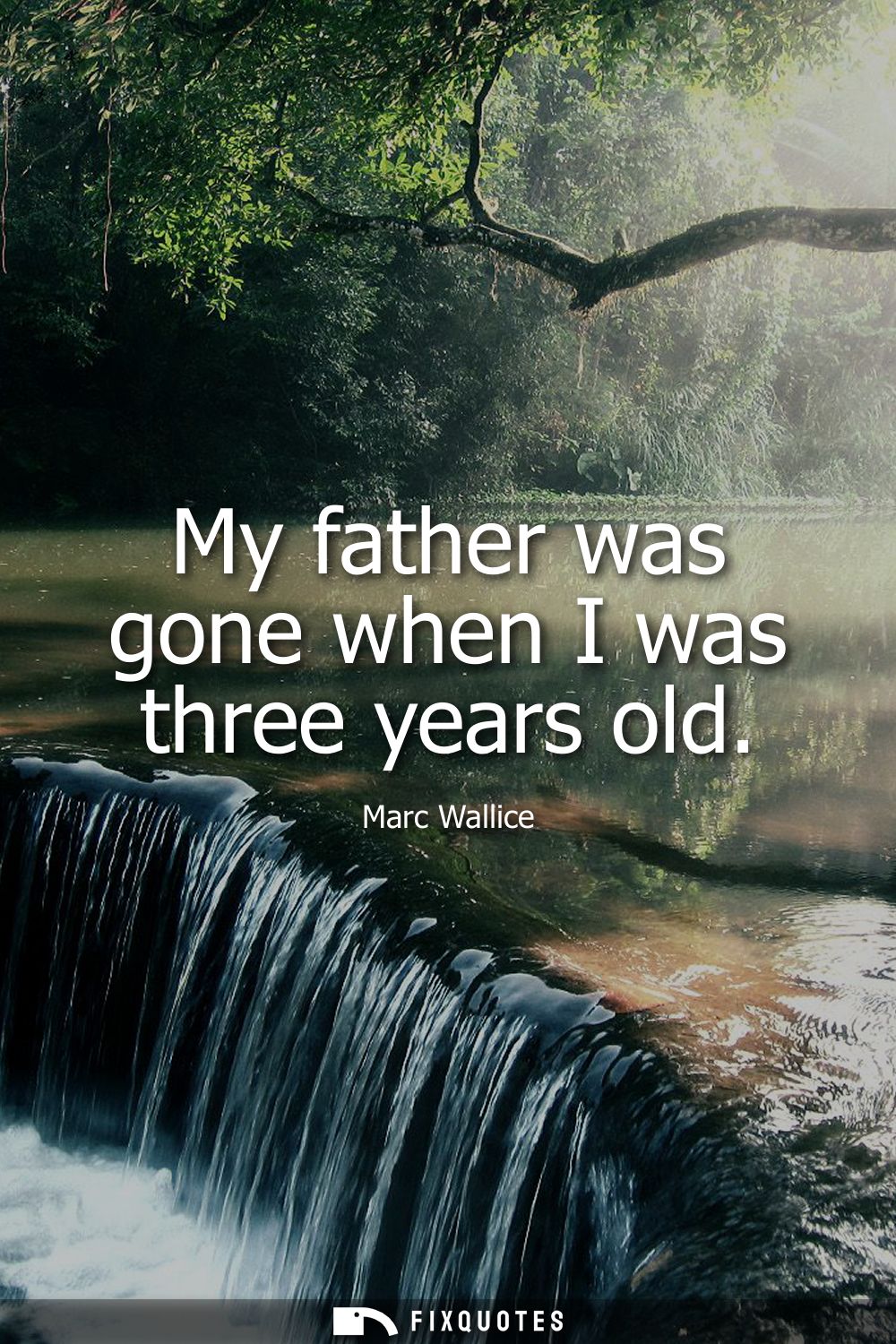
"My father was gone when I was three years old"
About this Quote
A clean, almost reportorial sentence like this is doing double duty: it delivers a fact while refusing to perform the emotion people expect to come with it. "Gone" is the operative word. It’s evasive enough to hold multiple truths at once - death, abandonment, absence by choice, absence by necessity - and that ambiguity is part of the power. It lets the speaker control the story by withholding the kind of explanatory detail audiences tend to demand, especially from public figures.
The age marker, "three years old", isn’t there for chronology alone; it’s a rhetorical device that collapses memory into myth. At three, you don’t have a clear narrative of what happened, only the aftershocks: who showed up, who didn’t, what you absorbed in other people’s silences. The line quietly frames the father’s disappearance as a foundational event without turning it into a melodrama. It also subtly shifts responsibility away from the child-self: nothing about that absence can be blamed on a toddler.
Coming from an actor, the statement reads as origin-story shorthand - a way to sketch an emotional backdrop that can explain toughness, hunger, volatility, or self-reliance without spelling any of it out. It’s compact enough to be used in an interview, a memoir beat, or a courtroom-adjacent confession, depending on which chapter of a life is being narrated. The subtext is less "pity me" than "this is the missing piece you should factor into how you read me", a bid for context without surrendering privacy.
The age marker, "three years old", isn’t there for chronology alone; it’s a rhetorical device that collapses memory into myth. At three, you don’t have a clear narrative of what happened, only the aftershocks: who showed up, who didn’t, what you absorbed in other people’s silences. The line quietly frames the father’s disappearance as a foundational event without turning it into a melodrama. It also subtly shifts responsibility away from the child-self: nothing about that absence can be blamed on a toddler.
Coming from an actor, the statement reads as origin-story shorthand - a way to sketch an emotional backdrop that can explain toughness, hunger, volatility, or self-reliance without spelling any of it out. It’s compact enough to be used in an interview, a memoir beat, or a courtroom-adjacent confession, depending on which chapter of a life is being narrated. The subtext is less "pity me" than "this is the missing piece you should factor into how you read me", a bid for context without surrendering privacy.
Quote Details
| Topic | Father |
|---|---|
| Source | Help us find the source |
| Cite |
Citation Formats
APA Style (7th ed.)
Wallice, Marc. (2026, January 16). My father was gone when I was three years old. FixQuotes. https://fixquotes.com/quotes/my-father-was-gone-when-i-was-three-years-old-129906/
Chicago Style
Wallice, Marc. "My father was gone when I was three years old." FixQuotes. January 16, 2026. https://fixquotes.com/quotes/my-father-was-gone-when-i-was-three-years-old-129906/.
MLA Style (9th ed.)
"My father was gone when I was three years old." FixQuotes, 16 Jan. 2026, https://fixquotes.com/quotes/my-father-was-gone-when-i-was-three-years-old-129906/. Accessed 18 Mar. 2026.
More Quotes by Marc
Add to List