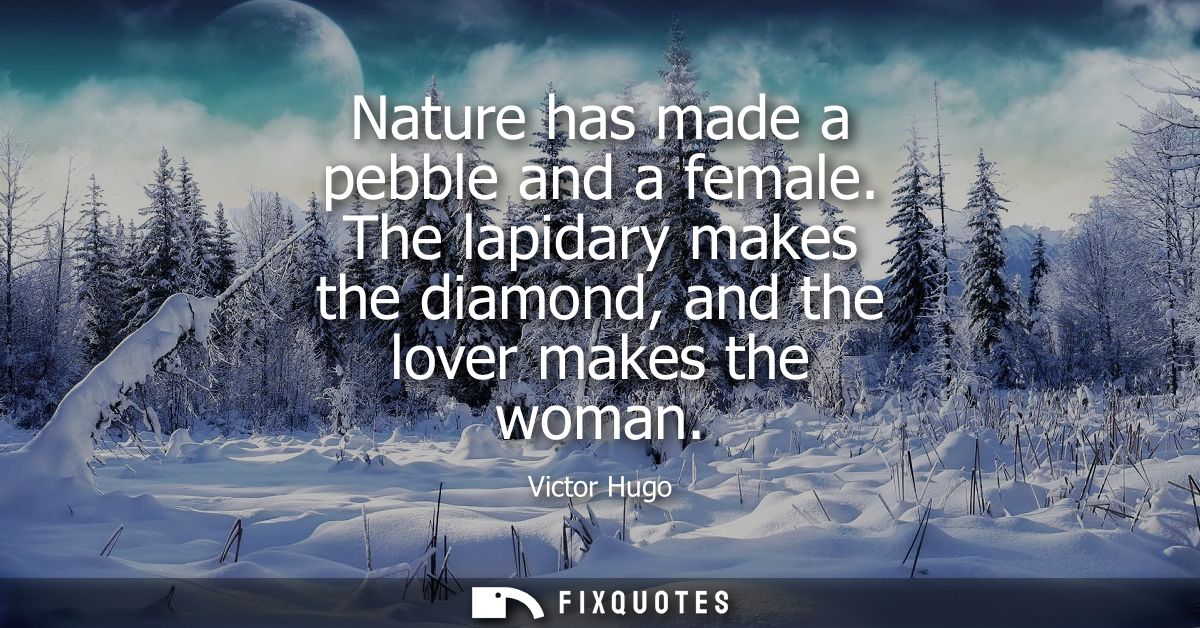
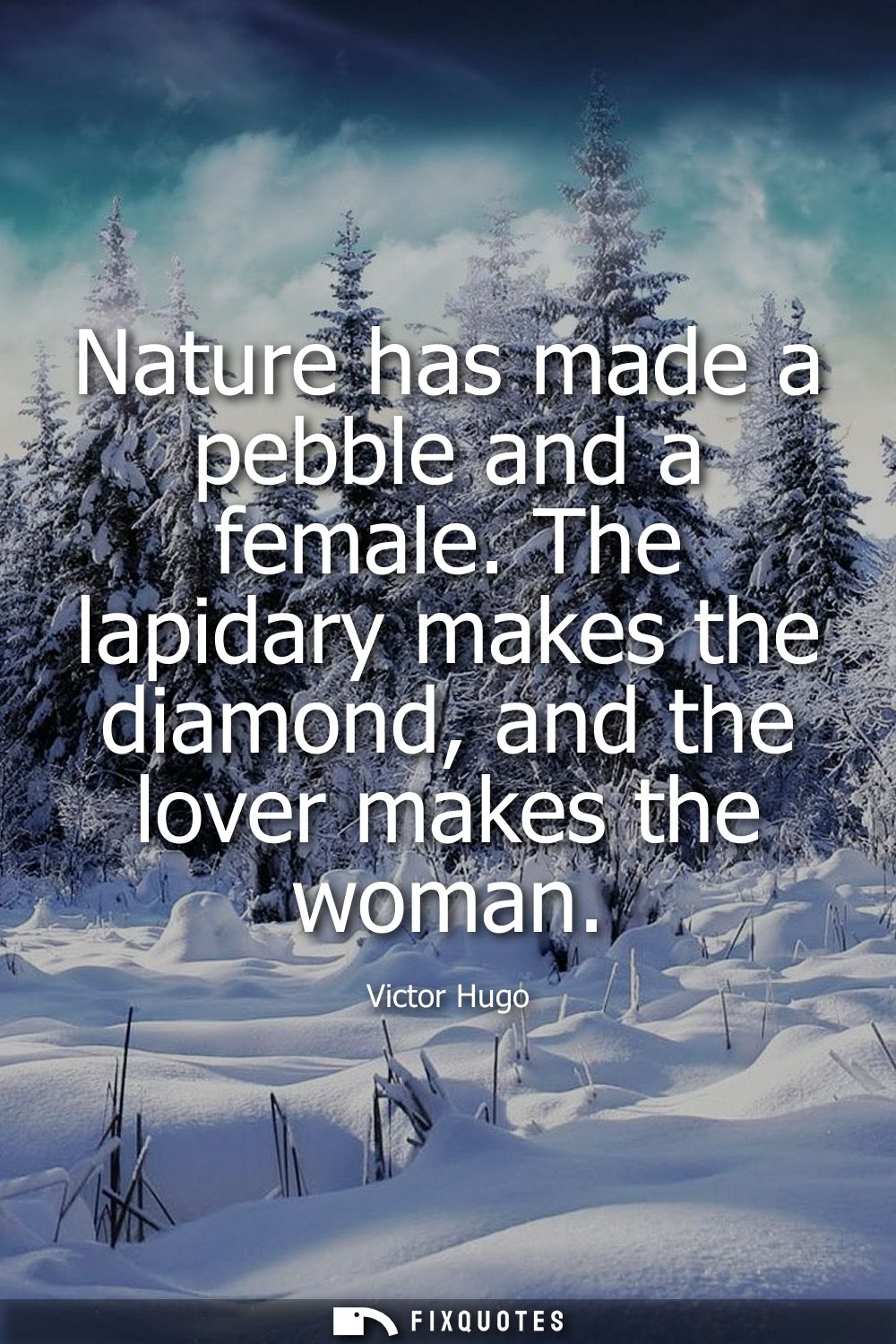
"Nature has made a pebble and a female. The lapidary makes the diamond, and the lover makes the woman"
About this Quote
But the subtext is more complicated than a valentine. The lapidary metaphor is technical, almost industrial: value is not innate; it’s made. By pairing “diamond” with “woman,” Hugo suggests femininity is a finished product, not a self-possessed identity. The lover isn’t meeting an equal; he’s shaping her, authoring her. That’s not incidental. In 19th-century France, the “ideal woman” was a cultural project - coded by class, decorum, and male gaze - and Romantic literature often treated women as catalysts for male destiny rather than agents of their own.
The intent, then, is double: to elevate love as a creative force and to naturalize a power dynamic. It works because it compresses a whole worldview into a crisp parallelism: nature gives matter, men give meaning. The sentence reads like praise, but it smuggles in a hierarchy - one where the lover’s attention is the tool that makes a woman “shine,” and the cost of being adored is being made.
Quote Details
| Topic | Romantic |
|---|---|
| Source | Help us find the source |
| Cite |
Citation Formats
APA Style (7th ed.)
Hugo, Victor. (2026, January 18). Nature has made a pebble and a female. The lapidary makes the diamond, and the lover makes the woman. FixQuotes. https://fixquotes.com/quotes/nature-has-made-a-pebble-and-a-female-the-15988/
Chicago Style
Hugo, Victor. "Nature has made a pebble and a female. The lapidary makes the diamond, and the lover makes the woman." FixQuotes. January 18, 2026. https://fixquotes.com/quotes/nature-has-made-a-pebble-and-a-female-the-15988/.
MLA Style (9th ed.)
"Nature has made a pebble and a female. The lapidary makes the diamond, and the lover makes the woman." FixQuotes, 18 Jan. 2026, https://fixquotes.com/quotes/nature-has-made-a-pebble-and-a-female-the-15988/. Accessed 28 Mar. 2026.