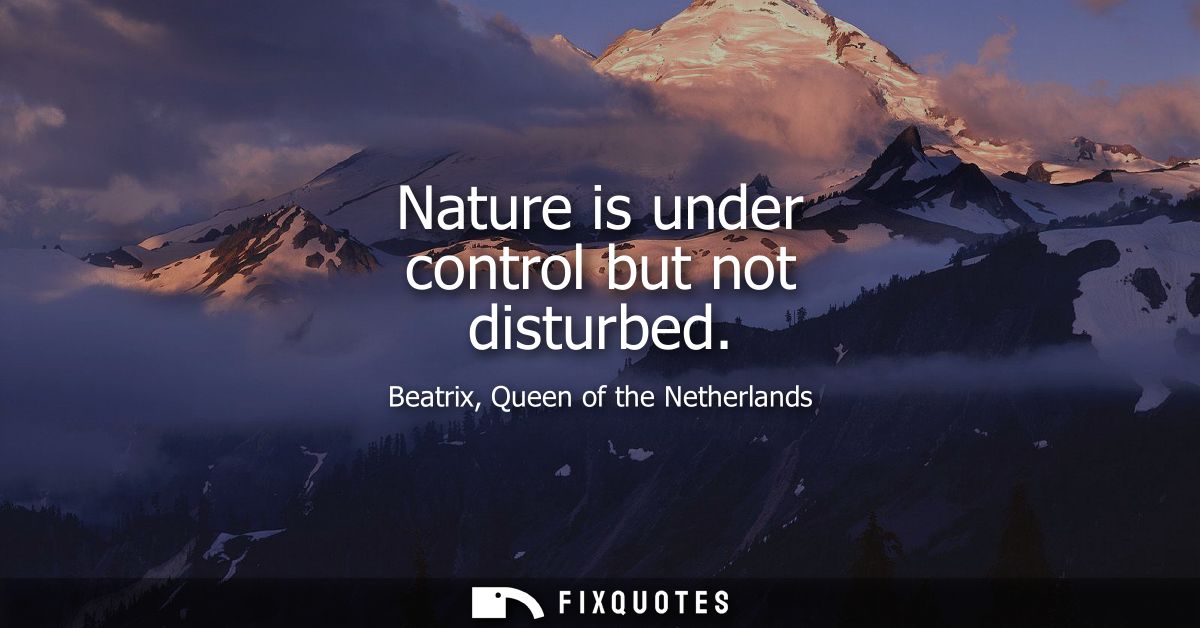
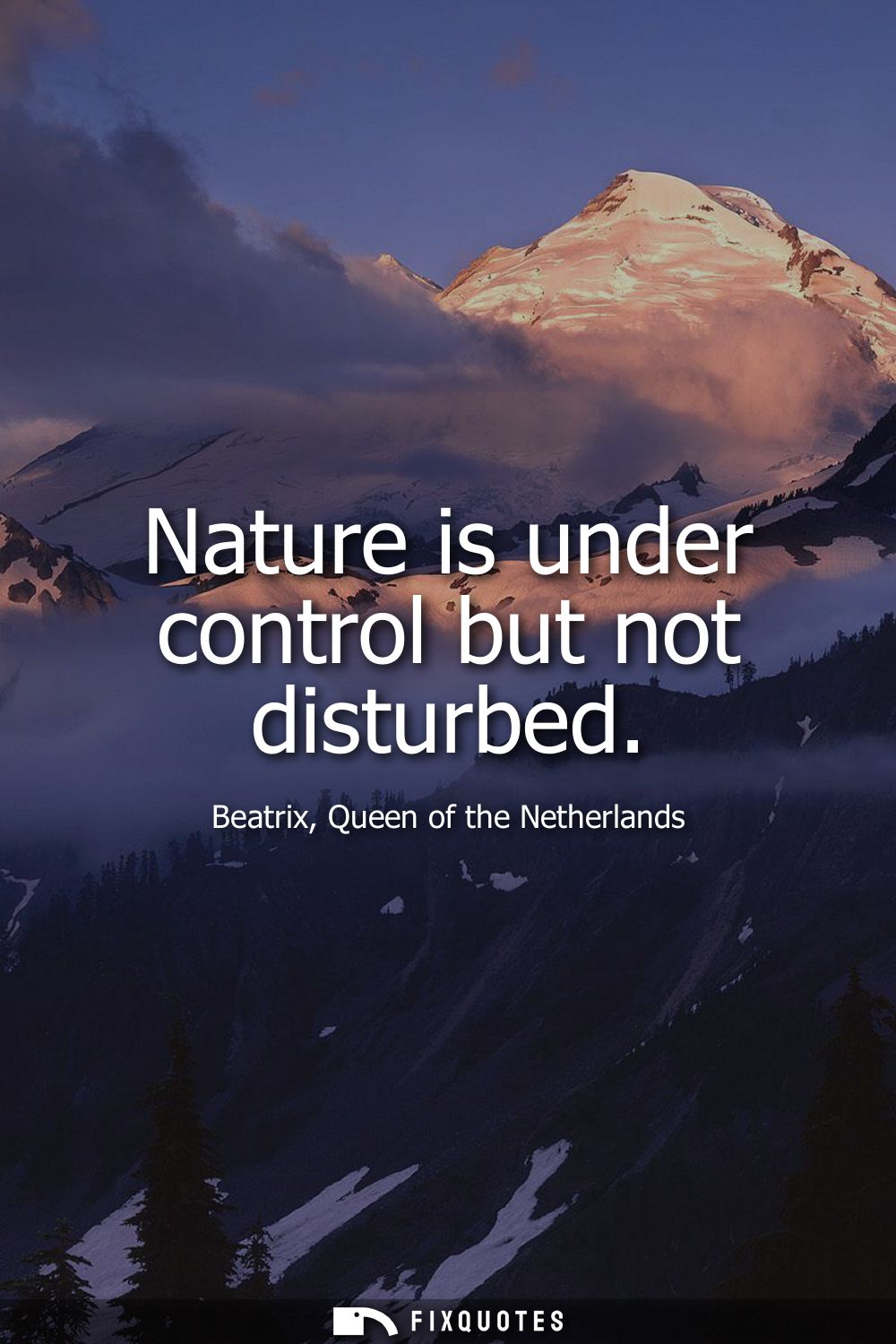
"Nature is under control but not disturbed"
About this Quote
“Nature is under control but not disturbed” is monarchy-speak distilled to eight words: reassurance with a velvet glove on it. Coming from Beatrix of the Netherlands, a queen associated with a modern, managerial style of monarchy, the line reads less like a pastoral observation and more like a political aesthetic. It proposes a vision of stewardship where humans remain firmly in charge, yet can still claim innocence - the fantasy of intervention without consequence.
The phrasing does quiet rhetorical work. “Under control” signals competence, planning, and national order: the Netherlands as a country literally engineered against water, proud of its dikes, polders, and curated landscapes. “But not disturbed” is the absolution clause. It suggests that containment need not be violence, that discipline can be benign. The subtext is a familiar Dutch self-myth: we shape the land with technical genius and civic restraint, not brute extraction. It’s the same story told by impeccably maintained parks, agricultural efficiency, and water management systems celebrated as humane engineering.
Yet the sentence also betrays anxiety. If nature truly weren’t disturbed, the reassurance would be unnecessary. The line anticipates critique: that control is disturbance, that management is intrusion, that “order” often comes at an ecological cost. Beatrix’s quote offers a monarch’s ideal equilibrium: authority that is present but tactful, power that doesn’t leave fingerprints. It’s a compact allegory for constitutional monarchy itself - controlled, contained, and always careful to appear unobtrusive while shaping the frame.
The phrasing does quiet rhetorical work. “Under control” signals competence, planning, and national order: the Netherlands as a country literally engineered against water, proud of its dikes, polders, and curated landscapes. “But not disturbed” is the absolution clause. It suggests that containment need not be violence, that discipline can be benign. The subtext is a familiar Dutch self-myth: we shape the land with technical genius and civic restraint, not brute extraction. It’s the same story told by impeccably maintained parks, agricultural efficiency, and water management systems celebrated as humane engineering.
Yet the sentence also betrays anxiety. If nature truly weren’t disturbed, the reassurance would be unnecessary. The line anticipates critique: that control is disturbance, that management is intrusion, that “order” often comes at an ecological cost. Beatrix’s quote offers a monarch’s ideal equilibrium: authority that is present but tactful, power that doesn’t leave fingerprints. It’s a compact allegory for constitutional monarchy itself - controlled, contained, and always careful to appear unobtrusive while shaping the frame.
Quote Details
| Topic | Nature |
|---|---|
| Source | Help us find the source |
| Cite |
Citation Formats
APA Style (7th ed.)
Netherlands, Beatrix of the. (2026, January 16). Nature is under control but not disturbed. FixQuotes. https://fixquotes.com/quotes/nature-is-under-control-but-not-disturbed-132912/
Chicago Style
Netherlands, Beatrix of the. "Nature is under control but not disturbed." FixQuotes. January 16, 2026. https://fixquotes.com/quotes/nature-is-under-control-but-not-disturbed-132912/.
MLA Style (9th ed.)
"Nature is under control but not disturbed." FixQuotes, 16 Jan. 2026, https://fixquotes.com/quotes/nature-is-under-control-but-not-disturbed-132912/. Accessed 4 Mar. 2026.
More Quotes by Beatrix
Add to List