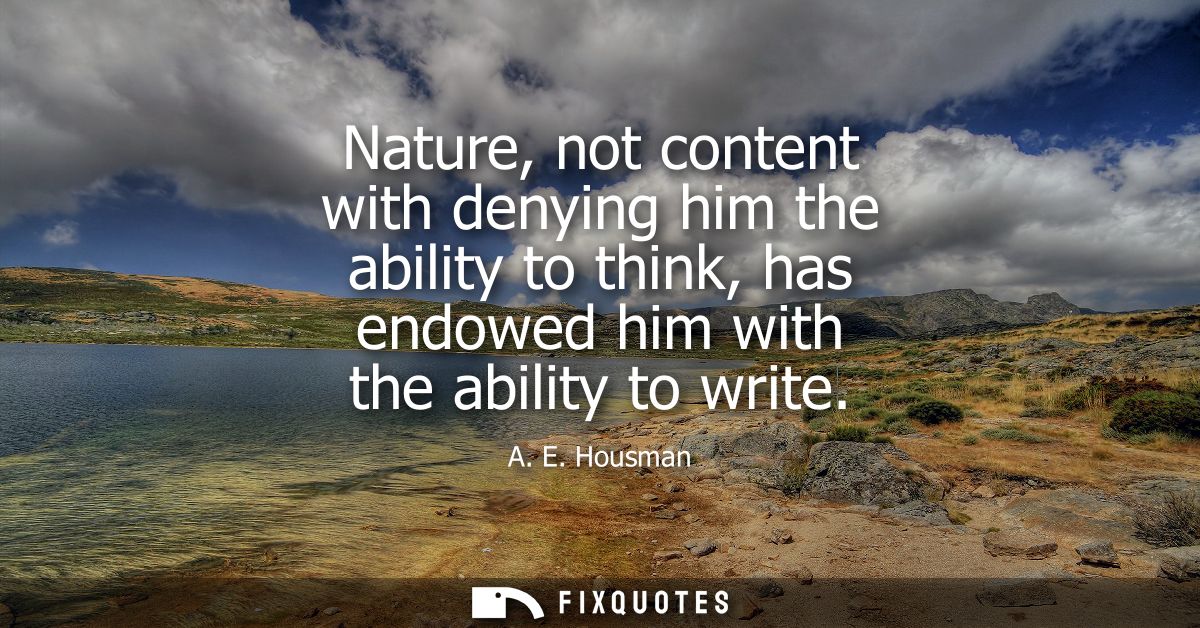
"Nature, not content with denying him the ability to think, has endowed him with the ability to write"
About this Quote
Housman’s intent isn’t just to call someone stupid; it’s to expose a familiar cultural error: mistaking fluency for intelligence, publication for authority. The subtext is institutional as much as personal. In a world where letters, essays, and reviews can confer status, the truly dangerous figure isn’t the silent fool; it’s the fool with a pen and an audience. The line implies that writing can function as camouflage - a social technology that lets emptiness travel as insight.
Context matters: Housman was both poet and classical scholar, steeped in traditions that prized disciplined thinking and precise language. His barbed epigram reads like a scholar’s revenge on sloppy argument, windy prose, or self-important literary posturing. It’s an elitist joke, yes, but also an unnervingly modern warning about the gap between expression and understanding.
Quote Details
| Topic | Witty One-Liners |
|---|---|
| Source | Help us find the source |
| Cite |
Citation Formats
APA Style (7th ed.)
Housman, A. E. (2026, January 14). Nature, not content with denying him the ability to think, has endowed him with the ability to write. FixQuotes. https://fixquotes.com/quotes/nature-not-content-with-denying-him-the-ability-35607/
Chicago Style
Housman, A. E. "Nature, not content with denying him the ability to think, has endowed him with the ability to write." FixQuotes. January 14, 2026. https://fixquotes.com/quotes/nature-not-content-with-denying-him-the-ability-35607/.
MLA Style (9th ed.)
"Nature, not content with denying him the ability to think, has endowed him with the ability to write." FixQuotes, 14 Jan. 2026, https://fixquotes.com/quotes/nature-not-content-with-denying-him-the-ability-35607/. Accessed 1 Apr. 2026.