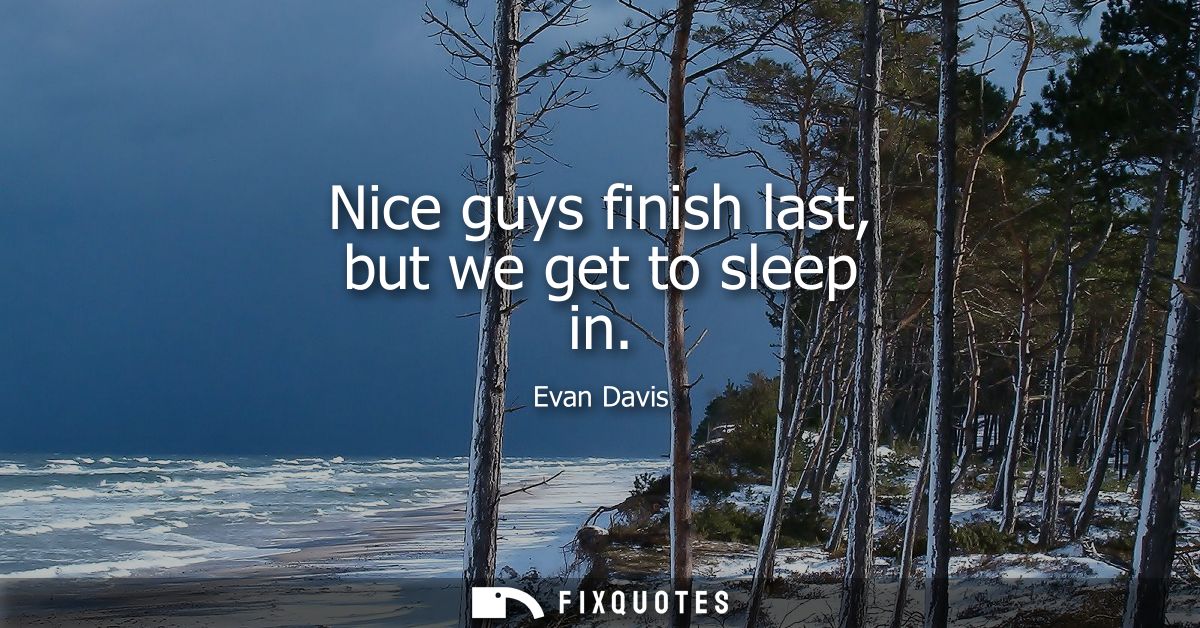
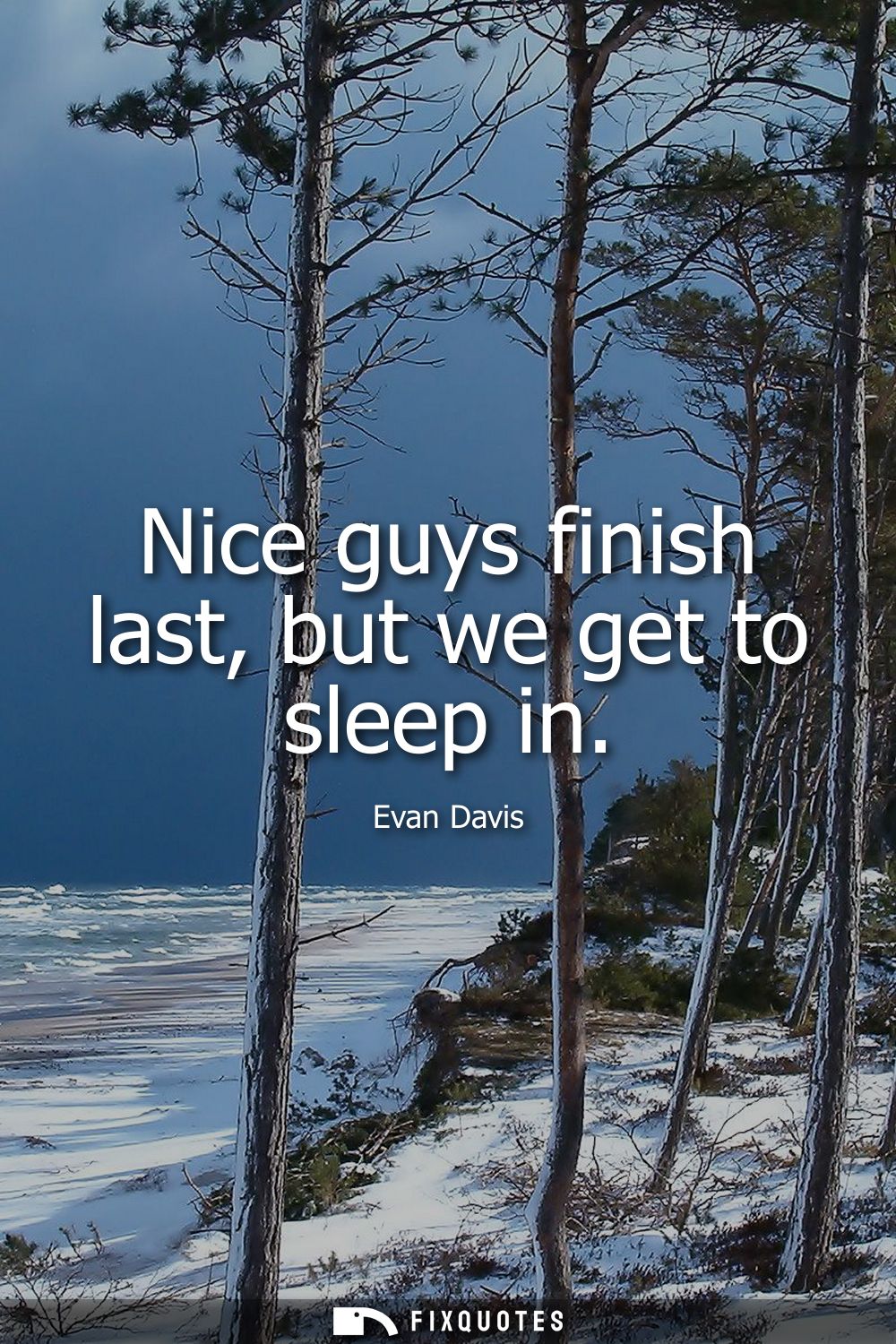
"Nice guys finish last, but we get to sleep in"
About this Quote
The line lands like a wink at the altar of hustle culture: if the scoreboard is rigged for the ruthless, at least decency buys you rest. By twisting the old macho proverb "nice guys finish last", Davis keeps the cynicism but flips the payoff. Winning, in this framing, is not dominance; it's a quieter kind of solvency - being able to live with yourself when the lights go out.
As an economist, Davis is basically smuggling a moral argument into a cost-benefit joke. "Finish last" nods to competitive markets where incentives reward aggression, corner-cutting, and strategic selfishness. "We get to sleep in" reframes the utility function. It suggests there are hidden costs to being "first": anxiety, reputational fragility, perpetual vigilance, the sleepless churn of maintaining advantage. The nice guy's benefit isn't naive purity; it's lower cognitive load. Fewer grudges to manage, fewer lies to track, fewer fires to put out at 3 a.m.
The subtext is also a rebuke to the performative niceness of networking culture. This isn't "be kind to get ahead". It's "be kind even if you don't". That makes the humor bite: it concedes the world often rewards the wrong things, then insists there's still a rational choice in refusing to play dirty. In an era that treats burnout as a badge and conscience as a luxury good, Davis offers a different status symbol: untroubled sleep.
As an economist, Davis is basically smuggling a moral argument into a cost-benefit joke. "Finish last" nods to competitive markets where incentives reward aggression, corner-cutting, and strategic selfishness. "We get to sleep in" reframes the utility function. It suggests there are hidden costs to being "first": anxiety, reputational fragility, perpetual vigilance, the sleepless churn of maintaining advantage. The nice guy's benefit isn't naive purity; it's lower cognitive load. Fewer grudges to manage, fewer lies to track, fewer fires to put out at 3 a.m.
The subtext is also a rebuke to the performative niceness of networking culture. This isn't "be kind to get ahead". It's "be kind even if you don't". That makes the humor bite: it concedes the world often rewards the wrong things, then insists there's still a rational choice in refusing to play dirty. In an era that treats burnout as a badge and conscience as a luxury good, Davis offers a different status symbol: untroubled sleep.
Quote Details
| Topic | Witty One-Liners |
|---|---|
| Source | Help us find the source |
| Cite |
Citation Formats
APA Style (7th ed.)
Davis, Evan. (2026, January 15). Nice guys finish last, but we get to sleep in. FixQuotes. https://fixquotes.com/quotes/nice-guys-finish-last-but-we-get-to-sleep-in-146198/
Chicago Style
Davis, Evan. "Nice guys finish last, but we get to sleep in." FixQuotes. January 15, 2026. https://fixquotes.com/quotes/nice-guys-finish-last-but-we-get-to-sleep-in-146198/.
MLA Style (9th ed.)
"Nice guys finish last, but we get to sleep in." FixQuotes, 15 Jan. 2026, https://fixquotes.com/quotes/nice-guys-finish-last-but-we-get-to-sleep-in-146198/. Accessed 7 Apr. 2026.
More Quotes by Evan
Add to List