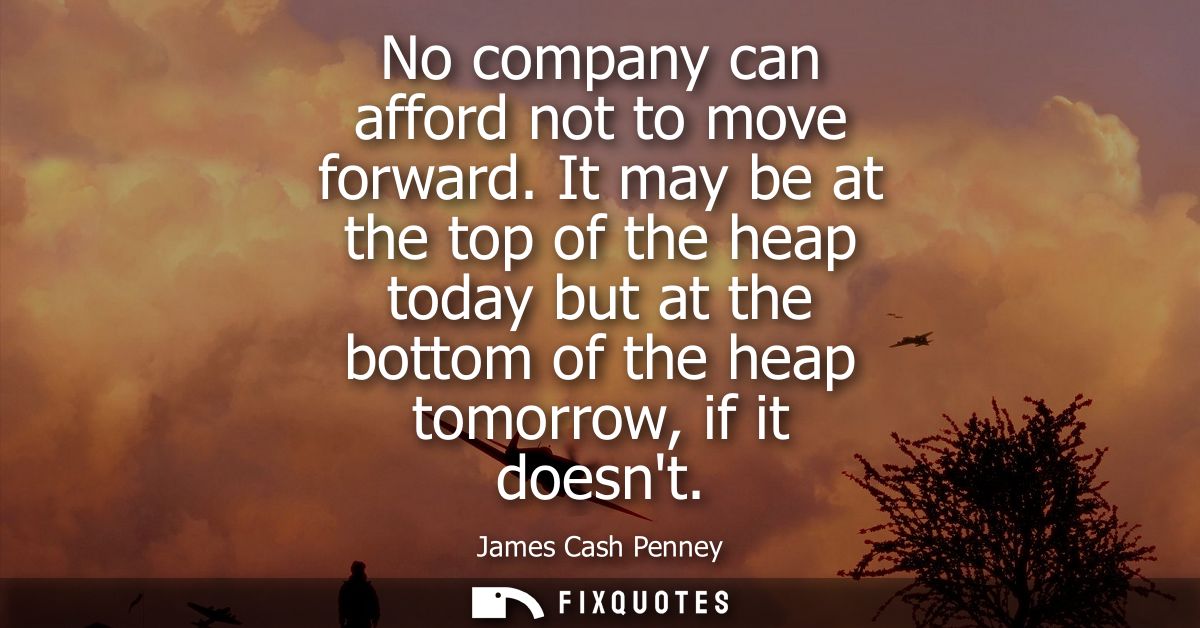
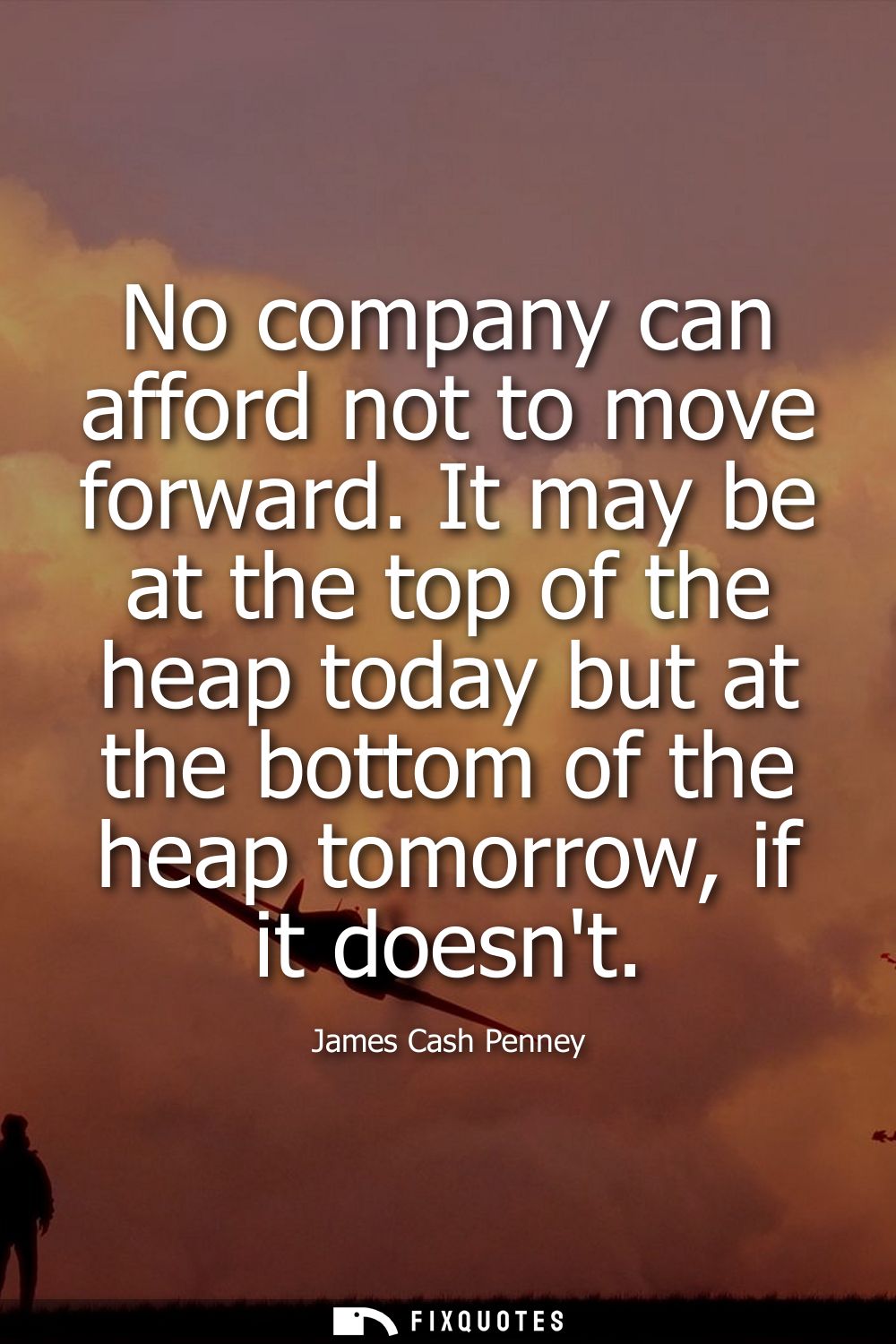
"No company can afford not to move forward. It may be at the top of the heap today but at the bottom of the heap tomorrow, if it doesn't"
About this Quote
The intent is managerial and moral at once. “Afford” is doing double duty: it’s a literal business term and a jab at the false economy of standing still. Penney isn’t arguing that change is exciting; he’s insisting it’s cheaper than the alternative. That’s a classic merchant’s persuasion technique: don’t sell the dream, sell the downside risk of ignoring the present.
Subtextually, the quote carries an early 20th-century American anxiety about disruption before the word existed. Penney built J.C. Penney in an era when retail was being reinvented by chains, mail-order catalogs, and new logistics. He’s speaking from the perspective of someone who watched local winners get erased by scale, standardization, and shifting consumer habits. The lesson isn’t “innovate because it’s trendy,” but “markets don’t honor past performance.”
Context matters, too: Penney’s career spanned panics, the Depression, and postwar modernization. Against that volatility, forward motion becomes a survival ethic. The line reads like a warning to executives, but it’s also a snapshot of capitalism’s coldest promise: stability is never a benefit, only a temporary illusion you keep buying with change.
Quote Details
| Topic | Vision & Strategy |
|---|---|
| Source | Help us find the source |
| Cite |
Citation Formats
APA Style (7th ed.)
Penney, James Cash. (2026, January 17). No company can afford not to move forward. It may be at the top of the heap today but at the bottom of the heap tomorrow, if it doesn't. FixQuotes. https://fixquotes.com/quotes/no-company-can-afford-not-to-move-forward-it-may-46784/
Chicago Style
Penney, James Cash. "No company can afford not to move forward. It may be at the top of the heap today but at the bottom of the heap tomorrow, if it doesn't." FixQuotes. January 17, 2026. https://fixquotes.com/quotes/no-company-can-afford-not-to-move-forward-it-may-46784/.
MLA Style (9th ed.)
"No company can afford not to move forward. It may be at the top of the heap today but at the bottom of the heap tomorrow, if it doesn't." FixQuotes, 17 Jan. 2026, https://fixquotes.com/quotes/no-company-can-afford-not-to-move-forward-it-may-46784/. Accessed 2 Apr. 2026.