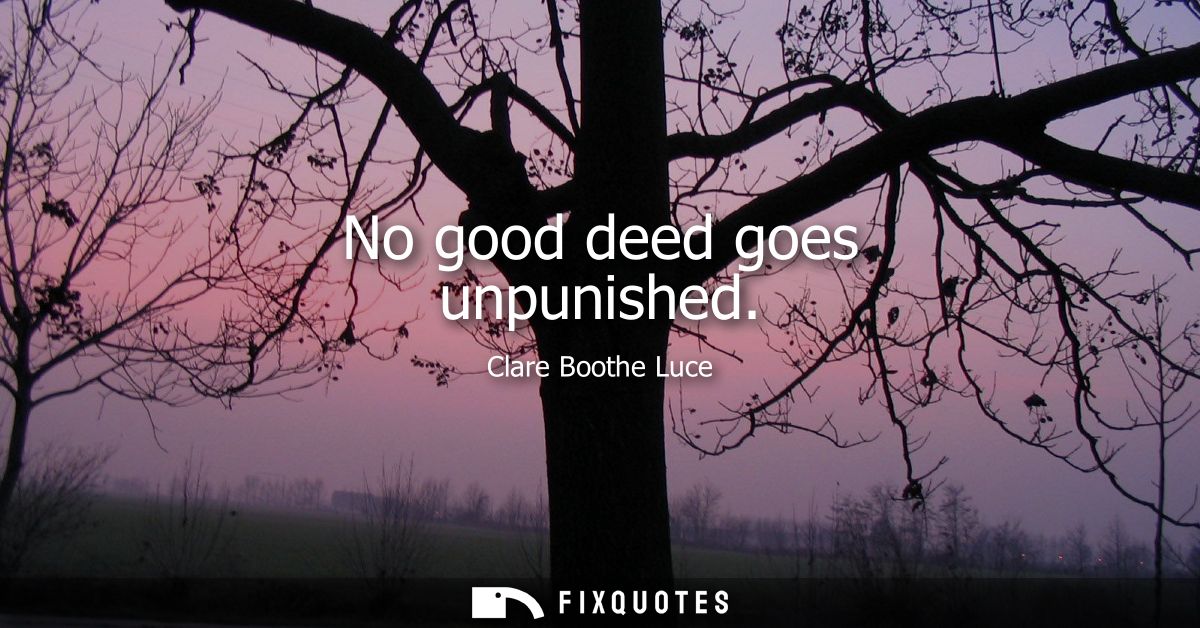
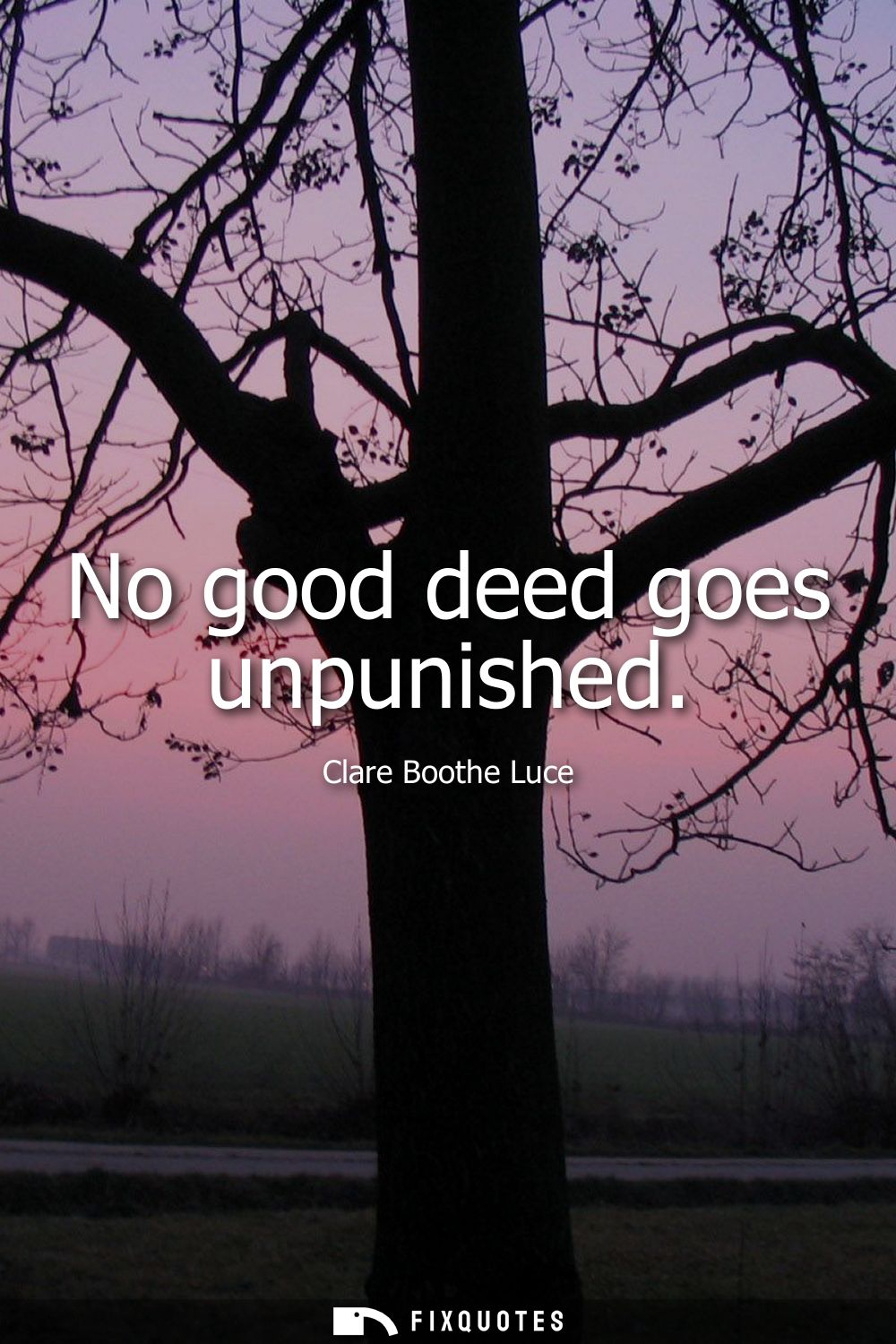
"No good deed goes unpunished"
About this Quote
A line like "No good deed goes unpunished" lands because it turns moral common sense into a punchline, then dares you to admit you have receipts. Clare Boothe Luce, a dramatist with a politician’s instinct for the cutting aside, packages social experience into a single, bleak epigram: kindness is not just thankless, it is actively risky. The wit is in the inversion. We are trained to expect virtue to pay; Luce’s sentence snaps that expectation in half and replaces it with a rule that feels truer in offices, families, and public life than any sermon.
The specific intent isn’t to discourage goodness so much as to warn the do-gooder about power, pride, and unintended consequences. Help can humiliate. Generosity can create dependency. Advocacy can embarrass institutions that prefer their problems quiet. When you intervene, you step into someone else’s story and rearrange the cast; someone will resent losing control, losing face, or losing a convenient scapegoat. Punishment, here, often looks like backlash dressed up as principle: accusations of ulterior motives, nitpicking your methods, or punishing you for setting a standard others don’t want to meet.
Context matters. Luce moved through theater, media, and Washington - ecosystems where motives are presumed guilty until proven otherwise, and where moral gestures double as strategy. The line thrives in such arenas because it flatters the speaker’s hard-earned cynicism while still allowing them to believe in goodness as an impulse. It’s a defensive wisdom: do the right thing if you must, but don’t expect applause, and don’t be surprised when the bill arrives.
The specific intent isn’t to discourage goodness so much as to warn the do-gooder about power, pride, and unintended consequences. Help can humiliate. Generosity can create dependency. Advocacy can embarrass institutions that prefer their problems quiet. When you intervene, you step into someone else’s story and rearrange the cast; someone will resent losing control, losing face, or losing a convenient scapegoat. Punishment, here, often looks like backlash dressed up as principle: accusations of ulterior motives, nitpicking your methods, or punishing you for setting a standard others don’t want to meet.
Context matters. Luce moved through theater, media, and Washington - ecosystems where motives are presumed guilty until proven otherwise, and where moral gestures double as strategy. The line thrives in such arenas because it flatters the speaker’s hard-earned cynicism while still allowing them to believe in goodness as an impulse. It’s a defensive wisdom: do the right thing if you must, but don’t expect applause, and don’t be surprised when the bill arrives.
Quote Details
| Topic | Witty One-Liners |
|---|---|
| Source | Help us find the source |
| Cite |
Citation Formats
APA Style (7th ed.)
Luce, Clare Boothe. (2026, January 18). No good deed goes unpunished. FixQuotes. https://fixquotes.com/quotes/no-good-deed-goes-unpunished-10199/
Chicago Style
Luce, Clare Boothe. "No good deed goes unpunished." FixQuotes. January 18, 2026. https://fixquotes.com/quotes/no-good-deed-goes-unpunished-10199/.
MLA Style (9th ed.)
"No good deed goes unpunished." FixQuotes, 18 Jan. 2026, https://fixquotes.com/quotes/no-good-deed-goes-unpunished-10199/. Accessed 30 Mar. 2026.
More Quotes by Clare
Add to List