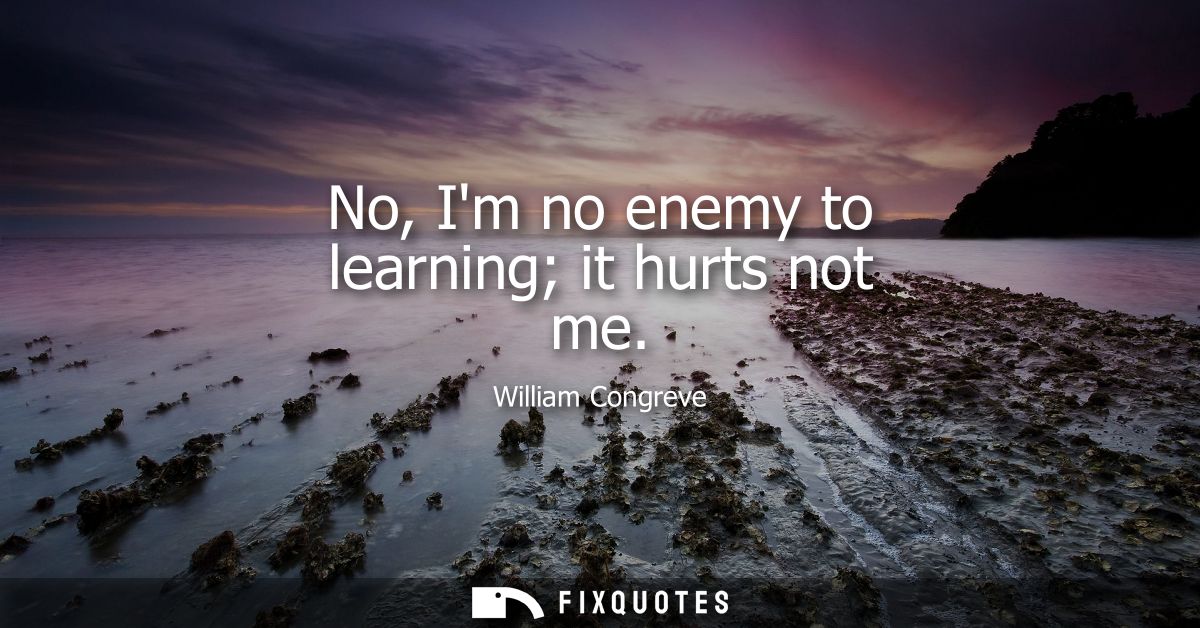
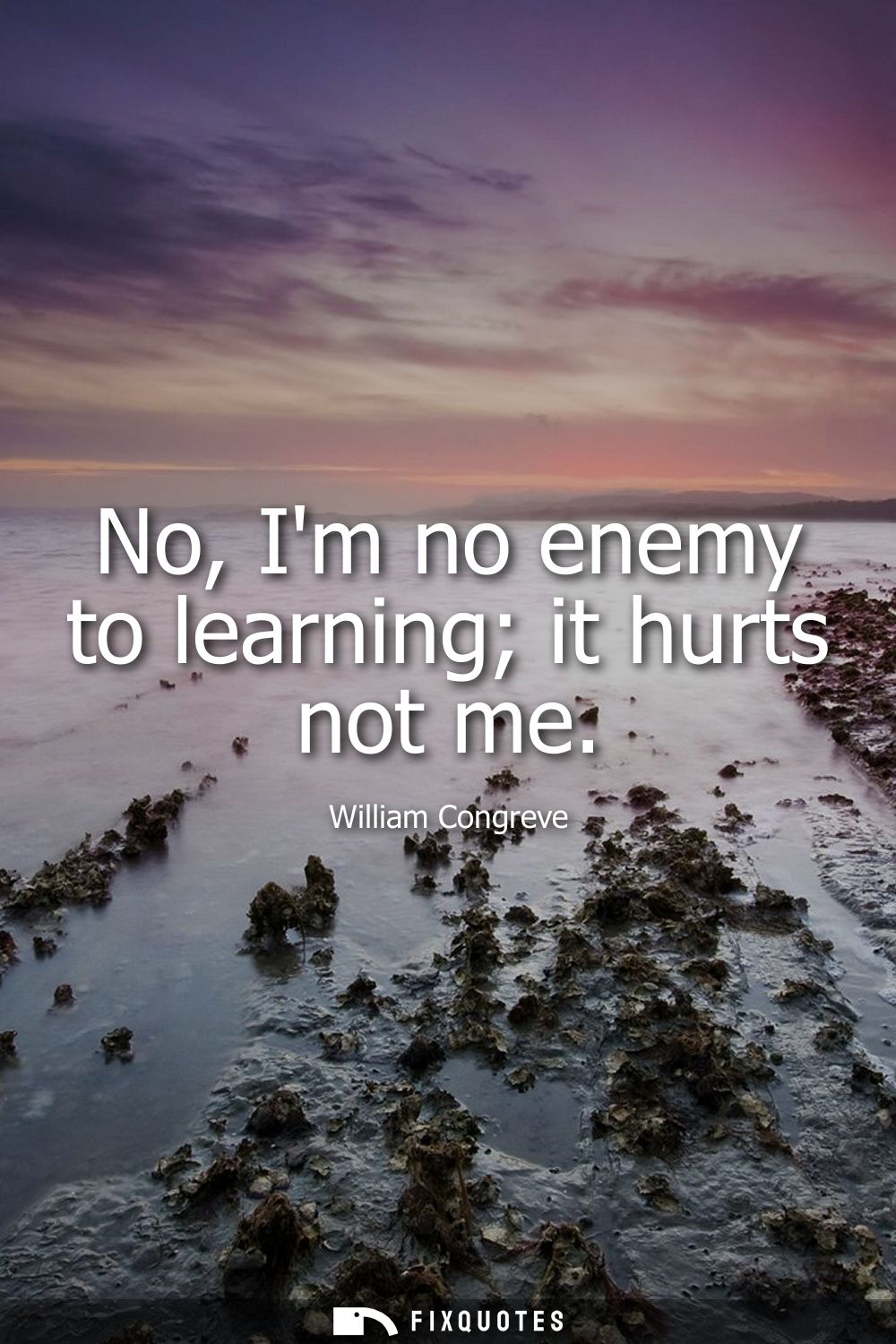
"No, I'm no enemy to learning; it hurts not me"
About this Quote
Congreve’s line lands like a perfectly timed eyebrow raise: a denial that’s too neat to be entirely sincere. “No, I’m no enemy to learning” sounds like a preemptive defense mounted by someone who knows he’s about to be accused of exactly that. Then comes the pivot - “it hurts not me” - which slyly relocates the debate from virtue to self-interest. Learning isn’t praised as ennobling or necessary; it’s tolerated because it’s harmless to the speaker’s standing. That’s Restoration comedy in miniature: morality and intellect treated less as ideals than as social accessories, useful or irrelevant depending on who benefits.
The subtext is a social maneuver. In Congreve’s world, “learning” can signal pedantry, a threat to wit, or a kind of earnestness that kills the room. By insisting it “hurts not,” the speaker frames education as something other people may indulge in without disturbing the hierarchy of charm and power he’s already mastered. It’s the voice of a man confident that credentials won’t outshine him, that brilliance in conversation beats brilliance on the page.
Context matters: late 17th-century London prized polish, satire, and the performance of intelligence over its slow accumulation. Congreve, a playwright and poet steeped in that milieu, writes characters who treat reason as a weapon and sincerity as a liability. The line works because it’s polite on the surface and faintly contemptuous underneath - a social smile that keeps learning at arm’s length while pretending to welcome it.
The subtext is a social maneuver. In Congreve’s world, “learning” can signal pedantry, a threat to wit, or a kind of earnestness that kills the room. By insisting it “hurts not,” the speaker frames education as something other people may indulge in without disturbing the hierarchy of charm and power he’s already mastered. It’s the voice of a man confident that credentials won’t outshine him, that brilliance in conversation beats brilliance on the page.
Context matters: late 17th-century London prized polish, satire, and the performance of intelligence over its slow accumulation. Congreve, a playwright and poet steeped in that milieu, writes characters who treat reason as a weapon and sincerity as a liability. The line works because it’s polite on the surface and faintly contemptuous underneath - a social smile that keeps learning at arm’s length while pretending to welcome it.
Quote Details
| Topic | Learning |
|---|---|
| Source | Help us find the source |
| Cite |
Citation Formats
APA Style (7th ed.)
Congreve, William. (2026, January 18). No, I'm no enemy to learning; it hurts not me. FixQuotes. https://fixquotes.com/quotes/no-im-no-enemy-to-learning-it-hurts-not-me-3406/
Chicago Style
Congreve, William. "No, I'm no enemy to learning; it hurts not me." FixQuotes. January 18, 2026. https://fixquotes.com/quotes/no-im-no-enemy-to-learning-it-hurts-not-me-3406/.
MLA Style (9th ed.)
"No, I'm no enemy to learning; it hurts not me." FixQuotes, 18 Jan. 2026, https://fixquotes.com/quotes/no-im-no-enemy-to-learning-it-hurts-not-me-3406/. Accessed 31 Mar. 2026.
More Quotes by William
Add to List