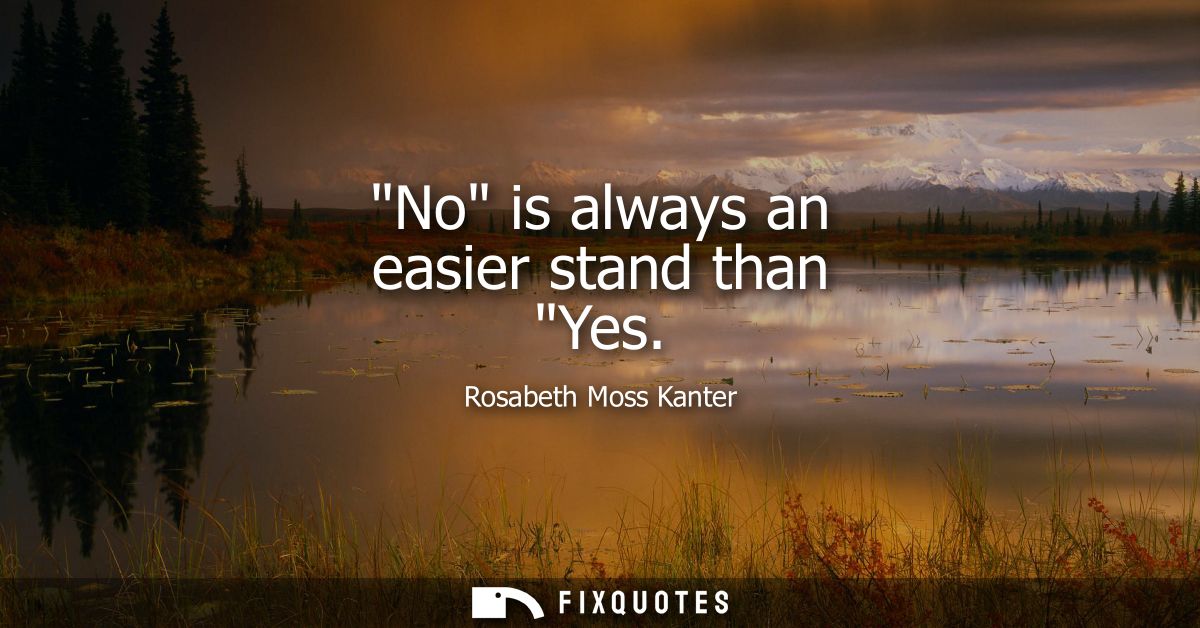
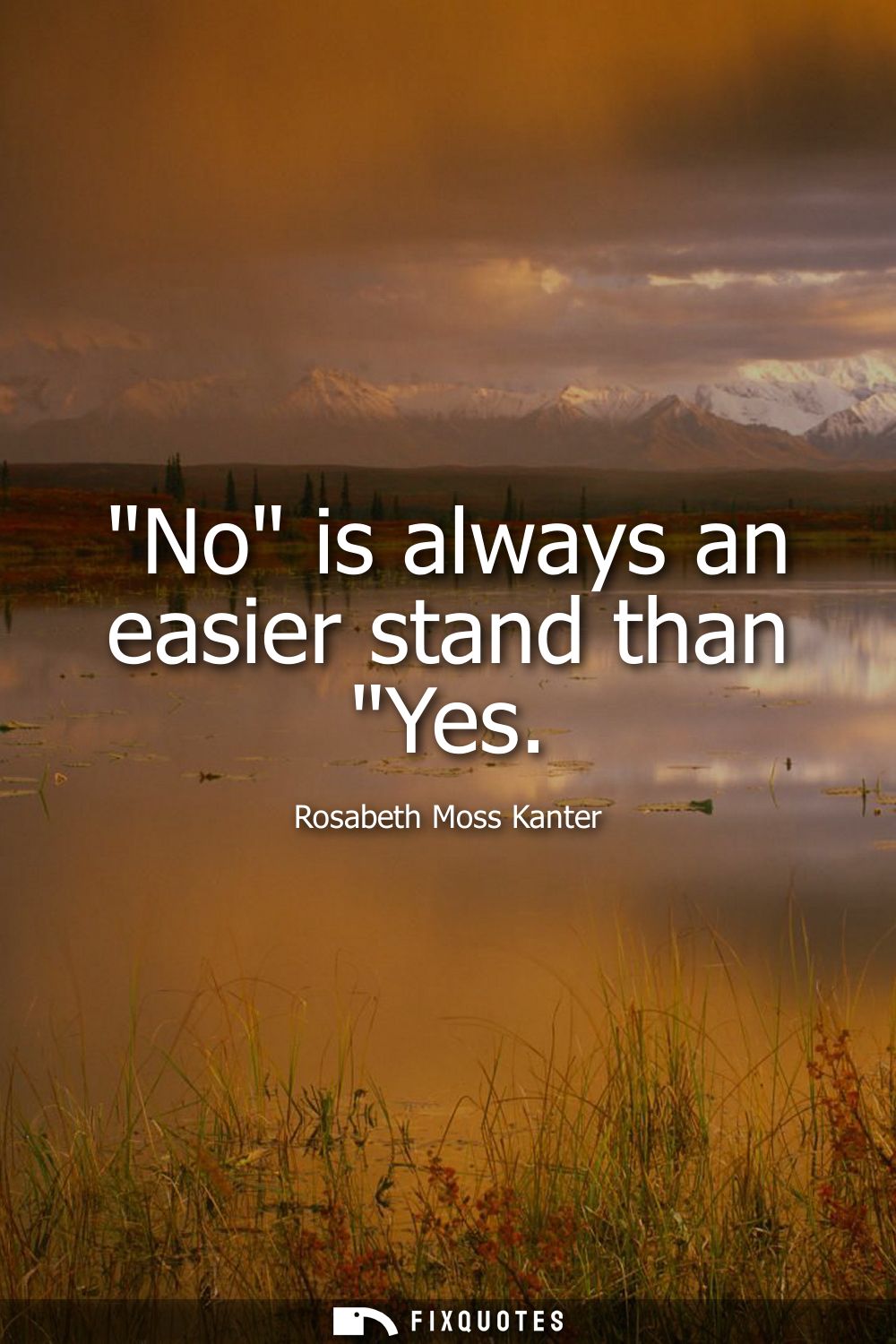
""No" is always an easier stand than "Yes"
About this Quote
Saying "no" is the safest kind of power: it costs less, risks less, and flatters the speaker as discerning. Rosabeth Moss Kanter, writing from the world of organizations and management, is pointing at a quiet asymmetry in how decisions get made. The default stance in many institutions is not creativity but gatekeeping. Vetoes are cheap. Approval is expensive.
The intent is partly corrective, partly diagnostic. Kanter is warning leaders and teams that constant refusal can masquerade as rigor. You can sound smart by finding flaws; you can protect your reputation by never attaching your name to a bet that might fail. "Yes", by contrast, is a commitment device. It drags you into logistics, trade-offs, budgets, politics, and accountability. A yes turns an idea into a project, which means timelines, coordination, and the possibility of being proven wrong in public.
The subtext is about fear and incentives. Many corporate cultures reward the person who prevents mistakes more than the person who creates value. That system breeds professional skeptics: people who build careers on "not on my watch". Kanter is nudging readers to notice how that mindset throttles innovation, inclusion, and speed. If "no" is always easier, organizations will drift toward no unless leaders actively make yes safer: distributing risk, tolerating early imperfections, and praising the labor of follow-through, not just the elegance of critique.
It works because it punctures a moral illusion: refusal feels principled, but it can be pure self-protection.
The intent is partly corrective, partly diagnostic. Kanter is warning leaders and teams that constant refusal can masquerade as rigor. You can sound smart by finding flaws; you can protect your reputation by never attaching your name to a bet that might fail. "Yes", by contrast, is a commitment device. It drags you into logistics, trade-offs, budgets, politics, and accountability. A yes turns an idea into a project, which means timelines, coordination, and the possibility of being proven wrong in public.
The subtext is about fear and incentives. Many corporate cultures reward the person who prevents mistakes more than the person who creates value. That system breeds professional skeptics: people who build careers on "not on my watch". Kanter is nudging readers to notice how that mindset throttles innovation, inclusion, and speed. If "no" is always easier, organizations will drift toward no unless leaders actively make yes safer: distributing risk, tolerating early imperfections, and praising the labor of follow-through, not just the elegance of critique.
It works because it punctures a moral illusion: refusal feels principled, but it can be pure self-protection.
Quote Details
| Topic | Decision-Making |
|---|---|
| Source | Help us find the source |
| Cite |
Citation Formats
APA Style (7th ed.)
Kanter, Rosabeth Moss. (2026, January 16). "No" is always an easier stand than "Yes. FixQuotes. https://fixquotes.com/quotes/no-is-always-an-easier-stand-than-yes-134627/
Chicago Style
Kanter, Rosabeth Moss. ""No" is always an easier stand than "Yes." FixQuotes. January 16, 2026. https://fixquotes.com/quotes/no-is-always-an-easier-stand-than-yes-134627/.
MLA Style (9th ed.)
""No" is always an easier stand than "Yes." FixQuotes, 16 Jan. 2026, https://fixquotes.com/quotes/no-is-always-an-easier-stand-than-yes-134627/. Accessed 11 Feb. 2026.
More Quotes by Rosabeth
Add to List