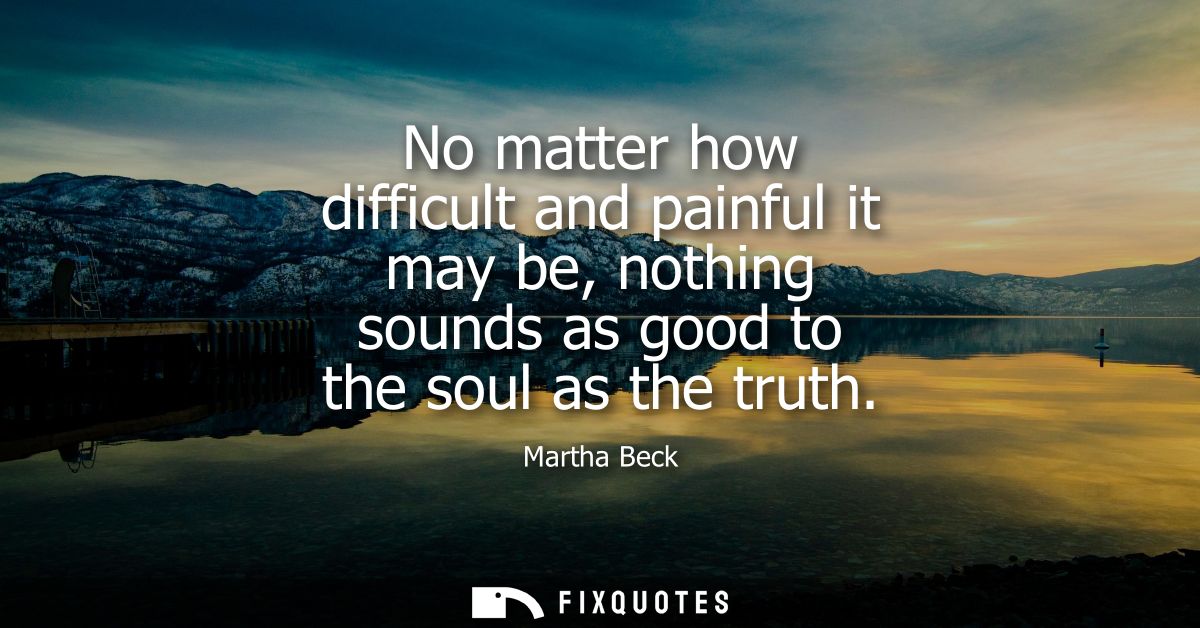
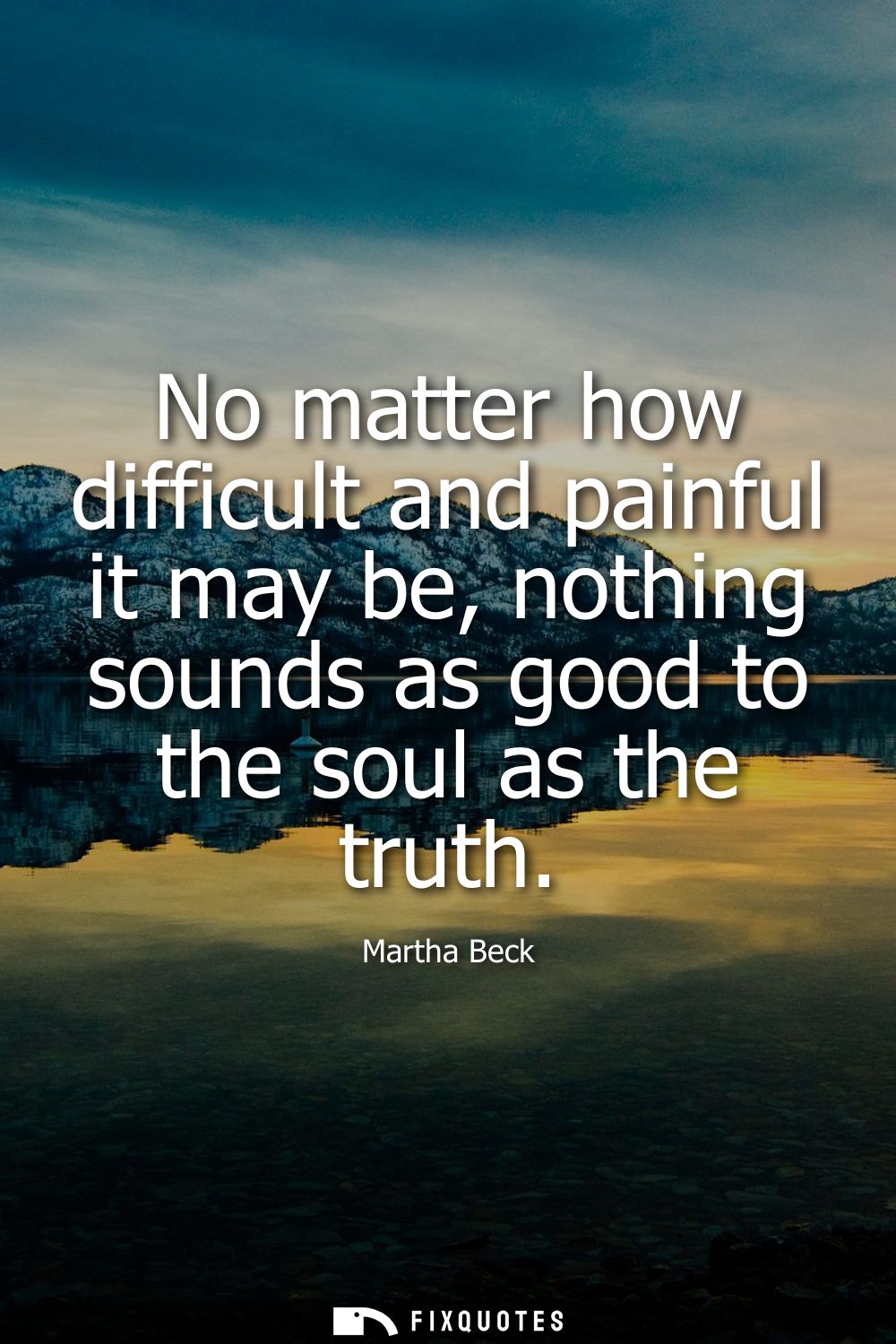
"No matter how difficult and painful it may be, nothing sounds as good to the soul as the truth"
About this Quote
Beck’s intent is therapeutic, but not in the soft, scented-candle way. It’s a push against the modern skill of self-editing: the stories we tell to keep a job, keep a relationship, keep the peace, keep our identity coherent. The subtext is that deception is loud. Lies create constant mental noise: checking, managing, rehearsing. Truth, even when it detonates, quiets that static. “Nothing sounds as good” implies comparison; the alternatives are seductive but ultimately tinny - approval, avoidance, performance.
Contextually, Beck comes out of the self-help and life-coaching ecosystem that treats authenticity as both moral practice and survival strategy. Her “soul” isn’t doctrinal; it’s psychological - the internal part of you that knows when you’re shrinking. The line works because it reframes courage: telling the truth isn’t noble self-sacrifice, it’s self-care with sharp edges. It suggests that pain can be a kind of proof you’ve stopped negotiating with reality, and that the reward isn’t applause. It’s resonance.
Quote Details
| Topic | Truth |
|---|---|
| Source | Help us find the source |
| Cite |
Citation Formats
APA Style (7th ed.)
Beck, Martha. (2026, January 17). No matter how difficult and painful it may be, nothing sounds as good to the soul as the truth. FixQuotes. https://fixquotes.com/quotes/no-matter-how-difficult-and-painful-it-may-be-56618/
Chicago Style
Beck, Martha. "No matter how difficult and painful it may be, nothing sounds as good to the soul as the truth." FixQuotes. January 17, 2026. https://fixquotes.com/quotes/no-matter-how-difficult-and-painful-it-may-be-56618/.
MLA Style (9th ed.)
"No matter how difficult and painful it may be, nothing sounds as good to the soul as the truth." FixQuotes, 17 Jan. 2026, https://fixquotes.com/quotes/no-matter-how-difficult-and-painful-it-may-be-56618/. Accessed 31 Mar. 2026.