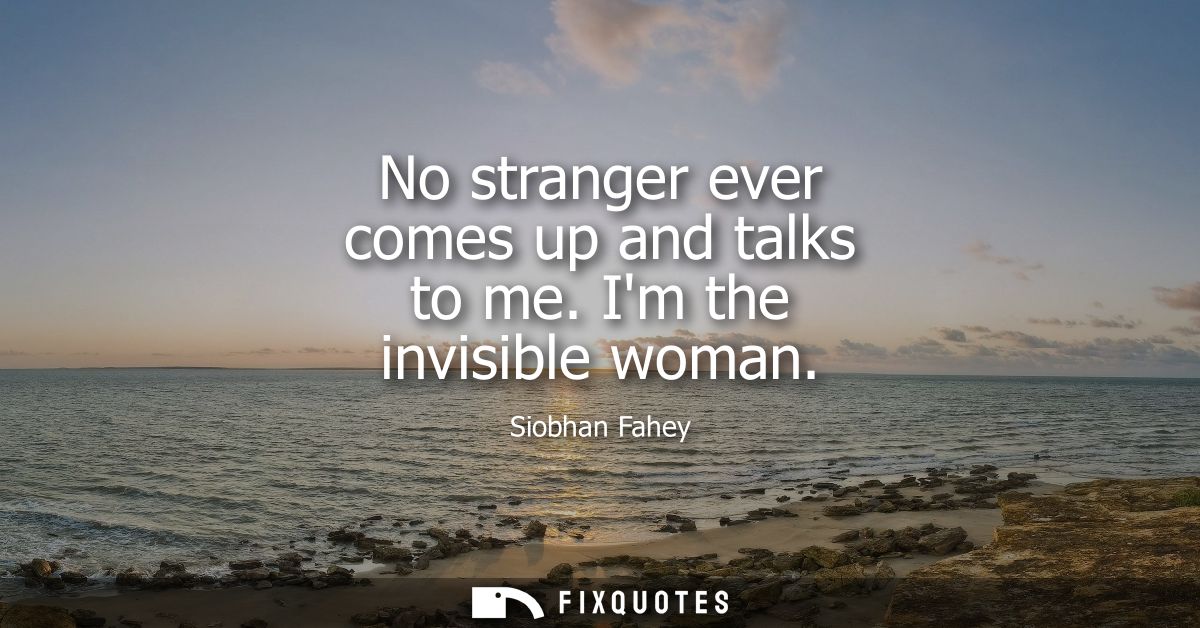
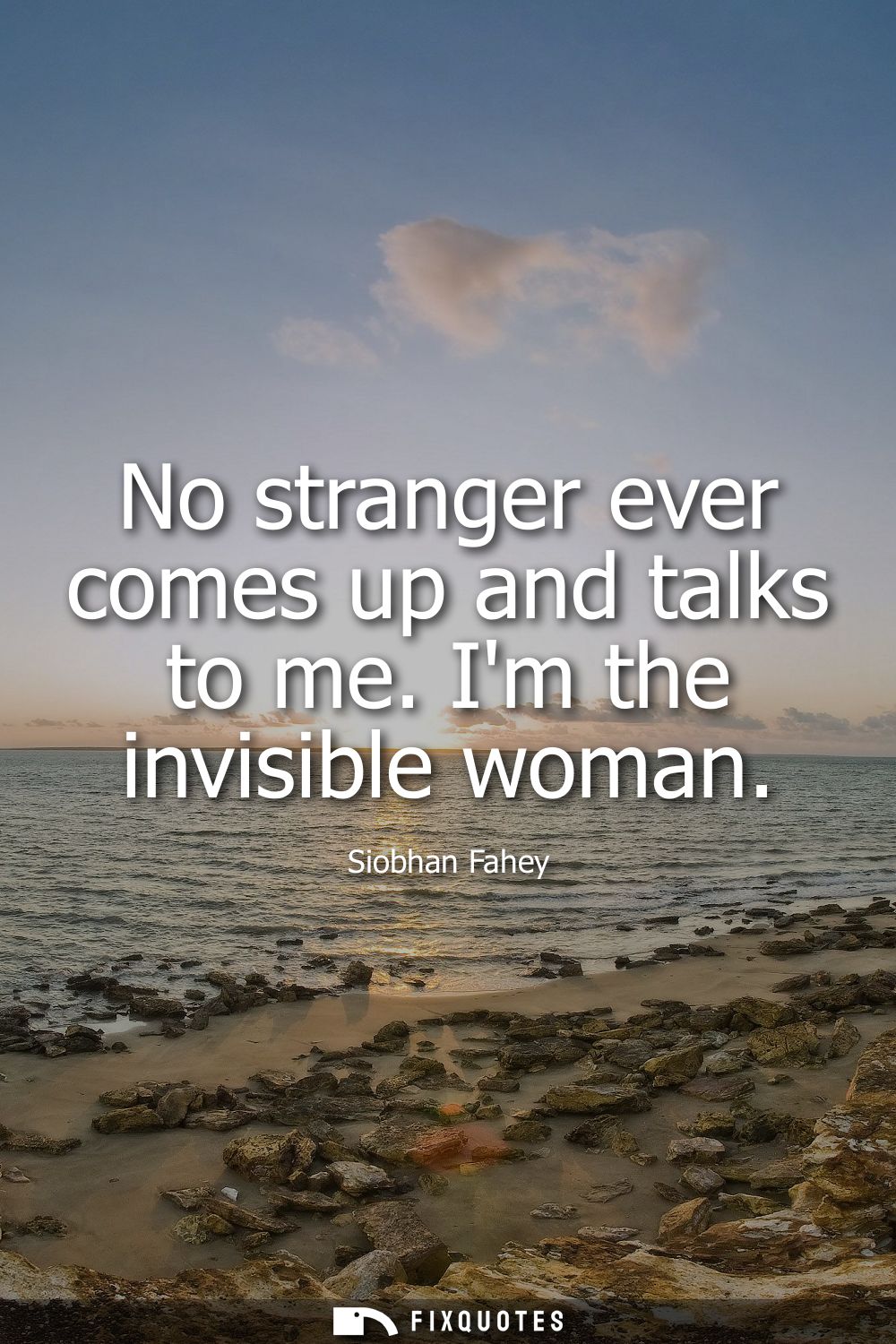
"No stranger ever comes up and talks to me. I'm the invisible woman"
About this Quote
Fame is supposed to be a magnet; Siobhan Fahey flips it into a kind of anticlimax. “No stranger ever comes up and talks to me” doesn’t read like a humblebrag or a complaint so much as a deadpan inventory of what celebrity didn’t buy her: casual recognition, the little social proofs that tell you your work has landed in the culture. The punchline, “I’m the invisible woman,” is both theatrical and defensive. It’s a persona you can wear when the world isn’t reflecting you back.
Coming from a musician whose career moved through tightly stylized pop projects and shifting lineups, the line carries a particular sting. Pop is built on surfaces: image, catchiness, branding, the performance of access. Being “invisible” inside that machinery hints at how uneven visibility can be, especially for women in group contexts where credit is fluid and the public often latches onto a single face. It’s not just about strangers on the street; it’s about who gets mythologized and who gets footnoted.
The wording matters. “Stranger” suggests a fan economy that never materializes at the human scale. “Ever” makes it absolute, almost comically final. Then “invisible woman” lands as a quiet cultural critique: a reminder that audiences don’t simply discover artists; industries, narratives, and bias decide who becomes legible. The line’s power is its restraint: it turns isolation into a slogan and lets the listener hear the silence around it.
Coming from a musician whose career moved through tightly stylized pop projects and shifting lineups, the line carries a particular sting. Pop is built on surfaces: image, catchiness, branding, the performance of access. Being “invisible” inside that machinery hints at how uneven visibility can be, especially for women in group contexts where credit is fluid and the public often latches onto a single face. It’s not just about strangers on the street; it’s about who gets mythologized and who gets footnoted.
The wording matters. “Stranger” suggests a fan economy that never materializes at the human scale. “Ever” makes it absolute, almost comically final. Then “invisible woman” lands as a quiet cultural critique: a reminder that audiences don’t simply discover artists; industries, narratives, and bias decide who becomes legible. The line’s power is its restraint: it turns isolation into a slogan and lets the listener hear the silence around it.
Quote Details
| Topic | Loneliness |
|---|---|
| Source | Help us find the source |
| Cite |
Citation Formats
APA Style (7th ed.)
Fahey, Siobhan. (2026, January 17). No stranger ever comes up and talks to me. I'm the invisible woman. FixQuotes. https://fixquotes.com/quotes/no-stranger-ever-comes-up-and-talks-to-me-im-the-75781/
Chicago Style
Fahey, Siobhan. "No stranger ever comes up and talks to me. I'm the invisible woman." FixQuotes. January 17, 2026. https://fixquotes.com/quotes/no-stranger-ever-comes-up-and-talks-to-me-im-the-75781/.
MLA Style (9th ed.)
"No stranger ever comes up and talks to me. I'm the invisible woman." FixQuotes, 17 Jan. 2026, https://fixquotes.com/quotes/no-stranger-ever-comes-up-and-talks-to-me-im-the-75781/. Accessed 3 Apr. 2026.
More Quotes by Siobhan
Add to List